
By Joyclyn Wea, gender correspondent with New Narratives
Summary:
- In River Cess and other rural areas, some girls use baby diapers, cloth, tissue, or other unsafe materials during their periods. Some stay home because they fear leaking, smelling, or being laughed at in school.
- Sanitary pads carry a 30 percent tax: 20 percent import duty and 10 percent Goods and Services Tax. Rep. Thomas Goshua has introduced a bill to remove those taxes and treat pads as essential health products, but the bill is still in committee.
- Groups like ActionAid Liberia want lawmakers to pass the bill, but they also say girls need free or low-cost pads in schools, clean toilets, water, soap, and menstrual health education. Ghana has already gone further by funding free pads for schoolgirls.
CESTOS CITY, River Cess County — W. knows what to do when her period comes, and there is no money for pads. She buys baby diapers. We are calling all the girls in the story by their initials to prevent them from further stigma and shame.
A pack of four costs L$100, about 50 U.S. cents. She cuts each diaper in two and uses the halves as sanitary pads. If she does not have money for that, she uses clothes.
“The diapers are not like pads,” W said. “Sometimes they leak. Cloth can smell. But I don’t have a choice.”
Her choice is at the center of a policy fight now before Liberia’s Legislature. A bill introduced by Grand Bassa County Representative Thomas A. Goshua seeks to reduce the cost of menstrual products by removing taxes. Advocates say girls are missing school while lawmakers sit on the bill. ActionAid Liberia, the local chapter of the global women’s rights organization, said more than three in five girls in rural and semi-urban communities lack basic menstrual hygiene materials. A study supported by the United Nations Population Fund in Lofa County found that nearly half of adolescent girls missed school during their periods, losing an average of 2.5 school days each month.
Even girls who find pads may have nowhere safe to change them. A 2025 education-sector analysis found that about 1,790 Liberian schools have no toilets, affecting more than 356,000 students, about half of them girls. For a menstruating girl, the school day can become a calculation of risk: Will there be water? Will the boys see? Will the pad leak before she gets home?
The sanitation gap goes beyond toilets. A UNICEF 2025 Liberia country document also said only 27 percent of schools have basic sanitation services, and about 69 percent have basic handwashing facilities, leaving many girls without the privacy, water, and soap they need to manage their periods safely at school.
Those lost days become weeks of lost learning each year. Advocates said repeated absence can push girls toward dropping out, early pregnancy, child marriage, and deeper poverty.
Liberia currently taxes sanitary pads as ordinary goods, adding a 20 percent import duty and 10 percent Goods and Services Tax, a combined 30 percent that advocates said keeps pads out of reach for poor women and girls. The bill would reclassify menstrual hygiene products as essential health commodities.
Goshua has said he introduced the bill to reduce the financial burden on women and girls and to treat menstrual hygiene products as essential goods, not taxable commodities. Public reporting says the bill was submitted in the House on March 20 and sent to the committees on Health, Commerce, and Gender for review. Nearly three months later, advocates said it has not returned to plenary for debate or a vote.
That committee delay is what advocates said is the hold-up. The bill would remove the 20 percent import duty and 10 percent Goods and Services Tax on sanitary products and reclassify them as essential health items. Supporters say the measure would lower the price of pads and help girls stay in school. But until the committees act, the proposal remains only a bill.
Other countries in Africa have gone further. Ghana has funded a free-pad program for schoolgirls. In Liberia, advocates say a tax exemption is a good start, but not enough.
“Tax relief is necessary,” ActionAid Liberia said. “It is not sufficient.”
No money, no pad
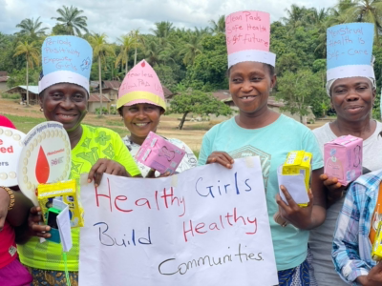
At Cestos High School, W, 20, is in the ninth grade, older than many of her classmates but still determined to finish. Each month, her period threatens that goal. When she cannot afford sanitary pads, she buys baby diapers and cuts them in half. If even that is out of reach, she turns to an even more unhygienic measure.
“Sometimes I used clothes,” W said.
The alternatives are uncomfortable and unreliable. Diapers are not made for menstruation, and cloth can leak or smell. For W, the fear is not only physical discomfort but the possibility of staining her uniform, being noticed by classmates, or missing school altogether.
She is not alone. M, another Cestos High student, said girls around her make the same calculations every month. Some ask relatives or boyfriends for money. Others sell small items — biscuits, scratch cards, or whatever they can — to buy pads. When that fails, they cut diapers or stay home.
Girls said they use cloth, tissue, socks, or cut diapers when money runs short. ActionAid Liberia has warned that unsafe materials can expose girls to infections, reproductive health complications, and emotional stress.
The shame can be just as damaging. Girls said a bloodstain on a uniform can bring jokes and insults from boys. Grace Togar, a teacher at Cestos High School, told UNFPA in earlier reporting that girls often left school when their periods started because they had no pads.
“Back then, you did not want your period to start on campus because you did not have pads,” Togar said. “Most girls were absent during their period.”
Small fixes, bigger gaps
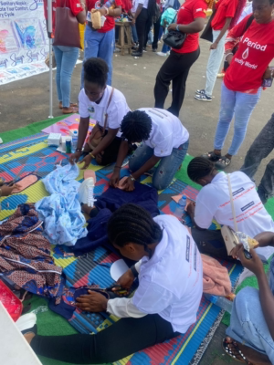
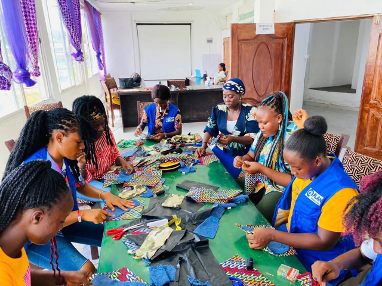
Disposable pads are made of plastic and can harm the environment when they are burned or discarded. They are not made locally and must be imported. Advocates said reusable pads are one small answer to a much larger gap.

Marcia Johnson, a youth leader with Girls Get Equal, has trained girls in Todee, a semi-rural district in Montserrado County, to sew reusable cloth pads. With support from Plan International Liberia, she said that about $US5 in materials can produce up to 10 washable pads that last two to three months. Her team has also trained women in Monrovia Central Prison, where she said the need is urgent.
“Women in the prison compounds, they will not fund your pad every month,” Johnson said. “You will see women bleeding, using cloth, and things that are not safe.”
The project gives women and girls another option, but advocates said reusable pads cannot replace government action on taxes, school distribution, water, toilets, and menstrual health education.
The Ministry of Education has acknowledged that hygiene affects learning. In January 2026, the government announced a school health and hygiene initiative for 10,000 vulnerable students, including menstrual hygiene support for girls. UNFPA, UNICEF, and the government have also supported school pad banks under the Nurture, Empower, and Protect Program.
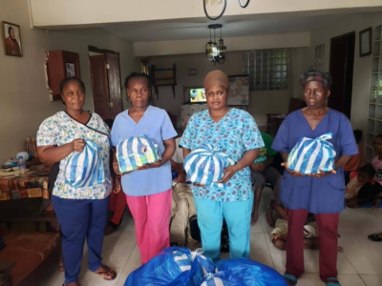
Advocates welcome those efforts but said they are too small for the scale of the problem. They want lawmakers to pass Goshua’s bill, include pads in public health and school-supply distribution, and invest in WASH facilities — water, sanitation, and hygiene — so girls can manage their periods safely at school.
The Ghana example
Ghana shows what political will can do, advocates said. In 2023, Ghanaian civil society groups launched the #DontTaxMyPad campaign. More than 500 organizations pushed the government to treat menstrual products as necessities, not luxuries. Ghana removed taxes on sanitary pads and waived import duties on raw materials for local pad manufacturing.
In the 2025 national budget, Ghana allocated GH₵292.4 million — about US$24.8 million — to distribute free sanitary pads to schoolgirls. President John Dramani Mahama later launched the national distribution program targeting girls from primary school through senior high school.
“No girl in Ghana should miss school because of her menstrual period,” Mahama said at the launch.
Liberia’s budget is smaller, and its manufacturing base is different. But advocates said the lesson is the same: removing taxes and supporting school distribution can turn period poverty from a private shame into a public problem government can solve.
For now, girls in River Cess are still managing the cost themselves. W does not talk about tax policy. She talks about what happens when her period comes, and the money is not there. She buys diapers. She cuts them in two. She uses cloth when she must.
It is a private solution to a public failure. Every month the bill waits, girls bleed through another lesson.
This story was produced in collaboration with New Narratives as part of the Investigating Liberia project. Funding was provided by a private donor and the Swedish International Development Cooperation Agency. The donors had no say in the story’s content.