
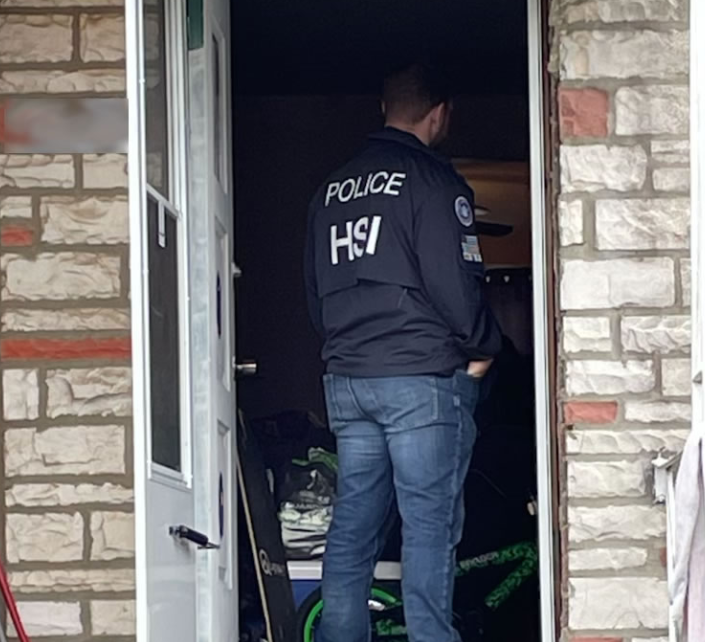
By Anthony Stephens, senior justice correspondent with New Narratives
Summary:
- The trial of Moses Wright, 73, a former senior Liberian army commander accused of lying to immigration agents about his involvement in Liberia’s civil conflict has been postponed to February. It was set to start in November. The court has yet to give a reason for the delay.
- U.S. prosecutors allege that Wright concealed his involvement in wartime atrocities when seeking immigration benefits and citizenship. He faces immigration-related charges, because the U.S. did not have laws in place to try citizens for war crimes committed in international jurisdictions when the alleged crimes took place.
- Wright faces a maximum possible sentence of 165 years in prison and a US$7 million fine.
The U.S. trial of Moses Wright, a former senior Liberian army commander accused of ordering and overseeing the 1990 St. Peter’s Lutheran Church massacre in which an estimated 600 men, women and children were killed, has been postponed again.
Wright’s trial, previously scheduled for November in the U.S. District Court for the Eastern District of Pennsylvania in Philadelphia, has been rescheduled for February, the latest in a series of delays.
“We see it as a setback to our quest for justice,” said Marcus P. Quoigoah, executive director of the Lutheran Massacre Survivors Association, in a phone interview. “We are frustrated. Looking at the lives of so many that have been shattered as a result of Wright and his men, delaying this, we feel that justice is still being halted.”
The postponement comes more than 36 years after the massacre, for which no one has been criminally convicted in Liberia. It also comes as legislation to establish a War and Economic Crimes Court has stalled at the Liberian Legislature, while survivors continue to pursue accountability through legal proceedings abroad.
Wright, 73, faces federal immigration fraud and perjury charges over allegations that he concealed his involvement in atrocities during Liberia’s first civil war to obtain immigration benefits and eventually U.S. citizenship.
According to a June 2022 indictment announced by the U.S. Department of Justice, Wright allegedly committed atrocities against civilians or ordered troops under his command to carry them out, including the persecution of members of the Gio and Mano ethnic groups, murder, assault, unlawful arrests and imprisonment.
Wright is believed to be a cousin of the late President Samuel Doe, and his alleged role during the First Liberian Civil War was General Commander of the Armed Forces of Liberia, which would make him one of the most prominent figures in the conflict. Liberia’s 2009 Truth and Reconciliation Commission report also named Wright, Moses Thomas, James Chelly and George Dweh in the June 1990 massacre of 27 Gio and Mano family members of Armed Forces of Liberia personnel living at the Barclay Training Center barracks in Monrovia. The killings were carried out “reportedly under orders of Samuel Doe,” according to the report. The commission also implicated Chelly, an army captain, in military operations against civilians in Nimba County, stating that he and Edwin Voker “commanded the onslaught.”
Dweh, a senior figure in the Movement for Democracy in Liberia, rebel group who became Speaker of Liberia’s transitional legislature in 2003, died in April 2020 without facing prosecution for his alleged involvement in the massacre or other wartime abuses.
The massacre occurred in July 1990, when soldiers of the Armed Forces of Liberia attacked civilians sheltering at St. Peter’s Lutheran Church in Monrovia during the country’s first civil war. Although it is not explicitly mentioned in Wright’s indictment, he commanded the army when the massacre took place. He oversaw Moses Thomas, a more junior commander, who was found civilly liable for the massacre in a 2021 case. The court ordered him to pay $84 million in damages to four survivors and relatives of victims. He fled the United States for Liberia avoiding enforcement of the fine.
“We still hold him responsible for the over 600 lives that were murdered,” said Quoigoah. “Wright had a hand; he had a big stake in it.”
Prosecutors say Wright obtained asylum in the United States in 2000, permanent residency in 2008 and applied for citizenship in 2013. He allegedly concealed his wartime conduct during the immigration process and repeated false statements under oath during an August 2016 naturalization interview.
Wright is not being prosecuted directly for violations of international law including war crimes or crimes against humanity because of limitations in U.S. federal law. The United States enacted so-called “universal jurisdiction” laws that allow government to prosecute people for crimes committed outside the country, after the alleged atrocities in Liberia in 1990. Those laws cannot be applied retroactively to conduct that occurred before they took effect.
Instead, prosecutors have brought immigration fraud and perjury charges, an approach previously used against other Liberian war criminals, including Mohammed Jabateh and Thomas Woewiyu, who were convicted in Philadelphia in 2017 and 2018, respectively. Jabateh is serving a 30-year sentence. Woewiyu died while awaiting sentencing. In 2026 former Liberians United for Reconciliation and Democracy commander Layee Sekou Camara, known as during the war as “K1,” pleaded guilty after being charged with immigration offenses. He is serving a nearly five-year sentence.
Other former Liberian rebel commanders have also been deported from the United States over immigration violations linked to their wartime activities. They include George Boley, former leader of the Liberia Peace Council, who was deported in March 2012 after a U.S. immigration court found that he had engaged in extrajudicial killings and recruited and used child soldiers. Mayama Sesay, known as “Black Diamond,” a former commander of the Liberians United for Reconciliation and Democracy rebel group, was deported in September 2025 after an immigration judge found that she had lied about recruiting and using child soldiers during her immigration applications.
Wright has denied the charges. If convicted on all counts, he faces a maximum sentence of 165 years in prison and $7 million in fines.
The proceedings against Wright have been accompanied by security concerns involving Liberian investigators. In September, the Global Justice and Research Project, a leading Liberian war crimes investigation organization, relocated a senior investigator following repeated death threats allegedly linked to Wright’s sympathizers.
Among the survivors still seeking accountability is Rufus Kartee, 65, who says a bullet struck his left hip during the massacre, damaging the bone and leaving him dependent on a crutch for more than three decades.
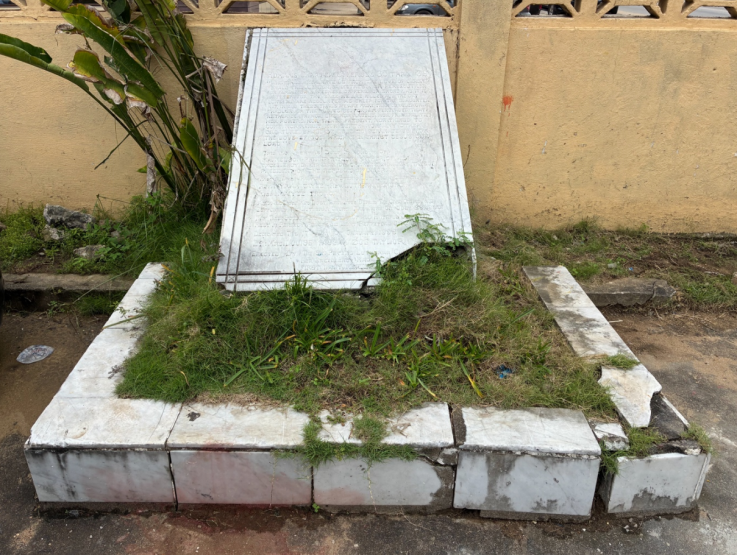
Kartee spoke to FrontPage Africa/New Narratives before undergoing surgery at the John F. Kennedy Memorial Medical Center in Monrovia this month. He said he hoped to see those responsible brought to justice before more survivors died.
“The main, main people them dying on a daily basis,” he said. “Even people from our side too are dying on a daily basis.”
Kartee said seeing alleged perpetrators face trial remains a priority.
“So, we that are alive today, if I will survive, I will still be happy to see the people going through court process.”
This story was a collaboration with New Narratives as part of the Investigating Liberia project. Funding was provided by the U.N. Office of the High Commissioner for Human Rights and the European Union. The funders had no say in the story’s content.