
By Aria Deemie, Climate Change Reporter with New Narratives
Summary:
- As the 30th global climate summit opens in Brazil, Liberia faces rising heat, erratic rainfall, and floods displacing thousands, exposing gaps in early-warning systems and adaptation measures, say experts.
- Liberia’s delegation is promoting its development agenda and climate goals, pledging 64 percent emissions cut by 2035 and middle-income status by 2030.
- Liberia’s Youth delegates calling for a Youth Climate Council and greater representation.
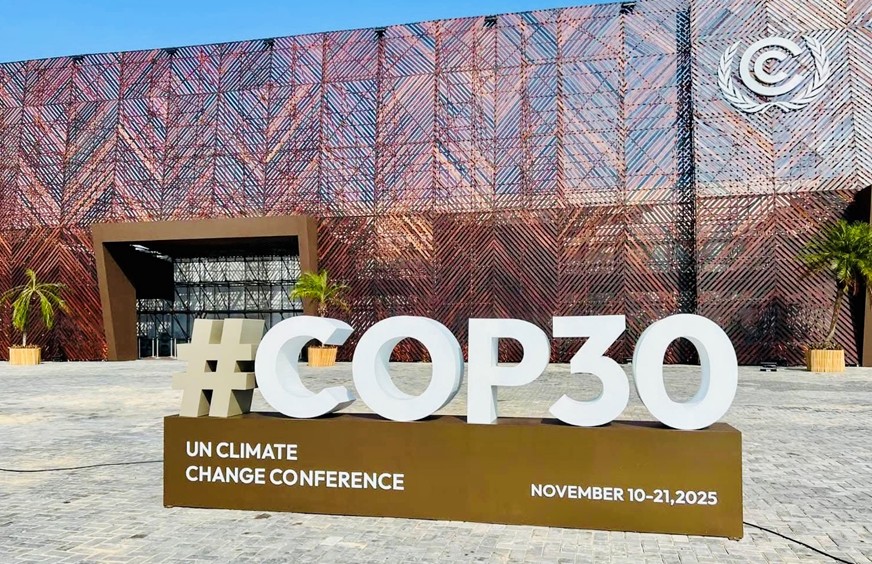
The 30th United Nations Climate Change Conference kicked off this week, in Belém, Brazil, marking what experts say could be one of the most decisive moments for global climate action. World leaders, activists, and negotiators are gathering to chart a path toward limiting global warming. But ten years after the groundbreaking Paris Agreement designed to keep temperatures from rising more than 1.5 degrees Celsius, expectations are tempered by the absence of the United States, the world’s second biggest polluter.
In his second term as US president, Donald Trump has withdrawn the country from the Paris Agreement and made major cuts to efforts to constrain the emission of gases causing global warming to put in place by former president Joe Biden. This comes as China has taken a lead in supplying in clean energy products to developing countries leaving the US and Europe behind.
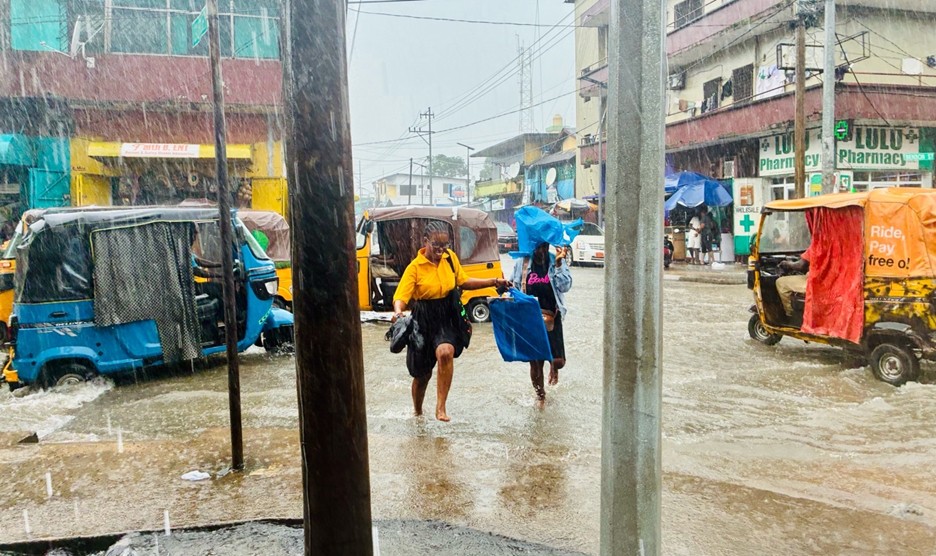
For Liberia, one of the world’s smallest emitters but one of the most climate-vulnerable nations, experts say the stakes could not be higher. Rising seas are swallowing coastal communities, unpredictable rains and high temperatures are cutting farm yields, and frequent floods continue to displace thousands across Monrovia and rural counties.
“Climate change has become a serious development issue globally,” said Dehpue Y. Zuo, deputy minister for economic management and a member of Liberia’s COP30 delegation, in a video released by the Environmental Protection Agency explaining Liberia’s COP30 plans. “We need to access all the resources it takes to foster development, from adaptation financing to mitigation programs that enhance productivity.”
In the video head of Liberia’s delegation Dr. Emmanuel Yarkpawolo, executive director of the Environmental Protection Agency, outlined the government’s blueprint for transforming Liberia into a middle-income country by 2030 while securing climate finance to support that work.
He said Liberia will use the conference to unveil its Third Nationally Determined Contribution, committing the country to cut greenhouse gas emissions by 64 percent by 2035. Ten percent of the target will be achieved using Liberia’s own resources, while the remaining 54 percent will depend on international support. The plan forms part of the government’s broader Vision 2030 agenda to build a greener, more resilient economy and reach middle-income status.
On Tuesday it launched the “Natural Capital Atlas of Liberia”, a book that showcases the country’s natural resources, rich biodiversity, and cultural heritage, aiming to attract investment and demonstrate that environmental protection and development can go hand in hand.
Liberia’s message to the world is that it is playing its part in preserving one of the planet’s most important forest regions — the Upper Guinea Forest — often called the “third lung” of the Earth after the Amazon and the Congo Basin.
Carbon trading remains key to Liberia’s plans despite opposition
Carbon trading—where forest communities can theoretically sell carbon absorbed by their forests on global trading markets—remains a central pillar of Liberia’s climate agenda. The government has developed a national carbon market policy, which was set for formal launch at COP30. The framework defines eligibility criteria, community benefit-sharing mechanisms, and aligns with Article 6 of the Paris Agreement on carbon trading, Yarkpawolo said. Liberia’s pavilion is also hosting sessions introducing the policy to bilateral and multilateral partners, as well as the private sector.
But climate experts have panned carbon trading schemes across Africa as being fraudulent plan to profit from forest communities while doing nothing to monitor and deter logging and deforestation. Speaking at COP30, Yarkpawolo reaffirmed Liberia’s commitment to forest protection, expressing support for the Tropical Forests Forever Facility – a performance-based funding mechanism rewarding countries for conserving forests—and highlighting that the new policy aims to ensure benefits are shared fairly with local and indigenous communities.
Liberia joins climate-vulnerable nations demanding dramatic boost in adaptation funds
The country also joined renewed calls from least developed countries on the frontlines of climate change for more funding from rich nations for adaptation. A recent United Nations report found developing countries will need between $310-365 billion per year between now and 2035 to prepare for the impacts of climate change. Yet in 2023, developed nations provided just under $26 billion in adaptation finance.
“This is urgent,” said Zuo. “Countries like Liberia need fair access to financing to adapt and grow sustainably.”

But New Narratives/FrontPage Africa reporting has shown that on numerous occasions that even when funding was made available failures to meet donor requirements by the Weah Environmental Protection Agency meant funding didn’t arrive. Internationally funded climate adaptation projects were stalled including the $27 million West Point Coastal Defense Project, and the $10 million Climate Information System, designed to provide early warnings for extreme weather. The CIS project was held up for nearly five years by “lack of competent staff, inflated salary claims, and refusal to follow donor rules,” according to the African Development Bank, leaving farmers across the country without weather forecasts.
Boakai administration EPA director Yarkwopolo has condemned the failures of the Weah administration and pledged to work to meet donor requirements. Multiple stalled projects have resumed. But experts said the delayed projects show the limitations of the current climate funding mechanisms and the consequences for communities facing worsening climate impacts.

Liberia’s youth delegation better organized ahead of this year’s COP
Youth representatives at this year’s conference said they have taken a more organized approach this year hoping to make themselves heard by delegates. For the first time they held a pre‑COP youth dialogue to coordinate a unified agenda at COP30, agreeing they will advocate for the creation of a Liberia Youth Climate Council, an umbrella body to engage government and international partners on Liberia’s NDC commitments to ensure young Liberians’ voices are represented in climate negotiations and policy implementation.
“We learned that young people often attend COP without a coordinated agenda, so we wanted to change that,” said Duku Jallah, FLY president, in an interview with New Narratives/FrontPage Africa.
The dialogue was supported by ActionAid, while the federation relied on personal and external contributions to make participation at COP30 possible said Jallah. The delegation initially intended to send seven youth representatives to Belém, but funding constraints meant only two were able to attend.

While delegates gathered in Brazil, Liberia continues to face urgent climate challenges at home. Data from Climate Central, the Red Cross Red Crescent Climate Centre, and the World Weather Attribution project, shows that Liberia has experienced 116 days over the past year hotter than 90 percent of historical days. The median temperature has risen nearly 1°C over the last 30 years, meaning even typical days are now warmer and signaling sustained climate warming in Liberia.
Last year’s floods alone displaced over 100,000 people. Without urgent investment in early warning systems and disaster preparedness, experts say climate-driven disasters will only worsen.

As COP30 begins, many developing nations are watching to see if wealthy countries will finally deliver on climate finance promises. With negotiations intensifying, Liberia’s delegation said it hopes COP30 will turn pledges into tangible progress, not just for the planet, but for communities already living with the cost of inaction.
This story is a collaboration with New Narratives. Funding was provided by the American Jewish World Service. The donor had no say in the content of this story.