

By Joyclyn Wea, senior correspondent, New Narratives
Summary:
- A mother of six died after years of abuse in a rural community with no police station, no safe home, and no emergency services, exposing what experts said are Liberia’s deep rural protection gaps.
- Advocates said harmful gender norms, victim blaming, and the belief that men “own” or can “discipline” women continue to fuel domestic violence.
- Without investment in trained police, shelters, emergency transport, and programs that re-socialize boys and men, experts warned Liberia will continue to lose people to domestic violence.
MISSION-THIRD, Montserrado County – Esther’s final words came in weak, gasping breaths. “I won’t make it,” the mother of six whispered, collapsing in the yard as neighbor Ma Fatu tried to hold her upright. Blood streamed from her nose. Moments earlier, according to her five-year-old daughter who witnessed the attack, Esther’s husband kicked her so violently that her head struck the wall.
Neighbors rushed to help, but it was too late. Esther, a 39-year-old mother of six, died in Fatu’s arms.
“When she opened her eyes she saw me, she said, ‘Sister Fatu, I won’t make it,’” Fatu recalled through tears. “I say ‘You will make it’. I started praying. She held my hand and the other woman held her other hand. But she was just shaking. White foam came from her mouth and nose.” Esther’s body went limp as she died.
Esther’s killing came the very week Liberia’s leaders were preparing speeches and banners for the global 16 Days of Activism Against Gender-Based Violence campaign, a UN-backed event designed to bring attention and solutions to situations like Esther’s. Yet in Mission-Third, this remote community in Todee District in Montserrado county, with no police station, no clinic, and no transport, Esther died like countless rural women: unprotected and unheard.
Advocates say the timing of her death laid bare the widening gap between Liberia’s promises to protect women and the dangerous reality they face, especially in rural communities where state services do not reach. (New Narratives is concealing the identity of Esther, her daughter and Fatu to protect them from retribution and stigma.)
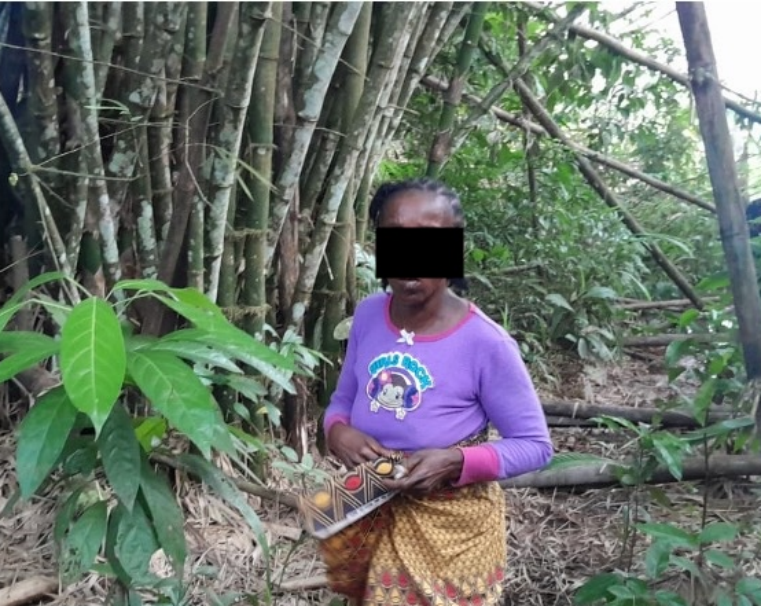
Experts said Esther’s case is heartbreakingly familiar. Liberia’s landscape of gender-based violence remains shaped by harmful norms, stigma, and a public tendency toward victim blaming.
“When women are molested or domestically abused, the conversation almost always leans toward blaming them,” said Amelia Siah Siaffa, acting executive director of Sister Aid Liberia, a women-led Liberian non-governmental organization that promotes rights for women and girls. “It shows how far we still must go in shifting people’s perception of how harmful these things are.”

Domestic violence persists across the world. A 2023 report by UN Women and UN Office on Drugs and Crime found 51,100 women and girls worldwide were killed in 2023 by an intimate partner or family member, the most extreme outcome of gender-based or domestic violence. That works out to about 140 deaths per day, or one woman or girl killed every 10 minutes. These killings account for about 60 percent of all female homicides globally. A majority of women murdered worldwide are killed by someone close to them, according to the report.
Liberia’s Domestic Violence Law, signed into law by President George Weah in 2019, promised to abolish all forms of violence meted against women, children and men. The law recognized domestic violence as “a serious crime against individuals and society which takes on many forms, including physical abuse, sexual abuse, neglect, and exploitation.”
The Act was supposed to strengthen the reporting pathway of domestic violence cases by making it mandatory for healthcare providers, school authorities, and social workers to report to law enforcement his or her belief that the injury or death of a victim with whom he or she had a professional interaction is related to domestic violence.
But with no rural shelters, overwhelmed gender officers, untrained police, and barely functional referral systems, enforcement has been almost impossible. Women like Esther have no protection even if they summon the courage to press charges.
“We lose cases because survivors have nowhere to go,” said Wida Smith, a women’s rights advocate. “Families compromise when the woman is sent home.”
Violence against women in Liberia has outpaced efforts to install protection systems. At the November 25 launch of Liberia’s 16 Days campaign at the Ellen Johnson Sirleaf Ministerial Complex, Laura Golakeh, deputy gender minister, announced a surge of 20 percent in cases from 2023 to 2024 when 3,381 sexual and gender based violence were reported, according to the Gender Ministry. In several counties, nearly half of women reported abuse from an intimate partner.
“These numbers are a reminder of the urgency not just to hear, but to act,” Golakeh said.
But government action so far has not penetrated the deep roots of the problem. Siaffa said long standing beliefs, especially the idea that women are property, continue to drive violence.
“Many men still think they have the right to ‘discipline’ their women,” said Siah Siaffa, acting executive director of Sister Aid Liberia . “Because women were socialized as property, a lot of men don’t see a problem with violating them sexually, physically, emotionally, or psychologically.”
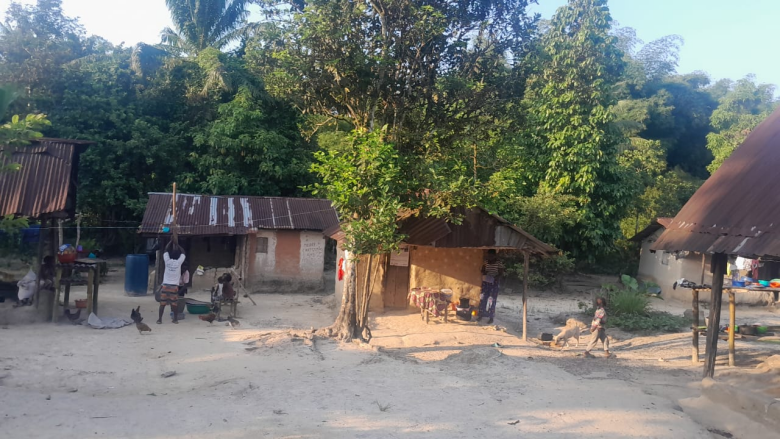
Endless Abuse but Nowhere to Go: Victims Trapped in a System That Protects Abusers
For years, Esther endured severe beatings. Clan Chief Satta Paul Hardien said she had intervened on numerous occasions.
“I sent him to jail before,” Hardien said. “Her face used to swell up. I told her to leave. She said she had nowhere to go.”
Siaffa said countless Liberian women face a similar trap: poverty, cultural pressure, and fear of worse violence if they leave.
“A lot of women prefer to stay because leaving may mean dying,” she said.
Even women with financial independence often stay, Siaffa said, because they fear retaliation or the stigma of being called a “failed woman.”

Fatu said that after a recent delivery by c-section, Esther’s husband began demanding money she didn’t have. When she refused, he accused her of having a boyfriend. Days later, he allegedly kicked her into the wall, killing her.
No Police. No Transport. No Protection. No Justice.
Mission-Third has no police station. The nearest post is a 90-minute walk through thick bush. When Esther died, residents called the police station for help. No one came.
It took 24 hours for police to arrive, and when they did, witnesses said police ordered an immediate burial, destroying crucial evidence. Family members begged for an autopsy, but officers insisted they sign papers releasing the body.
“They forced the people to sign,” Chief Hardien said. “No report. No explanation.”
The accused killer was later found in a nearby village. Police took him to Kakata. The Liberian national police confirmed he’s in their custody pending investigation and charges. The community is still waiting for a briefing on what is happening and what will happen next.
A National Protection System Collapsing
In interviews in Todee and Sinoe county, the reasons women said they stayed were consistent: poverty, isolation, cultural expectations, and fear. Esther told neighbors the same: she worried about school fees, food, and her newborn still breastfeeding. If she left, she had nowhere to take her children.
Advocates said poverty, isolation, cultural pressure to “save the marriage,” and fear of not being able to feed their children trap women in violent homes long past the point of safety. For many, leaving an abusive marriage means homelessness, hunger, or worse: retaliation. Liberia has reportedly seen multiple recent cases of women stabbed or beaten to death for attempting to leave abusive partners.
“Women know the danger,” said Siaffa. “They stay because the alternatives: – stigma, poverty, and danger to their children, feel even worse.”
County gender officers – frontline officials responsible for helping survivors of abuse, coordinating local services, and making sure national gender laws are actually carried out – said they are overwhelmed.
“We have a large number of cases,” said Angie Farley, gender officer for Sinoe County. “Women are dying. We are not supposed to reach this level.”
Siaffa, of Sister Aid, said Liberia needs more than slogans.
“We must re-socialize boys and men,” she said. “We must undo toxic gender norms that tell men they can own and discipline women. That is the root cause.”
Siaffa said justice reforms must be paired with investment in trained police, community awareness, and funding for civil society at a time when donor support is shrinking.
“We can’t have just anyone overseeing cases of sexual violence,” she said. “There have to be trained officers. There has to be investment in community education. Civil society must function.”
Esther leaves behind six children (three boys and three girls). The oldest is 15. The youngest is just two months old. The five-year-old who witnessed her killing struggles to sleep. The community is pleading for the two youngest children to be removed from the area for safety.
“They are all vulnerable now,” said Chief Hardien. “She was providing for so many.”
As leaders in Monrovia marked the 16 Days of Activism, women in Mission-Third buried Esther and asked the question: if the government cannot protect rural women, who will?
“How many women must die before the system changes?” Smith asked.
This story was produced in collaboration with New Narratives as part of the Investigating Liberia project, with funding from the Swedish Embassy. The donor had no say in the story content.