
Summary:
- As internet access expands across Liberia, increasingly sophisticated online scams are targeting families desperate for opportunity, using fake travel programs, scholarships, and investment apps to lure victims.
- Rising rural poverty, high youth unemployment, and limited digital awareness have created fertile ground for scammers who operate across Facebook, WhatsApp, Telegram, and email, often from outside the country.
- Police say reports of cyber fraud are growing, but with poor resources and inability to pursue cross-border perpetrators most cases go uninvestigated, leaving communities with few protections.
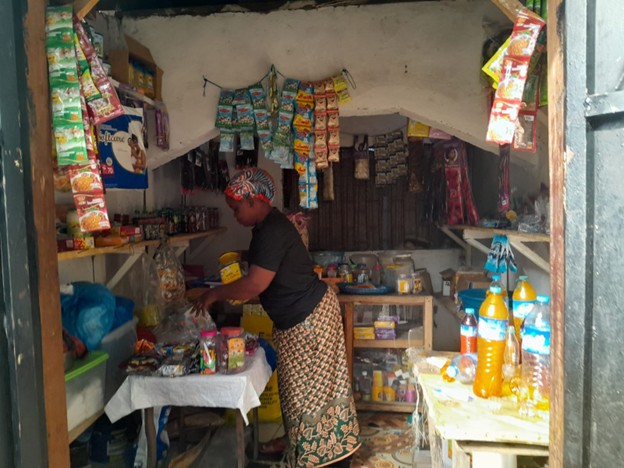
KARNGAR TOWN, Johnsonville — In interview after interview, the story begins the same way: a promise of opportunity arrives quietly, wrapped in hope for a way out of poverty, with no hint of danger. Here in this community on the outskirts of Monrovia, Nor G. Boo had just finished arranging goods in her small shop earlier this year when her niece called with news that felt like a blessing. There was a program, she said, that could take young Liberians abroad — “all expenses paid.”
Boo, who supports seven children, paid $US50 to register at an office in the Zayzay community that appeared legitimate. A young woman interviewed her and her daughter. Documents listing fees were taped neatly on the wall.
But red flags started immediately. The woman demanded US$300 more. Boo’s daughter, Ellenor Andrews, became suspicious. The woman kept lowering the required fee each time Boo said she could not raise the funds. Warnings on Facebook said that fake “opportunities” were spreading. Boo pulled out.
“I’m so happy my children were not able to go,” Boo said in an interview. “Even losing a little money can affect you. If somebody comes and tries to take even US$10 from you, it can affect you.”
Only later did Boo learn the scale of the deception. A sister had already paid $US3,000 for two children to travel on what the family believed was a program to Canada. Months later, Boo said, the family still had no video calls, no photos, and no clear information on where the children were. Someone using her niece’s Facebook Messenger account continues to text them, but never answers video calls. “We called on video chat — nothing, only text,” Boo said. She suspects the account has been taken over.
She believes her niece, who introduced the scheme, was also a victim, not a perpetrator: after Boo refused to pay more money, the niece stopped calling.
Experts say that as internet access grows, Liberians from market stalls to university campuses to executive office suites are being drawn into increasingly sophisticated online scams. Travel programs, investment apps, and scholarship offers come to them via Facebook, WhatsApp, Telegram, and email. Desperate families borrow or sell what little they have to pay fees.
Scamming has become a global industry. In Southeast Asia, a string of centers is luring migrants into traps where they are stripped of their passports and compelled to scam other vulnerable people to repay the costs of their travel.
Scammers are offering a range of fake travel schemes, scholarships, and investment platforms that are ensnaring people across the world. Experts say tens of billions of dollars are being lost. In the United States alone, authorities say US$12.5 billion went into online scams in 2023.

Silence and shame have helped the scams thrive. Boo also said the family has not reported the case to the police because they lack money and are afraid. Boo did not return to the office to confront anyone.
“Our only option now is prayer,” she said. The relatives have moved from one prayer group to another, hoping God will intervene and bring the children back. Boo now warns neighbors to speak openly about “opportunities” instead of keeping them secret. “Don’t be too secretive. The people are only taking money from people.”
For Liberians and other people from low-income countries, it often means more than lost money. Human traffickers can lure them into fake jobs and education opportunities that leave them stranded overseas. Front Page Africa/New Narratives has reported that victims have ended up in prostitution and crime to survive. Some have died.
The platforms often impersonate global brands — Amazon, Alibaba, and DHL — in ways that look credible to first-time smartphone users.
University student Melissa Powoe knows she could well have fallen victim. In January 2025, she received an email inviting her to a fully funded conference in the United States and Togo. The schedule looked official. The logos seemed real.
“I was excited,” she said. “Who doesn’t want to travel?”
As Powoe began corresponding with the purported organization, she asked a mentor for advice, a move that likely saved her from heartbreak. The mentor pointed out that the message had no group correspondence, deadlines kept shifting, and the sender demanded passport scans and bank details.
Powoe is among many Liberians who describe a mix of hope and doubt, wanting to believe an offer might finally be the chance they have waited for; a chance for opportunity that they have been unable to find in a country mired in economic stagnation with half the population living in poverty and few jobs and opportunities for the exploding youth population that now makes up two thirds of citizens.
It Was Like a Game
In Paynesville, Justina Thomas, a small business owner, joined what she believed was an investment platform shared through the Telegram app. The scheme used fake interfaces labeled “Amazon” and “Alibaba.” Participants “purchased” digital items to earn points that converted into profit.
“They said the more people you bring, the more your profit will increase,” she said.
Thomas said she paid about $US300 to join, encouraged by a friend. When she tried to withdraw about $US100, the platform stopped working, and she could no longer access it. A person using the name Angela, with a profile photo and accent that Thomas said suggested she was from the Philippines, sent reassuring messages at first, then disappeared. The friend had been scammed, too.

“I felt terrible… up to now, I’m like, how did I even manage?” Thomas said. “My conscience told me this wasn’t real. But when money is there… sometimes you become a victim.”
Most victims cannot afford to lose the money. For Thomas it was devastating. She and a friend put up about $US300 – money they had earned from their small fish-trading business, hoping the scheme would help them grow their working capital. When the platform collapsed the setback stalled the business. “Since that time, I haven’t even gotten back on my feet again,” she said.
Thomas said she knows at least six people personally who lost money in the same scheme, including educated professionals who she expected to know better. “People you highly look up to… they were encouraging you without verifying anything,” she said.
Thomas understands why so many joined. “Sometimes poverty makes you allow people to scam you,” she said. She now urges others to slow down and learn basic digital safety. “Don’t take chances with any app asking for money. Research first.”
Cybersecurity trainer Zayzay Mulbah of Star College says scammers are becoming more sophisticated and increasingly attuned to Liberian behavior.
“They clone websites, copy logos, and send messages from emails that look official,” he said. Attackers study their targets through social media photos, church affiliations, and relatives abroad to create convincing pitches. “People who think they are not vulnerable can be exploited as well.”
Not all schemes rely on technology alone. Sometimes the hook arrives the old-fashioned way: a relative or friend shares an “opportunity” and urges you to act fast. That is how Boo said it started for her, a call from her niece. Police and researchers say that even when masterminds are overseas, schemes often depend on local recruiters who meet victims in person, collect money, and then disappear once payments are made.
Cybersecurity experts said many scams work because they exploit aspiration.
“If you want to travel and someone says they can make that happen, you don’t want to lose that chance,” Mulbah said.
Taweh Johnson, who leads Campaigners Against Misinformation and Disinformation, has seen how a lack of information sharing heightens risk.
“They create pressure,” Johnson said. “They tell victims not to tell anyone.”
Johnson’s organization trains market women, students, and rural communities to verify links, question opportunities, and use free tools like Google Reverse Image Search.
“People receive links every day — scholarships, giveaways, job offers. Many do not know how to verify them,” he said. He warned that even highly educated people fall victim to basic digital literacy. “If you don’t have the skills to verify information, there’s a likelihood you will fall prey.”

Law Enforcement Struggles to Keep Up
The Liberia National Police acknowledge they are often outmatched. In a written response to a Freedom of Information request delivered in October, the force reported 20 cybercrime cases in the past two years; only five were forwarded to court. Investigators said the figures represent only a fraction of incidents because many victims never report the crimes. And when they do, police said, it is often difficult to identify perpetrators operating abroad or behind fake names.
“Because Liberia does not have a cybercrime law, the Office of the Crime Services Department has been finding it difficult to investigate and prosecute all cybercrime-related offenses,” the police response said. It was signed by the Special Investigation Unit of the Liberia National Police.
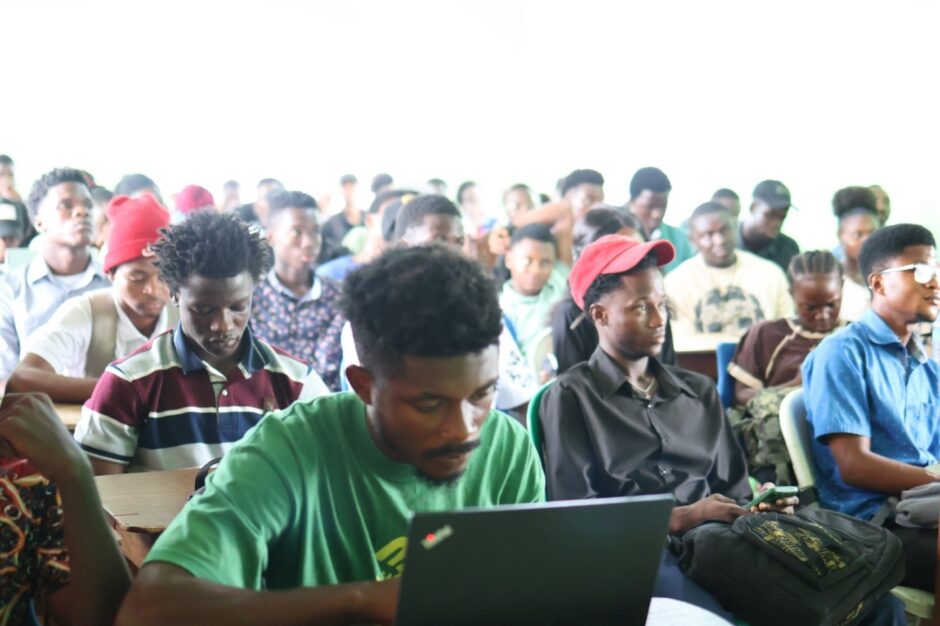
Days later, in early November, lawmakers passed the Cybercrime Act of 2025, giving Liberia its first comprehensive framework to tackle online offenses. The law defines crimes such as unauthorized access to computer systems, identity theft, and online fraud, and sets out rules for how digital evidence should be collected and used in court. It also creates a national cyber coordination structure under the Ministry of Posts and Telecommunications and formalizes LCERT, Liberia’s cyber incident-response team.
For everyday scams, the key shift is investigative power: the Act criminalizes online fraud and impersonation and gives investigators clearer, court-backed authority to preserve and compel evidence, including telecommunications subscriber data and traffic records, and to search and seize electronic devices when warranted. Police and experts caution that enforcement will still take time, particularly because many scams are run outside Liberia and depend on local intermediaries who disappear once payments are made.
For poor families the loss is personal and ongoing. Boo’s sister has waited months without proof that the two children are alive. Justina’s business stalled after her savings vanished into a Telegram scheme she once trusted. Melissa now questions opportunities that once seemed legitimate. Their experiences show how misinformation, secrecy, and hope intersect online, long before institutions can intervene.
Advocates say the new law is a necessary foundation, but not a cure. Liberia still needs public awareness campaigns, digital literacy training, and resources for investigators to meet the scale of the problem. Until then, victims will continue relying on community warnings, radio programs, and word-of-mouth to protect one another, informal networks filling the space where institutions are only beginning to take shape.
This story was a collaboration with New Narratives as part of the “Investigating Liberia” project. The Swedish Embassy provided funding, but the funder had no say in the story’s content.