
By Joyclyn Wea and Tetee Gebro, gender reporters with New Narratives
Summary:
- Senior women lawyers have used an event for female law graduates to tell the next generation to be brave, study hard, and stand up for themselves in the legal profession.
- Speakers at the Charlyne M. Brumskine Law Group luncheon said women must support one another, find good mentors, and practice law with honesty and courage.
- The gathering was part of Liberia’s International Women’s Day celebrations and brought together some of the country’s most accomplished women in law.
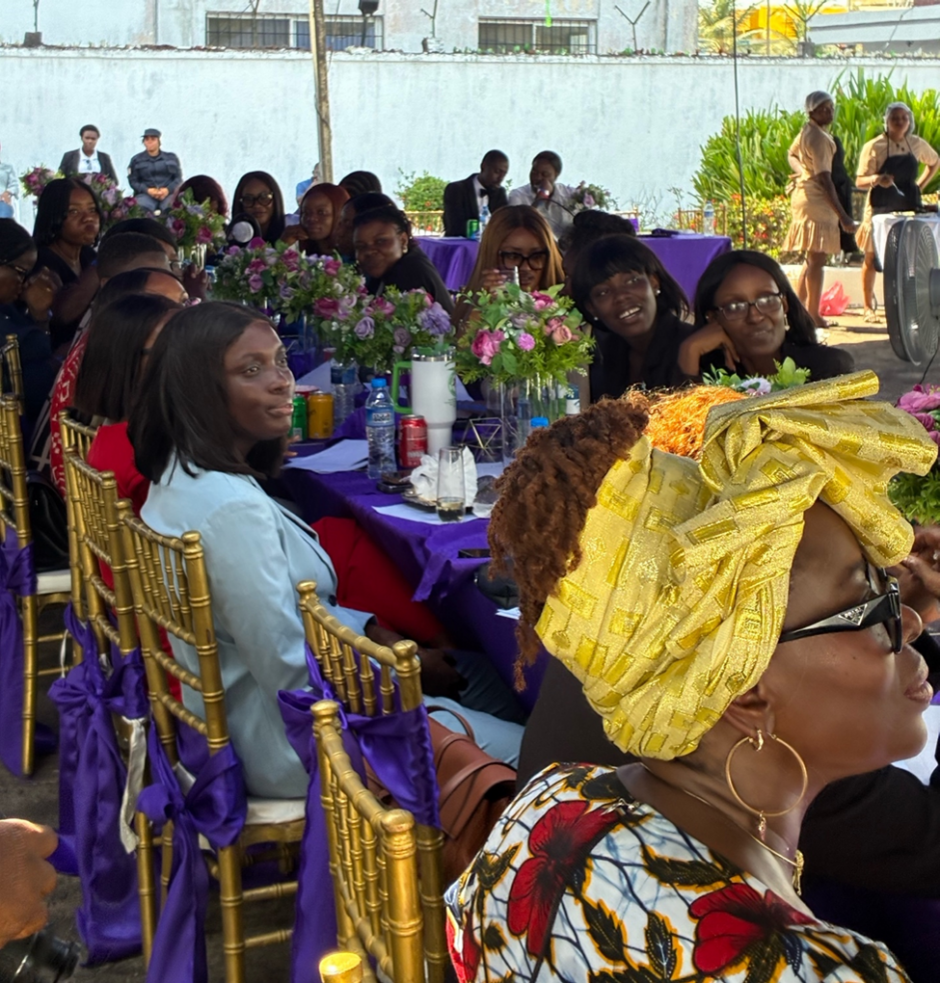
Some of Liberia’s most senior women lawyers gathered over the weekend under an outdoor canopy in front of the Charlyne M. Brumskine Law Group offices in Congo Town, Monrovia, to deliver a message to the country’s newest female law graduates: do not wait for permission to lead.
The luncheon, held as part of Liberia’s International Women’s Day celebrations, brought together retired justices, judges, senior counsellors-at-law, practicing attorneys, and newly graduating female lawyers from the Louis Arthur Grimes School of Law, Liberia’s professional law school, where graduates receive practical legal training before entering the legal profession.
Among those attending were Nyonblee Karnga-Lawrence, president pro tempore of the Liberian Senate, and Gloria Musu Scott, former chief justice of the Supreme Court of Liberia and former senator for Maryland County. Speakers used the gathering to urge young women entering the legal profession to prepare themselves for its demands and to stand firm in a field that remains challenging.
Former Chief Justice Sie-A-Nyene Gyapay Youh told the graduates to stop accepting limits placed on them and waiting for sympathy.
“The law is the law,” Youh told the graduates, urging them not to build careers around silence or self-pity and to move fast. “We’ve been patient since the 1900s,” she said. “We don’t have time.”
The luncheon was both a celebration and a challenge. Women remain significantly underrepresented in Liberia’s legal profession, a field long dominated by men. The Association of Female Lawyers of Liberia, founded in 1994, has grown into the country’s premier organization championing gender equality and access to justice, with members drawn from government, NGOs, civil society, and UN agencies. The challenges women face in the profession are rooted in broader gender inequality: Liberia’s Gender Inequality Index in 2022 was 0.656, ranking it 161 out of 191 countries, reflecting deep disparities in health, empowerment, and economic participation, according to the Liberian government’s Beijing+30 review submitted to UN Women. Women who enter the law do so in an environment where legal protections remain incomplete — the World Bank’s 2024 Women, Business and the Law report gives Liberia a legal frameworks score of just 60 out of 100, below the global average of 64.2, with particularly low marks on women’s safety laws, including the absence of comprehensive sexual harassment legislation.
Charlyne Brumskine, chief executive officer of Charlyne M. Brumskine Law Group, said she organized the program because when she entered the profession, there were not many women to guide her. The event, she said, was designed not only to honor the graduates, but also to connect entry-level lawyers with women who had already fought their way through Liberia’s legal system. She urged every graduate and law student in the room to find a senior lawyer who could mentor them through what she called “this arduous, difficult journey of practicing law in Liberia.”
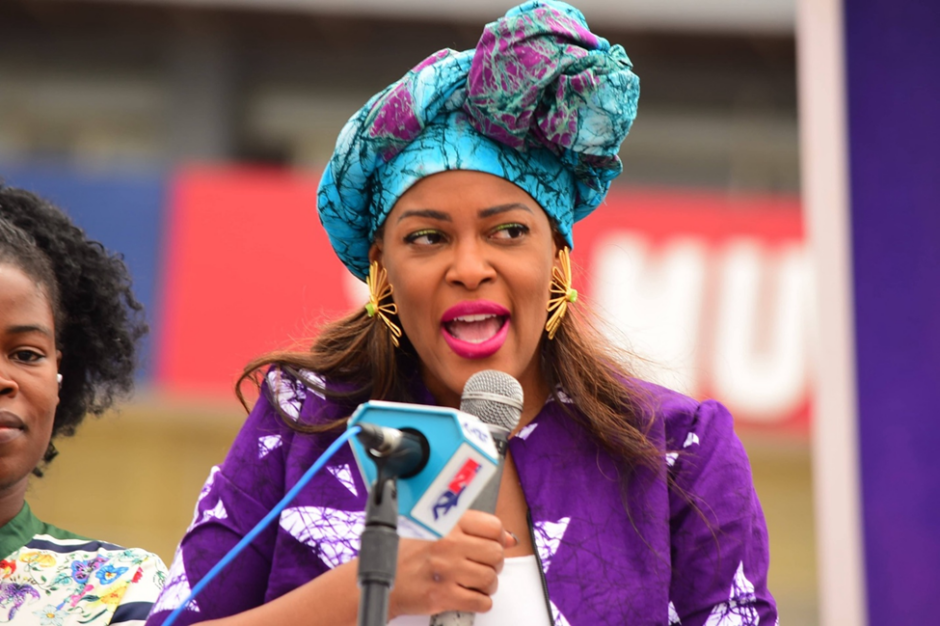
Again and again, speakers returned to the same themes: ethics, courage, mentorship, and solidarity. They told the graduates that entering the profession was only the beginning. The harder work is what comes next.
F. Juah Lawson, president of the Liberian National Bar Association, reminded the graduates that the legal profession carries enormous responsibility. The Association is the country’s main professional body representing lawyers. Lawson said every law degree reflects the sacrifices of families and the efforts of earlier generations of women who struggled to open doors in the profession.
Lawson urged the graduates to practice law with integrity and compassion and to use the law to defend the vulnerable. Then she offered practical advice for young lawyers beginning their careers. “Let’s learn first,” Lawson said. “Make the money later.”
Speakers also warned that success in the legal profession requires discipline and persistence. Moriah Yeakula, a family law counsellor, said law school teaches theory, but real learning continues in the courtroom. “A lawless country is a directionless country,” Yeakula said.
Yeakula encouraged the graduates to observe experienced lawyers, continue studying the law, and develop practical skills.
“Go to court. Keep learning,” she said. “Don’t be afraid of the courts.”
Bowoulo Taylor Kelley, vice president of the Association of Female Lawyers, delivered one of the day’s strongest messages about resilience.
She said women entering the profession should expect criticism and attack, especially when they begin to rise. “No one will take a stone and throw it at an empty tree,” she said, telling the graduates that criticism often follows women who are doing meaningful work. Her message was direct: do not be intimidated, support one another, and enter the profession ready to make a difference.
Youh warned the young lawyers to support each other. She said one of the biggest barriers facing women, she said, is other women.
“We are our own enemies,” she said. She urged the graduates to study hard, know the law deeply, and stop expecting doors to open out of pity. “Study to show yourself approved. Study the law.”
Youh told the graduates to reject the old idea that women are helpless or should quietly accept unfair treatment. If the law promises equality, she said, women lawyers must be prepared to use the law to demand it.
The event was one of several held in Liberia to mark International Women’s Day. Earlier on March 6, the Ministry of Gender, Children, and Social Protection led the national launch of the celebration under the theme: “give to gain,” bringing together government officials, civil society groups, and women from across the country. Other institutions also used the occasion to reflect on women’s rights, equality, and opportunity.
This story was a collaboration with New Narratives as part of the “Investigating Liberia” project. Funding was provided by a private donor and the Swedish International Development Cooperation Agency. The funders had no say in the content.