
By Joyclyn Wea, gender correspondent with New Narratives
Summary:
- Women from different political parties met in Monrovia to united on a new strategy to boost women’s numbers in the Legislature where they say real power is held.
- Representatives agreed that they needed to get past the situation where women do the work in election campaigns but do not get the power.
- Experts said the next test is whether the coalition can turn unity into real political results.
In a political system where women occupy less than 11 percent of seats in the country’s Legislature – one of the lowest rates in the world – women from Liberia’s major political parties gathered Tuesday in an effort to overcome differences and work together to achieve better representation for the country’s women.
Their union represented a recognition, they said, that working in siloes inside the political parties was not working. Men inside the major political parties still refuse to make room for women as candidates for winnable seats.
“The men will not do this,” said Amelia Siah Siaffa, acting executive director and program director of Sister Aid Liberia. “Women have to demand the space.”
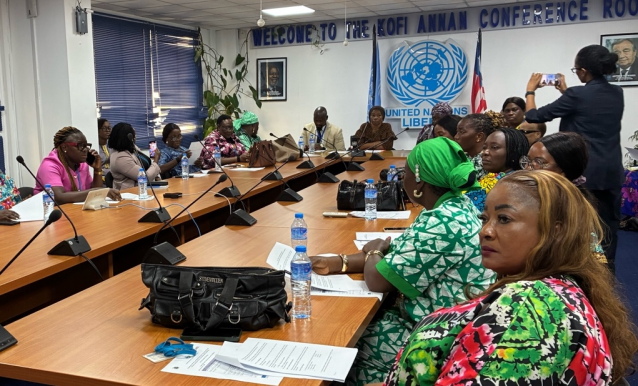
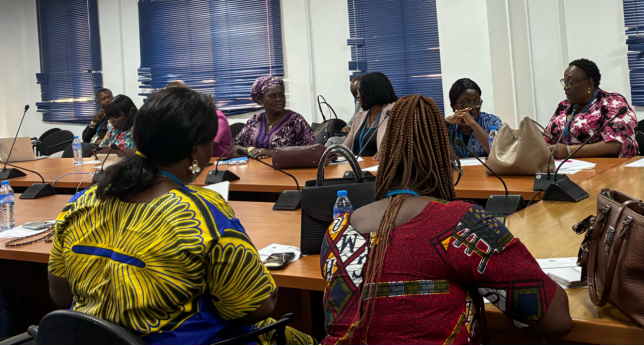
The meeting brought together about 25 members of the revived Coalition of Political Parties Women in Liberia. The grouping, formed in 2003, has been inactive in recent years. The meeting – driven by UN Women, Sister Aid and other stakeholders – was a chance to unite energy and efforts towards a common goal.
Meeting organizers said it carried broad significance in women’s push for equality in Liberia in the lead up to the 2029 presidential and legislative elections. At a time when women remain central to Liberia’s political life as voters, mobilizers, and organizers, yet still hold only a small share of elected office, organizers said the exercise would mark a determined effort to rebuild women’s collective voice across party lines and prepare for a stronger push for influence in the years ahead.

“The work towards the 2029 elections needs to start early,” said Comfort Lamptey, UN Women country representative to Liberia. “It begins with a stronger coalition, clearer systems, stronger county structures, leadership pathways, stronger advocacy, and a more deliberate pool of women leaders and aspirants.”
Liberian women were central to ending the civil war. They organized, protested, and pushed men toward peace. Nearly 20 years after Ellen Johnson Sirleaf broke one of the biggest political barriers in Africa to become the first elected woman leader, women’s presence in the Legislature remains marginal.
President Johnson Sirleaf lashed the Legislature last month for their poor record saying it was embarrassing for them and for the country. For advocates and women leaders, the failure is not just disappointing — it is evidence that the system has not changed. And that is hurting all Liberians.
Research consistently shows that the countries with the strongest economies and most equitable societies — from Scandinavia to Rwanda — are also those that have deliberately placed women in positions of political and economic power.
Held at the United Nations House in Monrovia, the meeting was supported by UN Women under the Liberia Electoral Support Project, an initiative led by the UN Development Program with international donors.
The meeting drew representatives from the African Women Leaders Network, the Ministry of Gender, the National Elections Commission, the National Civil Society Council of Liberia, and other civil society organizations.
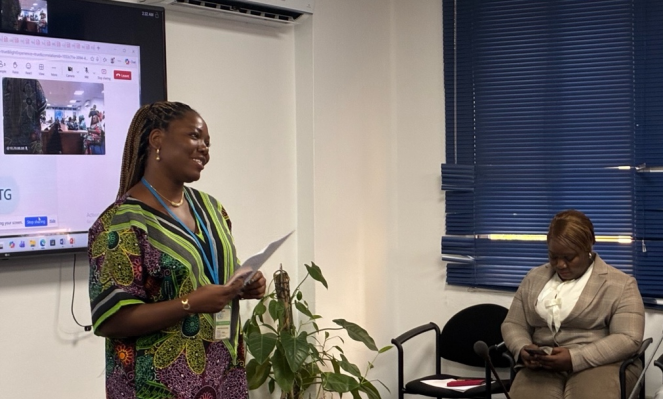
Amelia Siah Siaffa speaking to the gathering at the opening session of the event.
Established in 2003, and formalized in 2004, the Coalition of Political Parties Women in Liberia was created to empower women in politics and leadership by encouraging them to join political parties and take active roles in Liberia’s democratic process. Bringing together women from parties across the country, the coalition was a shared platform to push for equal rights, greater representation, and stronger participation in political life, while confronting the social, cultural, and traditional barriers that continue to hold women back. But that vision was difficult to sustain.
Even as women remained active across parties, Liberia continued to record low numbers of women in elected office and senior political leadership. Organizers said the Coalition itself went through a difficult period marked by internal misunderstanding and division, weakening a body meant to speak with a united voice.
“I don’t want to say it was dying,” Siaffa said. “But there was a lot of political misunderstanding within the institution, and it was more divided rather than championing the interests of women across political parties, as it was established to do.”
Tuesday’s meeting followed a consultative process, including a leadership retreat and discussions on the coalition’s structure, weaknesses, and future direction. Out of that process came a revised constitution and a new strategic plan intended to help reset the coalition and guide its work in the coming years.
Women made up 50 percent of registered voters in the 2023 elections according to the National Elections Commission, but only 159 of the 1,029 accepted candidates were women. Women now hold only 10.7 percent of seats in the national legislature.
“There remains a vast distance between women’s participation as voters and women’s representation in leadership and elected office,” Lamptey said.
Lamptey described the Coalition of Political Parties Women as an important cross-party platform for solidarity, collective advocacy, and leadership building. She said the coalition’s revised strategic plan focuses on institutional strengthening, political mobilization, support for women candidates, legal reform, and stronger partnerships, especially as attention begins to turn toward the 2029 elections.
Other speakers urged participants to seize the moment to drive real change for Liberia’s women.
A representative from the National Elections Commission’s gender section called for “50-50 inclusion” in politics and governance, while Lawrence Yealue, chair of the National Civil Society Council of Liberia, called for long-term investment in leadership development.
“Maybe it’s time for us to also catch them young,” Yealue said.
By the end of the session, the documents were reviewed, but the question remained whether the Coalition could now turn reform on paper into action in practice.
Participants said it will take a determined effort by all to rebuild trust, strengthen county structures, improve coordination across party lines, and help prepare more women for leadership and elected office.
This story was produced in collaboration with New Narratives as part of the Investigating Liberia project. Funding was provided by a private donor and the Swedish International Development Cooperation Agency. The donors had no say in the story’s content.