
Promises of jobs in Canada and Australia have lured hundreds of people into the hands of human traffickers in Liberia. But fair trials for those affected have been elusive. A months-long New Narratives investigation detailed bribe payments that more than 50 victims said had protected their traffickers from prosecution. Delays have meant that the accused traffickers could walk free.
In 2023 and 2024 Liberia did not try anyone for trafficking even as the crime exploded across the country, with thousands of victims imprisoned, defrauded, raped and possibly, murdered.
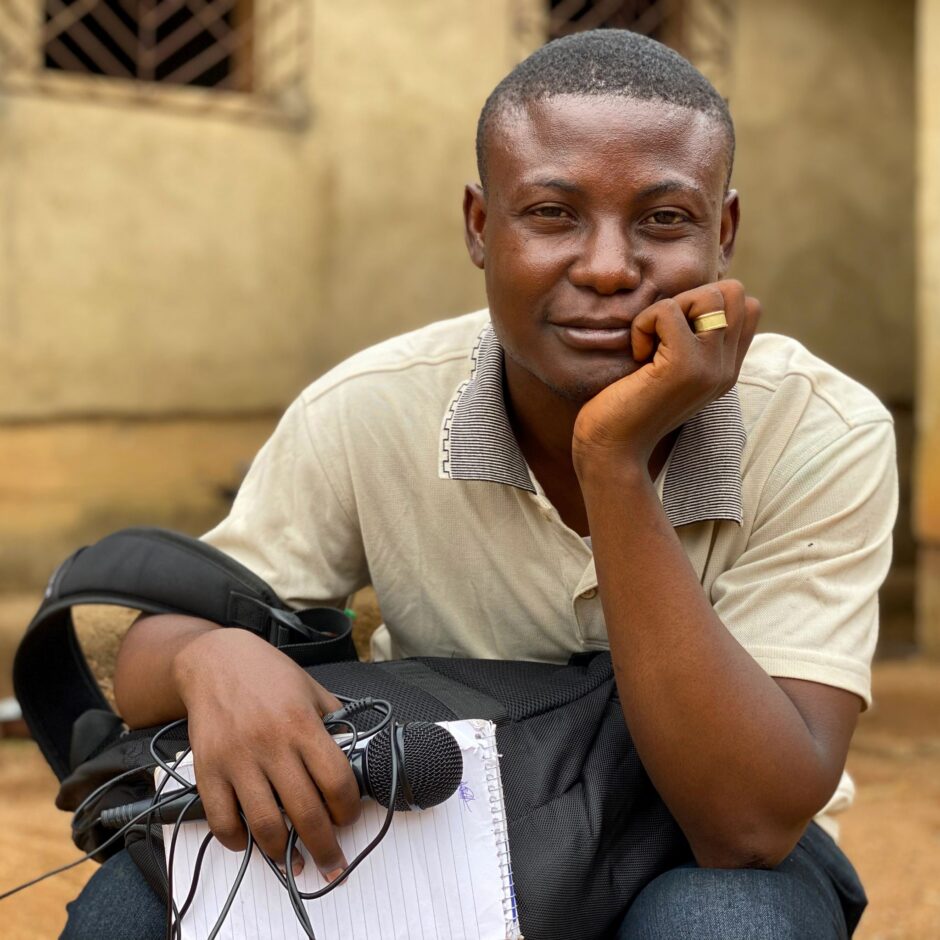
Anthony Stephens, an award-wining journalist and lawyer, has been reporting on these issues for New Narratives. Having covered human trafficking over the years, when he heard about widespread abuse of the issue, he set out to investigate how so many victims could be reporting the crimes to police and yet no one was being prosecuted.
Here is an interview with him about his investigation. It has been edited for brevity.
Q. What is the legal case at the center of the investigation?
A: The case involves more than 50 victims of human trafficking—men and women who say they were lured and deceived by individuals believed to be agents of QNET, an online e-commerce company, with promises of job and educational opportunities in Canada or Australia. The company denies its connection to the accused. The victims say they were locked up, starved, raped, and tortured in a compound close to the residence of Jeremiah Koung, Liberia’s Vice President, for nearly a year. One woman disappeared and the victims believe she was murdered. Victims say they were scammed out of more than $100,000. The case has not gone to trial, despite victims risking their safety to provide prosecutors with all the necessary evidence and testimonies. Current and former state prosecutors told us the evidence is overwhelming and more than sufficient to prosecute the case.
This comes as New Narratives has reported that two compounds in Lagos, Nigeria were raided by police and military in January. In each case we have been told there were more than 200 Liberians trapped there. There have also been compounds in Ghana and Sierra Leone. And Sierra Leoneans have been found in compounds here, so it’s clearly a widespread organized crime. We are investigating whether it is a group of independent actors or whether there is an organized syndicate at the head of these operations.
Q. Did QNET provide any insights on how they’re addressing this issue of their brand being used to trap victims?
A: In emails to us, QNET said it had launched its “QNET Against Scams” campaign in Ghana and Sierra Leone and had worked with media, local authorities, and communities to educate people on how to identify and report fraudulent actors misusing its name. But it has taken no legal actions against those involved, despite ongoing reports of scams.
It does appear that some of the perpetrators have signed up with Qnet as what the company calls independent representatives, but New Narratives has not been able to ascertain whether there is one large cartel or just independent operators.
Q. When you looked into the case, what stood out to you that required further reporting?
A: What stood out was the apparent reluctance of police investigators and state prosecutors to thoroughly investigate and prosecute the case. Their responses to questions about the status of the case—such as why it had not been prioritized—made it clear that there was a need to widen our investigation.
Q. How and when did you first hear about this story? What made you stay on it?
A: I first heard about the case in May 2025, but I did not fully understand its scale until October. I had gone to the Paynesville Magistrates’ Court to follow up on a case by a woman who accused her niece, her partner and others of deceiving her with promises of travel to Canada, where she would work and go to school.
When I arrived, a local prosecutor told me there was much more to the case than I had realized. He explained the magnitude of what was unfolding. He said he had one case with more than 50 victims, but he estimated that there had been hundreds more victims in his area alone.
On another day, I returned to the court hoping to speak with more victims. But they refused, saying other journalists had spoken to them but never reported their stories. I needed the prosecutor to assure them of my credibility and encourage them to speak with me. That was enough to open the door.
One woman shared a deeply distressing story: she and her family had sold all their property—including cocoa farms, land, and houses—raising US$16,500, which they gave to their captors. Like others, she said she had been told she would travel from Sanniquellie, Nimba County, to Canada to work as a housemaid.
A 28-year-old woman from Nimba County said she had been inside the compound for eleven months. She had left home still breastfeeding twins. The traffickers made her work through every contact in her phone — family, friends, neighbors — and tell them she was happy, that Canada was everything she had hoped, that they should come. She demonstrated to us how they had tortured her when she resisted: pinned to the ground beneath heavy cement blocks.
She found it very difficult to tell us how she had been forced to call her own brother. He scraped together the money and followed her to Monrovia and also ended up in a compound.
Back home, their mother is now bedridden and debt collectors are coming to the house every day to get the money they had lent her back.
As the victims grew to trust me they gave the details of the bribes they had been told about. I learned that Enoch Dunbar, head of the anti-human trafficking unit at the Liberia National Police, had allegedly left rape accusations against several suspects out of the charges.
Victims also said a prosecutor had told them that Bestman Juah, president of the Public Defenders Association of Liberia, had offered him a $7,000 bribe to reduce the charges. Seven of the witnesses also told police in their statements that the accused perpetrators had boasted that Juah was their lawyer, that he was being paid $500 weekly, and that the government and police were “in our pockets.” I contacted Juah and Dunbar and both denied the allegations.
Over time, we began connecting the many pieces of a complex and deeply troubling story—one in which the signs increasingly pointed to suspected corruption. And given just five cases have actually ended in conviction the last five years we had to suspect that this was systemic corruption stopping these cases being tried. In the last two years, for comparison, Uganda has secured more than 300 convictions.
This is all while the US government had been putting a lot of pressure on Liberia to act on human trafficking. There was a U.S.-funded trafficking adviser working with the government. Liberia has been on the tier 2 watchlist of the US State Department’s annual Trafficking in Persons Report. One more year could see it lose aid. This story will likely be reflected in this year’s report that comes out in about June. We expect that will lead to some tough questions between the government and US and EU ambassadors.
Q. What challenges did you face while gathering data and testimonies for your reporting?
A: There were significant challenges. Victims and legal officials were afraid. Court officials told us their bosses had told them not to talk to me. Court officials, clerical staff, and prosecution lawyers often delayed or obstructed access to information. It took persistent back-and-forth before I could obtain the case file, and few people were willing to assist.
Q. What is the biggest concern at this point and what does it mean for Liberia’s track record on pursuing human trafficking cases?
A: The biggest concern now is that there are likely thousands of victims already of these scams and if the government continues to do nothing there will be thousands more. There are almost certainly people being held in compounds right here in Monrovia now.
Four in every five Liberians in rural areas already lives in poverty. Almost all of them live on the food they can grow. Climate change is making that almost impossible and life is becoming desperate. They jump at these opportunities to travel overseas because they have no other hope.
It is incredible to me that these traffickers are preying on our most vulnerable citizens; their own country men and women. It’s really hard for me to understand.
Personally, I am somewhat concerned about my security and the security of the victims and court officials who spoke to me anonymously. There has been no action has been taken by the government, despite repeated efforts to obtain comment from the president’s office and the Justice Minister. While I have not received direct threats, one of the prosecutors in the case says he has been threatened.
At New Narratives we have security and legal advisers and we follow strict security protocols. We also have some protection because we have been funded by the Swedish and American governments – the two biggest donors here. Wrong doers in the past have told us that backing has deterred them from legal action against us. But that’s not the case for most of my journalism colleagues here or for the victims and the court officials who spoke to us.
Q. What advice do you have for journalists investigating human trafficking?
A: Stay on your beat. Go deeper. Don’t rely only on what you are told on the surface. Be patient, hungry for the truth, and remain professional and objective in your reporting to build and maintain trust with all sides.
Q. What did you learn about the tactics used by human traffickers to lure victims? What are some warning signs that people should look out for?
A: The traffickers exploit poverty, ignorance, lack of education, and vulnerability. This pattern is common. Many of the victims are among Liberia’s poorest citizens, desperate for opportunities to improve their lives and escape poverty. Crucially, recruitment often takes place in villages and towns where there is little or no information about these scams. And on social media where disinformation is thriving and impossible to counter.
I tell all Liberians that none of these promises of jobs and education are real. They should never hand over money to someone they don’t know. Sadly so many people are just so desperate that without a major public education campaign people are going to keep falling for these scams.
The government has to want to inform their citizens but so far they have not done that.
Q. Has there been any response since the report?
A: There has been no response from the government publicly. The perpetrators became eligible for bail on April 12 because the case had not been heard in two court sessions. Victims are worried the men – facing 20-year sentences – will disappear if they get free.
But we see signs that behind the scenes, the attention we have brought to this case will make it difficult for the court to release them. The prosecutor told me they are still in jail as we speak. He has begun drawing up an indictment for this court term beginning in May. Victims have been called to speak to him.
So we are very hopeful that the attention we have brought to the case will help secure justice for these victims and put pressure on corrupt actors in police and courts to do the right thing going forward. We will certainly be scrutinizing every case going forward.