
By Jerome Saye with New Narratives
Summary:
- Liberia’s eco-guards return to hunting and slash-and-burn farming after donor-funded conservation projects ended, raising alarm over renewed threats to the Nimba Forest Reserve’s biodiversity.
- Experts warn nearly two decades of forest protection could be undone, as former guards cite government inaction and poverty for resuming activities that threaten endangered species.
- The Forestry Development Agency admits lack of funding is hampering efforts, but offers no timeline for rehiring the guards or restoring conservation efforts in one of the world’s most vital forest regions.
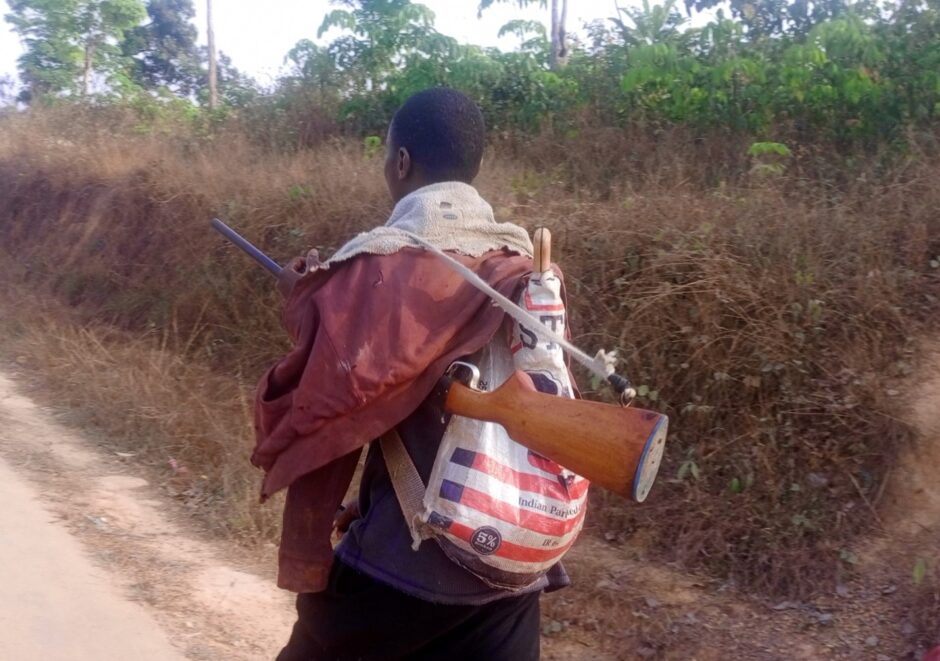
GBOBAYEE TOWN, Nimba County – It is evening here as Paul Flomo hangs his single barrel shot gun over his shoulder and heads into the forest to hunt. Not so long ago it was Paul’s job to stop hunting in this ecologically rich part of the Nimba Mountain Range forest.
It’s almost a decade since he swapped his weapon for a guard uniform to protect the animals that are vital to the biodiversity of this precious forest on the borders with Guinea and Cote D’Ivoire as part of the conversation project Rural Integrated Center for Community Empowerment project known as RICCE. His daily US$5 income allowed him to feed his family without hunting. But in 2023 the project ended. Flomo says he had no choice but to return to hunting.
“They [NGOS] used to give us small, small thing that we used to help our family,” says Flomo. “But now, we are not seeing them. And we not seeing employment from government. Since we been sitting down, we are going back in the bush to hunt especially in [the reserve] because there is where plenty animals are. Since there is no means for us we are hunting there to help our family.”
Flomo is one of 100 former guards here in similar positions. They have contributed to a dramatic uptick in hunting and deforestation that has experts alarmed that nearly two decades of work to protect the forests will be undone.
“In the absence of donor funding, my people we beg you, go back and help to protect the forest instead of destroying it,” says Madam Renee Gibson, program officer for the RICCE project. “Go back and help to protect the [reserve] instead of killing the animals that is of more benefit to the entire world than just eating it.”
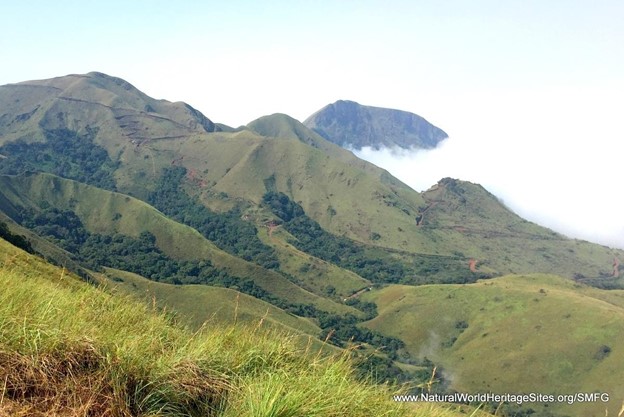
absorbing carbon dioxide, a greenhouse gas, from the atmosphere.
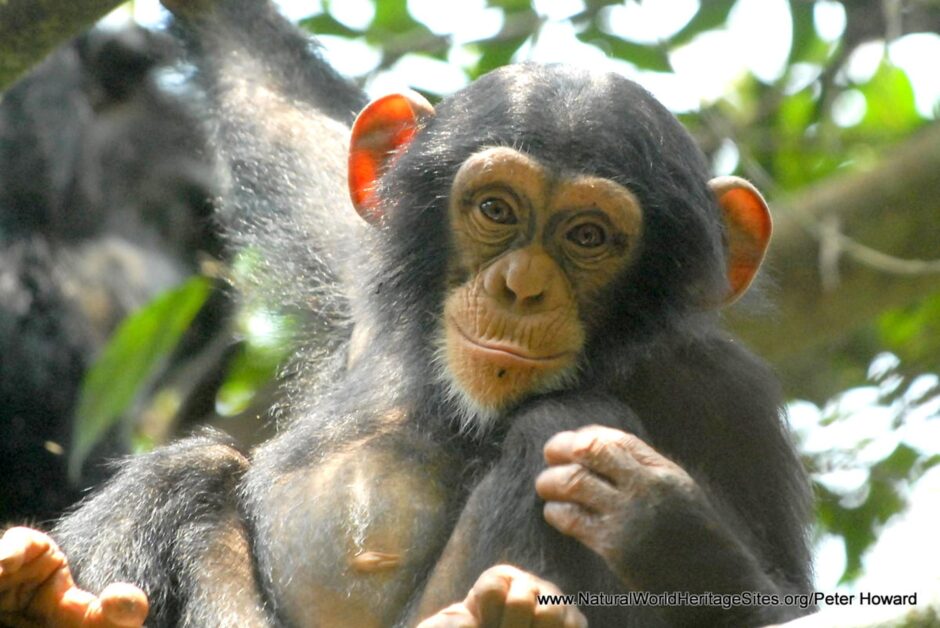
The Reserve is one of Liberia’s most biologically diverse protected areas, home to rare and endangered species including the West African chimpanzee and the Nimba otter shrew. It has been a focal point of international conservation efforts since it was designated as a reserve by the Legislature in 2003. It lies adjacent to mining concessions held by ArcelorMittal, a global mining company, which has operated in the country since 2006.
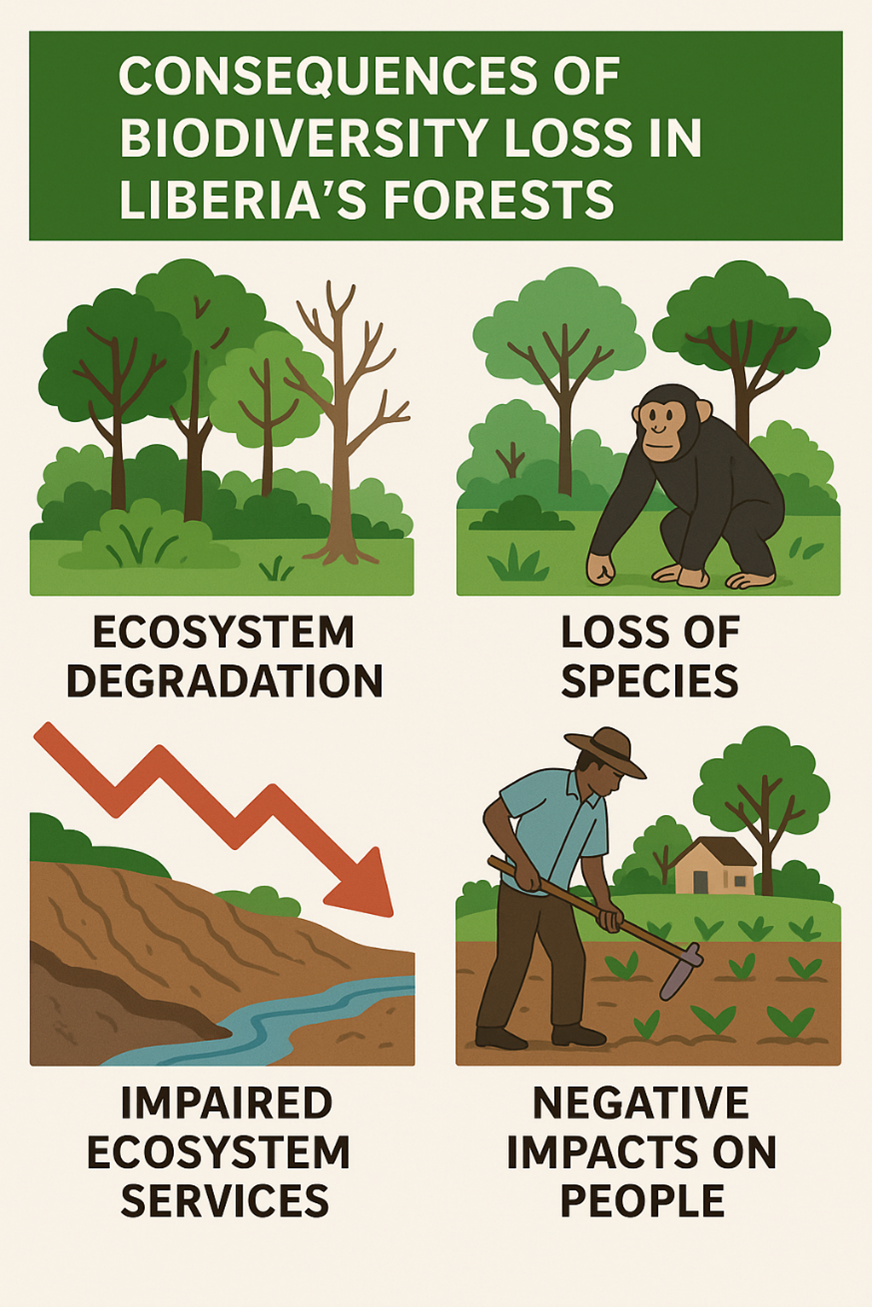
So-called “bush meats” hunted here include deer and monkey. Most are consumed by the hunters and their families. Some make it to nearby markets. The two biggest are Sanniquellie and Yekepa Markets. Experts say depletion of the animals here can upset the fragile ecosystem that keeps the forest alive. Without them it could collapse into grassland.

In an interview, Victor Kpaiseh, deputy managing director for administration and finance at the Forestry Development Authority denied having heard anything about a resumption of hunting in the Reserve.
“If they have returned to the forest, we will know, but there has been no report from the chief warden of the area and those on ground,” Kpaiseh said. But he promised government would act. “Government will not sit down to see people go back to the forest.”
Biodiversity refers to the variety of life in the forest. It includes every living thing from tiny bacteria to towering trees and roaming animals. Removing one element can quickly lead to ecosystem collapse, causing the forest to turn into grassland.
The conservation program funded by the United States Agency for International Development (USAID), ArcelorMittal, Fauna & Flora International, Conservation International, and Liberia’s Forestry Development Authority, saw investments in ranger training, biodiversity monitoring and community engagement.
According to Peter Mulbah, former country director for Conservation International Liberia, USAID funding ended in 2023. The project finally ended when ArcelorMittal terminated its support because of high costs according to Mulbah.
“AML said our cost was so high, so, they wanted to deal with national NGOs than international NGOs,” said Mulbah. “They wanted to be giving their resources directly to national groups that will help to empower them.”
It is not clear whether ArcelorMittal diverted funding to local groups. The company’s communication officer did not respond to a letter, phone calls and emails seeking comment, by publication.
At the end of these efforts, the Forestry Agency was supposed to have employed the eco-guards, according to RICCE Program Officer Renee Gibson. But lack of funding from the then Weah government stalled the employment process.
She is disappointed that the former guards have chosen to return to hunting given the knowledge they gained from the project.
“It is quite unfortunate for the former hunters after several trainings and investment of the American people money – that trained hunters for more than five years – to resort to hunting,” says Gibson. “We expect that when people received education, behavior must change. It’s quite unfortunate to hear that.”
But former guards here say that option ignores their financial reality. Without the income from the project, they say, they have no way of feeding their families. Experts say it also underscores the profound difficulty of embedding a conservation project in a rural Liberian setting where corruption and poor governance can undermine sustainability.
“We used to be hunting in the forest, and they came to our parents and asked for those who can hunt and took our names and trained us as eco-guards,” says Washington Gogbah, 35, another eco-guard who concedes he has also returned to hunting within the protected area. “We were forgetting about hunting. They are giving us nothing, so we are going back there again to go and get what we need to support our family.”
Former Eco-Guards Resumes ‘Slash and Burn’ Farming Adding to Biodiversity Risks
The eco-guards have not just resumed hunting. They have also resumed the slash and burn farming practices that threaten the forest by removing trees. Farmers clear a new area of forest each year to plant crops believing their old land to be depleted. This practice has accelerated across the country because climate change and its unpredictable weather patterns are making farming unviable in the country. This is adding to the strain on the forest ecosystem.
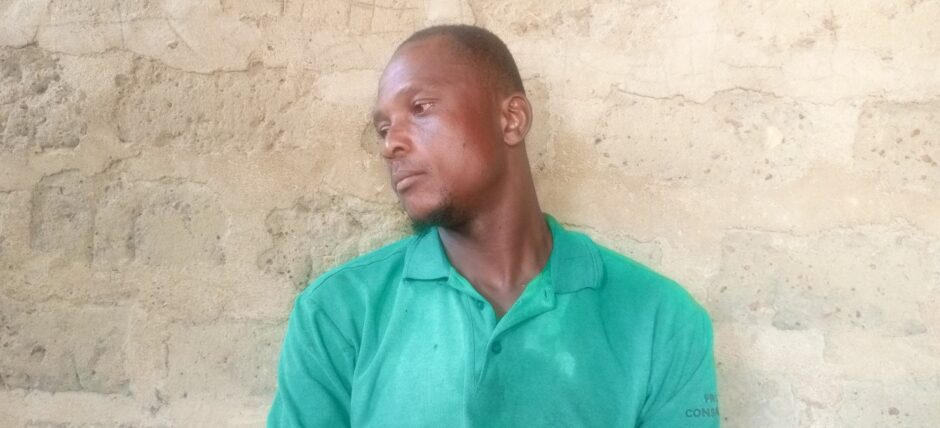
Former eco-guard Abraham Gonlepa sits in silence on a splintered bamboo bench inside an old building here in Zortapa Town. Outside, the trees of the forest stretch far and quiet. Like Flomo, he was never formally employed by the project and protected the area as a volunteer.
For more than nine years, Gonlepa served with the hope of being employed by the government eventually. Without pay, and often without food or proper equipment, he and other volunteers patrolled the Reserve, deterring hunters, sometimes at a great personal risk.
But in 2023, the 35-year-old returned to his family in Zortapa after it became clear the government would never put him on the payroll. Years of unpaid service have left him with no savings, no steady income, and fading prospects. Now, he worries more about how to feed his children than how to track the footprints of elephants and endangered animals. He is angry.
“Somebody will not work for nine years, then, no good benefit, government not looking after the people. Government not looking after you. Then how you will work and how we will sustain our families?” Gonlepa asks in anger. “So, I will tell the government to look in our interest, let we be employed. Then we will be able to manage this bush, protect the species and sustain our families.”
Francis G. Panneh is a member of the local community who has decided to raise the alarm.
“People are going in that bush there to prey on the animals that have to be preserved,” says Panneah. “So for this reason, I raise that concern and I decided to talk with my brothers for the international community and community of West Africa to know that there is something that going on in the forest is that is not good for us. When we talk about reserve, it is something that should be kept for future use. But people are going in forest there and hunting them.”
Forestry Development Agency Concedes Lack of Funding Is Causing Renewed Threat to Forests
While he denied that he heard of hunters resuming their trade, the Forestry Development Agency’s Victor Kpaiseh admitted that a lack of funding was an issue.
“Employment is something that every citizen will need, but the funding is one thing,” said Kpaiseh in an interview with FrontPage Africa/New Narratives. “You are talking about one area and you are talking about hundred persons in that particular locale, is FDA able to absorb all of them? It is not possible. You know it is not possible. But there is need for citizens to be employed, we agree.”
For now, Kpaiseh said, the Forestry Development Agency remains in dialogue with the eco-guards and international partners for support. But he could offer no timeline for when the eco-guards might be re-employed.
This story was a collaboration with New Narratives as part of the Investigating Liberia project. Funding was provided by Swedish Embassy in Liberia. The funder had no say in the story’s content.