
By Aria Deemie, climate change reporter with New Narratives
Summary:
· Monrovia experienced its hottest dry season on record in 2024. Climate models predict the city could face up to 118 additional hot days annually by mid-century.
· Experts warn prolonged exposure to extreme heat increases the risk of heat exhaustion, dehydration, and pregnancy complications, with women hit hardest. Liberia is ill-prepared.
· Monrovia, Paynesville, Accra, and Kassa receive grants to identify heat risks and protect residents. Paynesville has launched a 25-year Climate Action Plan to guide urban planning and strengthen resilience against rising temperatures.
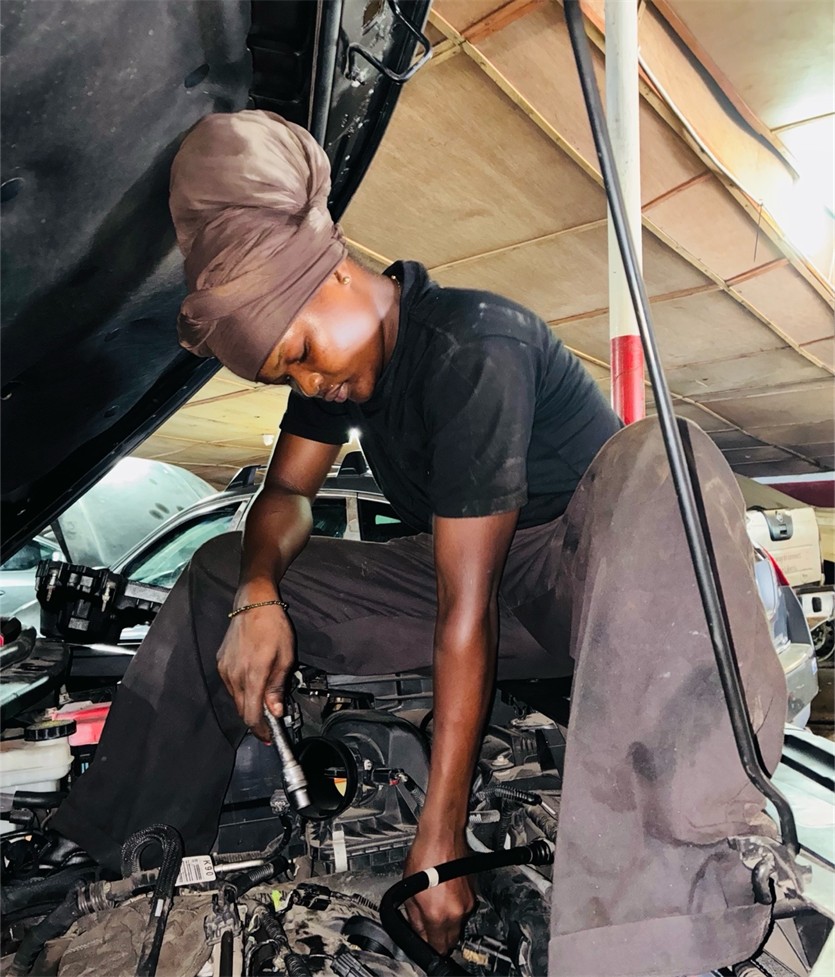
DOWNTOWN, Monrovia – The air inside Uptown Garage on Broad Street feels trapped and heavy, thick with grease and iron. Squatting under the hood of a sedan, 22-year-old mechanic Jartu B. Woobay grips a long metal clutch with both hands, tightening bolts as sweat glistens on her forehead and mixes with engine oil.
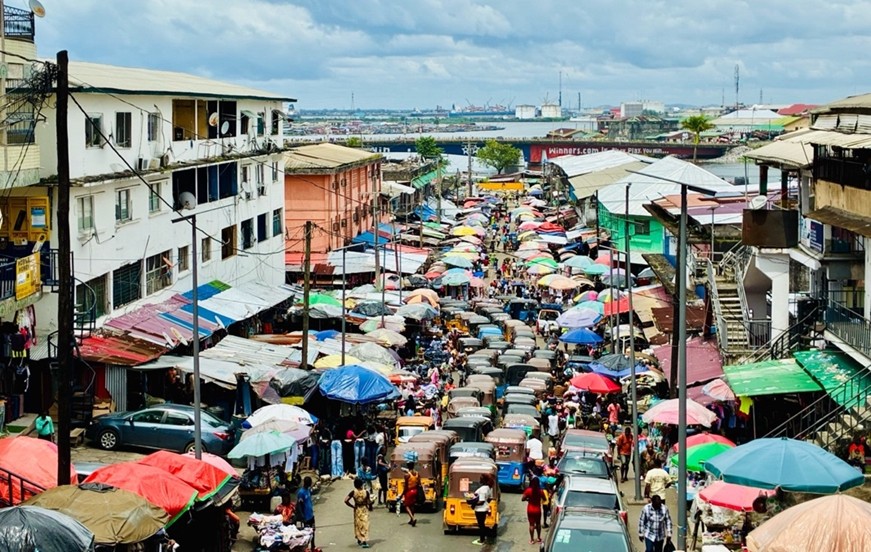
Heat is a constant part of Jartu’s daily job. As the dry season looms, memories of last year’s record-breaking heat hang over the city’s crowded garages, markets, and streets.
“The shop is very hot most often, even with the fans on,” she says, sliding out from beneath the car. “I’ve felt dizzy and tired, but this work needs strength and energy. You just keep going.”
That heat isn’t just uncomfortable, it’s deadly. The Lancet Countdown on Health and Climate Change, a global research collaboration working with the World Health Organization, tracks how rising temperatures, pollution, and extreme weather are affecting human health. In its latest report, the group warns that the world’s failure to act on climate change is now costing millions of lives every year. It found that heat-related deaths have increased by 23 percent since the 1990s, claiming more than half a million lives annually, while extreme heat caused workers around the world to lose over 640 billion labor hours in 2024 alone.
“The climate crisis is a health crisis,” said Dr. Jeremy Farrar, WHO’s Assistant Director-General for Health Promotion, in a WHO news release. “Every fraction of a degree of warming costs lives and livelihoods.”
In Liberia, that warning feels immediate. Climate models show that Montserrado County, which includes Monrovia, could face 118 more extremely hot dayseach year by mid-century compared with 1995–2014. That means longer, harsher dry seasons that threaten the health and livelihoods of people like Jartu, and a city still struggling to prepare.
The World Bank warns that African cities are experiencing some of the fastest temperature increases globally, yet most remain underprepared to protect residents from heat-related risks. In its Climate Risk Profile: Liberia, the Bank identifies Monrovia and Paynesville as among the country’s most heat-exposed areas, with limited municipal capacity to adapt.
The Intergovernmental Panel on Climate Change also reports that Africa is warming faster than the global average, with significant increases in the frequency and intensity of heatwaves projected for the coming decades.
But Liberia is ill-prepared. A $10 million Weather Warning System approved in 2020 remains non-operational, leaving farmers and vulnerable communities without crucial forecasts. With unreliable and unaffordable electricity supply across the country air conditioning is a dream for most Liberians.
At her garage, Jartu relies on endurance, self-supplied water, and limited breaks. “The heat makes the work slower, not harder,” she said. “You just manage.”
Health Risks from Extreme Heat
“When the body can no longer regulate temperature, the effects can be devastating,” says Dr. Richard J. Doe, a Liberian medical doctor and public health specialist. He warns that prolonged exposure increases risks of heat exhaustion, dehydration, and heat stroke, especially among outdoor workers. Children, the elderly, and pregnant women are particularly vulnerable.
“Fans only circulate hot air; they don’t cool a space,” Dr. Doe says. He also worries that Liberians do not have knowledge of ways to keep themselves safe. “Simple measures—rest, hydration, proper ventilation—can save lives.”
And it can be significantly worse for women. At a regional Extreme Heat Reporting Workshop held in Accra, Ghana, in February, organized by the global nonprofit Climate Resilience for All, health and climate experts warned that women face unique biological risks under extreme temperatures.
“Women’s bodies respond differently to heat stress,” said Kathy Baughman McLeod, CEO of Climate Resilience for All. “Cardiovascular systems, skin structure, and hormonal fluctuations create vulnerabilities that science is only beginning to document. Prolonged exposure raises the likelihood of heat exhaustion, complications during pregnancy, and reduced productivity for women whose livelihoods depend on outdoor work.”
In practical terms, McLeod explained, high heat can strain the heart and increase dehydration risks during menstruation, pregnancy, and menopause. “Prolonged exposure raises the likelihood of heat exhaustion, complications during pregnancy, and even reduced productivity for women whose livelihoods depend on outdoor work,” she said.
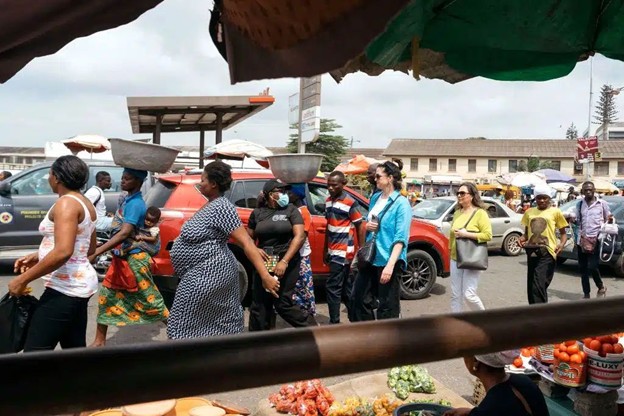
Jartu doesn’t think of herself as different from the men she works alongside. Most days, she pushes through the heat the same way they do, lifting, sorting and hauling until her shirt is soaked through. What she doesn’t know, experts said, is that her body reacts differently in extreme heat — that she needs to drink more water, cool down more often and take short rests to avoid overheating. In a male-dominated job like this, she worries that asking for extra breaks might make her seem weak or less committed. Simply not knowing, experts note, puts her at greater risk than her colleagues.
Urban Heat Resilience Grants in Africa
In an effort to address the growing risk, Monrovia and Paynesville, along with Accra, and Kassa, a town in Southern Province, Sierra Leone, became some of the first African cities to receive African Urban Heat Resilience Grants, announced at this year’s Africa Climate Summit in Addis Ababa. Each city receives $40,000 to map heat hotspots, assess vulnerable communities, and launch public awareness campaigns. Funded through Climate Resilience for All – the grants aim to help cities design practical, community-based strategies to protect residents from extreme heat.
The small funding—about $40,000 per city—is intended to support basic data collection and public awareness campaigns, marking one of the first regional efforts to treat extreme heat as a municipal planning issue rather than a weather problem. Officials said the grants could help cities with limited capacity begin to understand where heat hits hardest and which residents are most at risk, though meaningful change will depend on how effectively the cities implement the work.
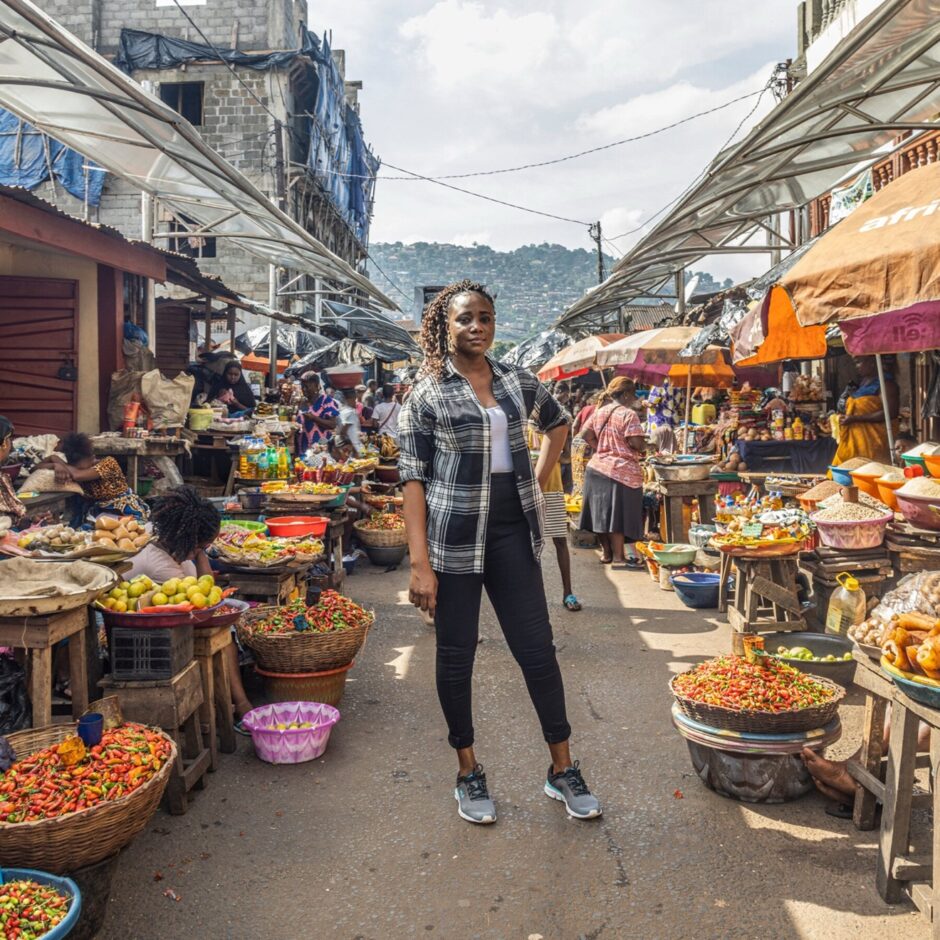
Experts said Freetown, the capital of Sierra Leone, offers a glimpse of what small-scale interventions can achieve.With support from Climate Resilience for All, the city installed shaded structures and solar-powered cooling systems in markets, where women traders had reported losing up to 60 percent of their income during peak heat. To coordinate long-term responses, Freetown also appointed a Chief Heat Officer, the first in Africa.
Inspired by that model, Paynesville has begun taking similar steps—appointing its own Heat Officer and launching a 25-year Climate Action Plan (2025–2050) to guide citywide climate-smart development. The plan aims to cut greenhouse gas emissions by half by 2030 and achieve carbon neutrality by 2050.
It focuses on five main pillars: resilient infrastructure, sustainable waste management, a circular economy, climate-smart business parks, and low-carbon transport. Proposed actions include upgrading drainage in flood-prone zones, building waste-to-energy plants, expanding solar power, and promoting electric public transport.

The plan also emphasizes community participation, including tree planting, youth-led environmental education, andwomen-driven green enterprises. A new Paynesville Climate Action Office will coordinate the rollout, supported by a Chief Climate Specialist and a multi-stakeholder advisory council.
The Paynesville City Corporation built an urban park at ELWA Junction, which provides shaded areas where residents can rest and seek relief during extreme heat.

Previous Failed Interventions Have Left Market Vendors Distrustful Of New Plans
But trevious efforts to provide protection elsewhere have been underwhelming and marketeers worry the new projects will be no better. In 2020 the Monrovia City Corporation under the administration of President George Weah, began constructing more than 2,000 modern iron market stalls at Waterside Market to protect vendors. Nearly 1500 iron stalls were installed from Front Street to Water Street in 2020, though 216 have already been damaged by rain, according to Liberian Market Association Secretary P. Richard Jackson.
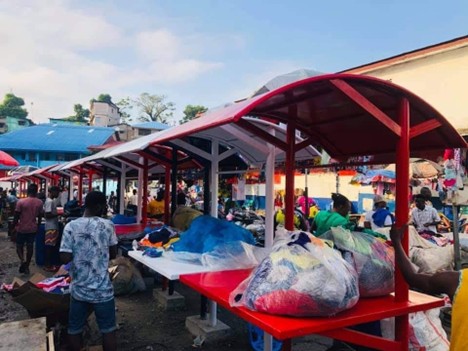
According to the government’s 2020/2021 Public Sector Investment Plan, $US1.3 million was allocated for the “Waterside Petty Trader Relocation” project, intended to fund improvements for thousands of vendors operating along the Waterside corridor.
Before construction, city officials presented three sample stalls. “The one chosen had doors so vendors could secure their goods overnight,” Jackson said. “To our surprise, the stalls that were built were different from the sample, leaving some vendors discouraged.” Women who had previously sold from smaller wooden tables lost selling space, he added, and some were forced onto sidewalks, often without shelter. Attempts by vendors to add zinc coverings, he said, have been met with harassment from city authorities. Markets were closed, they were detained by police and asked for money. Jackson said he often had to go to free their goods and mediate on their behalf.
A 2020 survey conducted by Jackson found that 6,413 vendors operated outside the constructed buildings. Today, he estimates the number at roughly 10,000. The iron stalls continue to deteriorate in the rain, underscoring what he described as an urgent need for refurbishment.
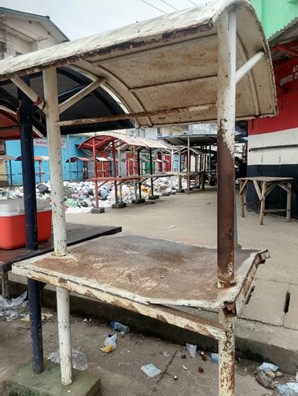
This reporter requested an interview with the Monrovia City Corporation about the city’s heat action plans and later followed up with a second letter seeking records for the 2020 Waterside Market stall project. But when the reporter returned, an MCC clerk said the staff member who received the first letter was no longer there and asked for the documents to be resubmitted. Over multiple visits, clerks repeatedly said the letters had been placed on Mayor John-Charuk Siafa’s desk and that he would call. No call came, and by publication time the MCC had still not released the contract, the bidders list, or the name of the official who supervised the project.
As the dry season gets underway climate models show that Monrovia is entering a pattern of hotter, longer dry seasons punctuated by sharp temperature spikes. At Uptown Garage, the fans keep buzzing. Jartu wipes her brow with the back of her hand and slides back under the car. “You just manage,” she repeats—words that echo across a city where the heat is only getting harder to bear. For many Liberians, “managing” the heat isn’t resilience, it’s survival.
This story was a collaboration with New Narratives. Funding was provided by the American Jewish World Service. The donor had no say in the story’s content.