
By Anthony Stephens, senior justice correspondent with New Narratives
Summary:
- Five women accused of trafficking their own children and those of their relatives to Mali and Burkina Faso indicted
- Prosecutors say the alleged crimes occurred in April and that the women admitted to committing the act, which experts say is increasingly prevalent as poverty grows
- This is the first set of indictments state prosecutors have secured since the release of the 2024 US State Department on Trafficking in Persons Report in which Liberian remained on the Tier 2 Watch List for the second year running.
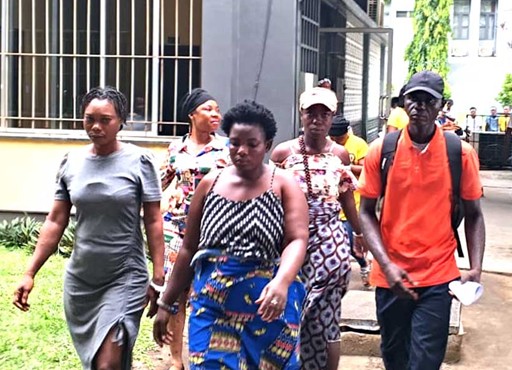
A grand jury in Monrovia has indicted five women for allegedly trafficking their own children and those of their relatives to Mali and Burkina Faso. The fourteen children—seven boys and seven girls, ranging in age from eleven months to eight years—have not been identified publicly to protect them from stigma.
The women whose names are being withheld pending an outcome in the case, allegedly committed the crimes in April, according to the indictment. The charges are the first of several new trafficking cases state prosecutors say they are investigating as part of a renewed crackdown.
According to the indictment three of the women trafficked their biological children. One allegedly admitted that seven of the children found in her care were not her own but her grandchildren and nieces. For her part, another “transported and harbored her sister’s children and grandson,” read the indictment. One defendant told investigators she had transported three children given to her by another. The indictment said all five women admitted to the charge of Trafficking In Persons.
The indictment revealed that the women had originally received “50,000 Liberian dollars ($US250) for resettlement” from an unnamed organization through the Ministry of Gender, Children and Social Protection when they were part of a XX program. They were arrested by Liberian authorities after attempting to re-traffic the children—this time to Burkina Faso—“for the purpose of exploiting them to receive an International Organization for Migration package.”
According to prosecutors, the women were apprehended by the Liberia Immigration Service at the Red Light Market, Liberia’s largest commercial hub, and later turned over to the Liberia National Police. The indictment said the accused engaged in deception by falsifying birth records and altering the children’s names to “convince, mislead, and misinform” immigration officers. The government said by their action, the women had put the children’s “lives at risk,” noting that Burkina Faso remains volatile due to political and security unrest. The government said it had moved the children to a “safe home.”
Human trafficking is widespread in Liberia. Experts say the act of parents trafficking their own children or relatives’ children is common but underreported. The latest indictments are the first Liberia has taken since the release of the 2024 US TIP report, which surprised many experts by again placing Liberia on the “Tier 2 Watch List” for the second year running.
After a dramatic drop in funding and prosecutions in 2023 and 2024, experts had expected the country to fall further in the rankings. The pressure will now be on the Joseph Boakai administration to act on the issue. Any country that spends more than two years on the watch list is at risk of a cut in funding from the United States. That threat may have less impact this year after 90 percent of U.S. funding was cut by the new Trump administration.
Adolphus Satiah, the former head of the Anti-Trafficking Secretariat at the Labor Ministry, praised the government’s action in a FrontPage Africa/New Narratives interview, but said it needed a better and workable strategy to properly tackle the scourge.
“The government of Liberia through the Ministry of Labor should create awareness so that people get to understand what human trafficking is,” said Satiah. “So, parents will not make quick fixed decisions to send their children away.”
The Boakai administration has fordged new partnerships and launched awareness campaigns, including a third National Action Plan on Human Trafficking, validated during a September meeting in Buchanan, Grand Bassa County.
Both the 2024 and 2025 TIP reports on Liberia from the U.S. State Department highlight the prevalence of trafficking among children. The 2025 report noted that “children are exploited in Liberia’s commercial sex and forced-labor sectors” and that traffickers “often target children because they are more vulnerable.”
Siobhán Mullally, the U.N. special rapporteur on human trafficking, said during her 2024 visit to Liberia that poverty and inequality were high among “children, women and girls” in Liberia and “are drivers” of human trafficking. As with many experts, she said internal trafficking among children was high, though underreported. Many cases follow a familiar pattern: a child is taken from a rural village to Monrovia or another city under promises of education or a better life but ends up in forced labor or street peddling.
Princess Taire, social protection program managerat World Hope International, said she was “not shocked at all” about these issues, blaming it on three factors.
“I would put it to ignorance, poverty, and sheer wickedness,” Taire said. The case will go to trial this month. Taire welcomed the indictment.
“It will help to deter would-be traffickers or those who are already trafficking people.”
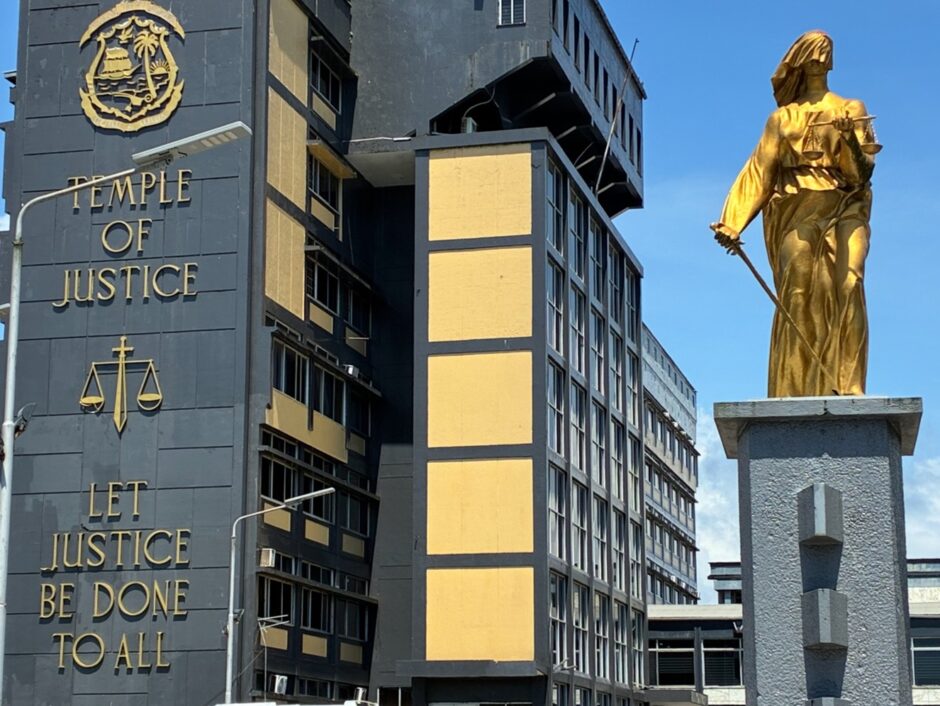
Despite strong laws, Liberia’s anti-trafficking efforts have been crippled by funding shortages and witness-protection failures. Prosecutors say they have struggled to locate victims and witnesses; in some cases, survivors have signed waivers refusing to testify. They have accused the government of abandonment, a claim it always rejects.
A few years ago, Liberia received international praise for its aggressive response to human trafficking. The government allocated $US 230,000 to the effort in 2023, helping fund victims’ protection programs, awareness campaigns, and the repatriation of hundreds of women trafficked to Oman. Those achievements earned Liberia an upgrade in the TIP ranking, removing it from the Tier 2 Watch List and averting aid cuts. But in the lead-up to the 2023 presidential and legislative elections, the George Weah administration slashed anti-trafficking funding by nearly 90 percent—to just $US15,000.
The Boakai administration, now nearly two years in office, has allotted just $US 40,000 to the anti-trafficking unit in 2025—an 80 percent reduction from the 2023 allocation.
Taire said that without an urgent funding boost, Liberia risks sliding further backward.
“The Secretariat needs emergency funding from now to March 31st, the next TIP reporting period,” said Taire. “There’s no way the people will fight trafficking when their budget is low. We need to run all those activities that the state department report talked about. They people talked about victims’ protection, awareness and so forth.”
Liberia’s gains have also been affected by shifting U.S. priorities. The Trump administration cut roughly $US 300 million in aid to Liberia and downsized the State Department’s Office to Monitor and Combat Trafficking in Persons, which publishes the TIP Report. The U.S. Department of Labor has also eliminated 69 programs worth over $US 500 million that supported anti-trafficking and child-labor efforts worldwide, according to a memo obtained by The Washington Post.
Since then, Liberia has received no new U.S. funding for anti-trafficking programs.
The government has prosecuted 21 traffickers, including Arthur Chan-Chan, a former national security agent sentenced to 25 years in prison—a conviction widely hailed as a milestone. But no new convictions have been secured since late 2024, when the government lost its only active trafficking case.
As the trial of the five indicted women begins, advocates say the outcome will be a test of Liberia’s waning commitment to combating human trafficking. The challenge, they warn, lies not only in the courtroom but in rebuilding public trust, protecting victims, and restoring the resources once credited for Liberia’s brief but celebrated progress.
This story is a collaboration with New Narratives as part of the West Africa Justice Reporting Project. Funding was provided by the Swedish Embassy in Liberia which had no say in the story’s content.