


By Anthony Stephens, senior justice correspondent with New Narratives
Summary:
- An accused trafficker in Liberia’s largest human trafficking trial has denied he was engaged in human trafficking saying he recruited the victims in the case for training to become so-called “Independent Representatives” of a local affiliate of Qnet, the Malaysian online multilevel marketing company.
- The defendant claimed victims paid money to join the business network and be trained to sell products. He denied victims’ claims they were told they would be taken to Canada or Australia for jobs.
- His testimony prompted the court to order authorities to produce records related to the registration of an organization linked to the accused, marking a significant step in efforts to examine the structure of networks alleged to be connected to human trafficking.
On day seven of Liberia’s largest human-trafficking trial, an accused perpetrator testified that he was an “independent representative” of QNet, the Malaysian e-commerce company, that has become synonymous with human trafficking throughout West Africa, undertaking legal activities recruiting people to be representatives and sellers for the company. He denied he had been involved in human trafficking.
The company, which is a multilevel marketing company that sells online products and recruits “Independent Representatives” to sell products and sales training to other people, has long denied any association with human trafficking and accused those who use their name as impostors.
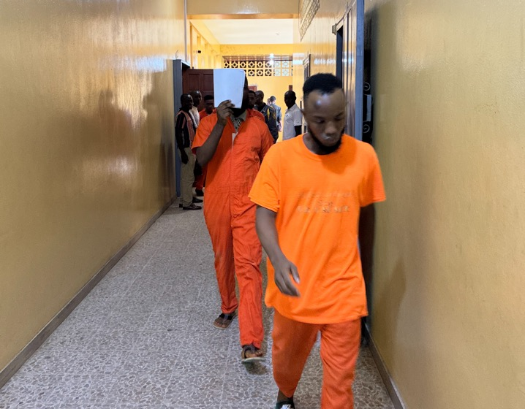
57 victims in the case have accused Davis and 26 other defendants (15 of whom have yet to be arrested) of luring them with promises of jobs and travel opportunities in Canada and Australia before holding them captive at a compound in Gpanka Town, near the residence of Vice President Jeremiah Koung on the Robertsfield Highway. A grand jury returned an indictment alleging that victims were beaten, tortured and sexually abused while being held at the compound and more than $100,000 in total was taken from them through fraud.
Testifying before Criminal Court A, Daniel Davis, whom prosecutors and victims identified as Wuo Zekarso Garteh, described his role in the network as a legitimate business. He said he was one of the leaders of Infinity Millennium Platinum Star Limitless Institution, a local organization he said was affiliated with QNet as well as an “Independent Representative” of QNet.
“They are the ones who have their profits,” said Davis. “Qnet is the one that will pay you. When you sell for them, they will pay you. You buy the products from them. You sell and then they pay you.”
For years, prosecutors have alleged that trafficking networks operated through organizations linked to the company but have struggled to establish those ties in court. The most prominent example was the case of Yacouba Sawadogo, an Ivorian national, whom prosecutors accused of trafficking 11 Sierra Leoneans to Liberia between 2022 and 2023 under the pretense that they would travel to Canada. Prosecutors alleged that Sawadogo was connected to QNet, jurors acquitted him of human trafficking and related charges.
Victims told the court that Davis, Bill Plato, Matherline Tompia and others recruited them with promises of travel to Canada or Australia, collecting thousands of U.S. dollars from each victim, before confining them at the compound for periods ranging from several weeks to 18 months and forcing them to call family and friends to tell them that they were doing well overseas and they should also join.
Under cross-examination, Davis acknowledged that recruits paid money to join the enterprise but he claimed that the money was for him and other leaders of the organization to conduct three-day online training sessions focused on “how to sell the products to people and also about how to focus on the business and how to train women about network marketing.”
He denied he had promised to get the passports and visas and arrange travel overseas. “My only work was to present the business plan. Other people were there to accept money.”
He said some members of the organization recruited people into the business, including Shelly Johnny, a former defendant who admitted that she and the others had been engaged in human trafficking in a dramatic moment at the start of the trial. After she testified for the prosecution, the state dropped the charges against her. A day later three more defendants confessed they were guilty of human trafficking, but prosecutors refused to grant them the same clemency in a sign of their confidence in their case. Human trafficking carries a 20-year prison sentence.
Davis named Mamie Dollar and Munah Y. Bartie as senior figures in Infinity Millenium, the local organization. He testified that Dollar remained in Liberia and was “the one in charge” now that he and Bill Plato were on trial.
Davis also told the court that the organization was registered with the Liberia Revenue Authority and the Liberia Business Registry.
The court approved prosecutors’ request for officials from the Liberia Revenue Authority, the Liberia Business Registry and the Ministry of Foreign Affairs to produce records related to Infinity Millenium. No date was announced for their appearance.
The court order marks one of the most significant efforts yet by prosecutors to obtain official records relating to organizations that victims and authorities have linked to Liberia’s human-trafficking networks.
Francis Sam, QNet’s public relations manager for Sub-Saharan Africa, did not immediately respond to requests for comment on Davis’s testimony. In previous emailed statements to FrontPage Africa/New Narratives, he denied any involvement in trafficking.
“We categorically state that QNet has never been involved in human trafficking, deceptive recruitment, or any related illegal activities in Liberia or anywhere else,” Sam wrote. “Unfortunately, over the past few years, our brand name has been rampantly abused by criminal networks and unscrupulous individuals operating across parts of Africa.”
During his four-hour testimony Davis denied allegations by two women, identified in court as M. and S., who accused him of raping them after luring them with promises of jobs abroad.
“We had no affair. There was no point in time for she and I to have any affair.”
Later in the day, Daylue Kargon, another defendant, accused of torture and other crimes, told the court that she was introduced to the business by a friend, Esther Togba, who later traveled to Guinea. Kargon said she paid US$950 to join the training to Togba but received nothing in return before Togba left.
Kargon said she knew little about the business.
“I was pregnant and entered the business and I do not know much about it because I was home,” she testified.
Kargon denied participating in any abuse of victims.
“I never punish nobody,” she said. “I normally presented the business to them by saying ‘this business is very good, and it can help you.’”
She testified that she spent only a week at the compound before falling ill and being taken to Bong County for treatment by a herbalist. Kargon also told the court that the child she had been carrying when she joined the organization died within a week of birth.
The trial resumes Monday with additional defense witnesses scheduled to testify.
This story was a collaboration with New Narratives as part of the Investigating Liberia project. Funding was provided by the Swedish International Cooperation Development Agency. The funder had no say in the story’s content.