
By Anthony Stephens, senior justice correspondent with New Narratives
Summary:
- The ongoing dispute between Liberia’s War Crimes Court Office and a civil society coalition dominated a transitional justice conference in Monrovia.
- Officials and advocates called for collaboration, even as disagreements deepened over who should submit legislation that would establish the court.
- International experts urged broad consultation and realistic expectations as Liberia moves toward a long-delayed tribunal.
What was intended as a forum to build consensus instead laid bare deepening divisions over Liberia’s proposed war crimes court. At the justice conference in Monrovia last week, an ongoing public dispute between the Office of War and Economic Crimes Court of Liberia and a coalition of justice advocates led by the Independent National Commission on Human Rights, again took center stage, airing tensions over who should lead the legislative process that would establish the court.
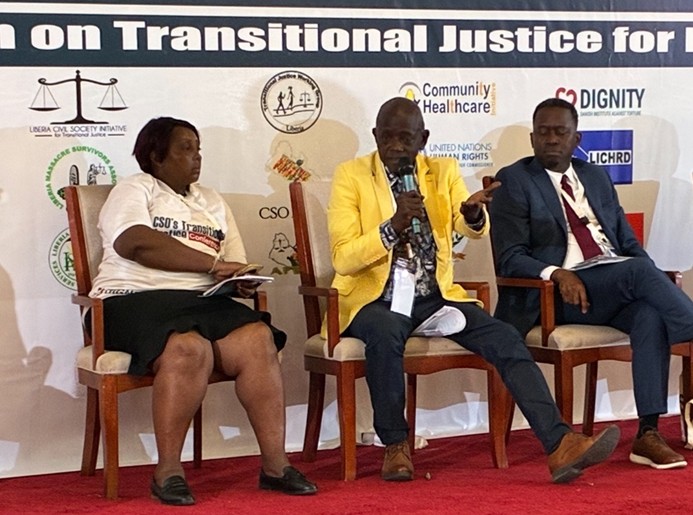
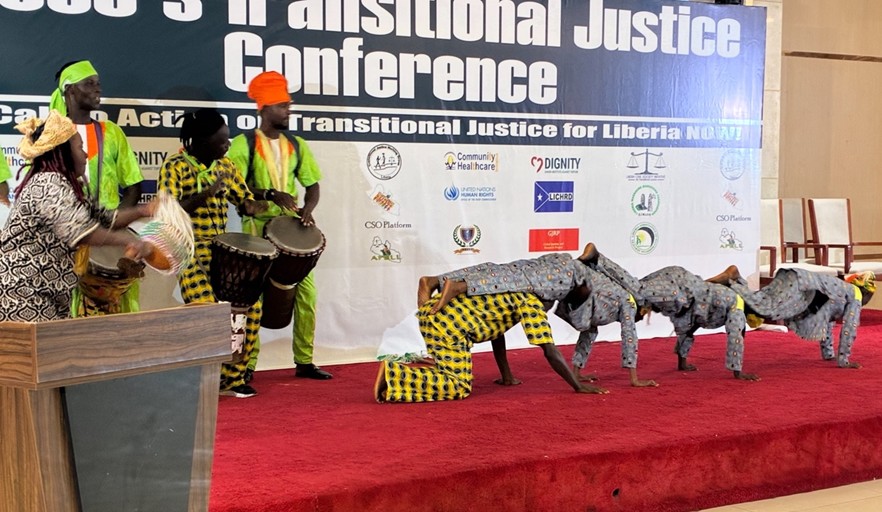
The conference brought together leading Liberian and international transitional justice advocates, including victims’ and survivors’ groups. It was organized by the Liberia Civil Society Organization Initiative on Transitional Justice, in partnership with the Danish Institute Against Torture, with support from the United Nations Office of the High Commissioner for Human Rights. But, rather than building unity, the gathering exposed a widening rift between the court’s office and prominent civil society actors.
A panel titled “How can expectations for the transitional justice process be managed and trust generated?” was dominated by the dispute, which erupted after a decision by the Commission-led civil society coalition to submit its own bill for the court without the Office’s involvement. The official process originally outlined by President Joseph Boakai had anticipated the Office would submit the bill that would establish the war and economic crimes court and a national anti-corruption court. As the war crimes court bill was delayed and trust between civil society and the Office grew, civil society actors drew up their own bill. It has been praised by international actors.
Aaron Weah, executive director of the Ducor Institute for Social and Economic Research, criticized the civil society revolt. His organization signed a collaboration agreement with the Office in 2025. He said civil society needed to rethink what he described as a “sense of entitlement” on justice and accountability issues by working with everyone.
“We have to recognize that society is growing, the population is advancing, and there are new actors coming up,” said Weah. “We have to trust, we have to believe, that they all have something to contribute. And so, again, collaboration will require a change of attitude. Collaboration will require some level of modesty.”
Fredrick Gbemie, director for operations of the Office, echoed the call for collaboration but insisted that drafting and submitting a bill for the court fell squarely within the Office’s mandate.
“Extraordinary criminal tribunals have been established in other countries. The role of civil society is clear,” said Gbemie. “If one institution or one stakeholder leaves his role and jumps into the sphere of another, obviously you are sowing conflict. We need to work together.”
From the civil society coalition, Adama Dempster, secretary general of the Civil Society Human Rights Advocacy Platform of Liberia, defended the coalition’s actions.
“We are civil society. We are the voice of the voiceless,” Dempster said. “We are advocates. We are not praise singers… It is on us to make sure that the war crimes court is established, made operational so that justice will be served.”
The coalition’s submission of a bill marked the peak of a public falling-out with the Office, led by Jallah Barbu, its executive director. Barbu has described the move as “mischief” and a “distraction,” while coalition members have accused him of not knowing “what he’s doing.” The coalition said it acted out of concern that time was running out to establish a court for atrocities that claimed an estimated 250,000 lives and displaced millions.
Barbu — who said in March that the office’s bill would be ready “very soon,” —finally submitted the draft bill to Justice Minister Oswald Tweh and the president’s legal adviser, Bushuben Keita, in January this year.
In his annual message last month, President Boakai acknowledged that the Office’s bills had been “completed for” legislative “review,” though they have not been made public.
enate Pro Tempore Nyonblee Karnga-Lawrence and Senator Joseph Jallah of Lofa County introduced two separate bills to the Senate in late October. The proposals seek to prosecute crimes committed during the wars under Liberian law rather than widely accepted international frameworks. The proposal would route crimes committed during the war through Liberia’s courts under national law, even though international crimes — including rape used as a weapon of war, use of child soldiers and torture — are not defined in domestic statutes. Another bill would exclude corruption and economic crimes committed during the civil wars, such as resource looting and financial abuses. Under existing law, Liberia lacks the legal framework to prosecute these offenses, which can be tried only before an internationally backed court.
Legal experts and civil society groups warned that the Jallah bills would weaken accountability and shield alleged perpetrators, including sitting lawmakers. Jallah later told FrontPage Africa/New Narratives the bills were under “a review with more consultation.”
In an interview on the sidelines of the justice conference, Michelle Reyes Milk, senior international justice counsel at Human Rights Watch, said it was important that any final legislation emerge from broad consultations with all stakeholders, including the civil society.
“In a scenario where different bills are being discussed, we hope this can truly contribute to achieving the strongest and most robust legislation possible for a statute of the War Crimes Court, building on the best elements of the various proposals,” said Reyes Milk. “In particular, we are hopeful that this can lead to a process in Congress [Legislature] that is open to consultations with national experts, civil society, survivors’ groups, and international experts, whose expertise can significantly strengthen the drafting process.”
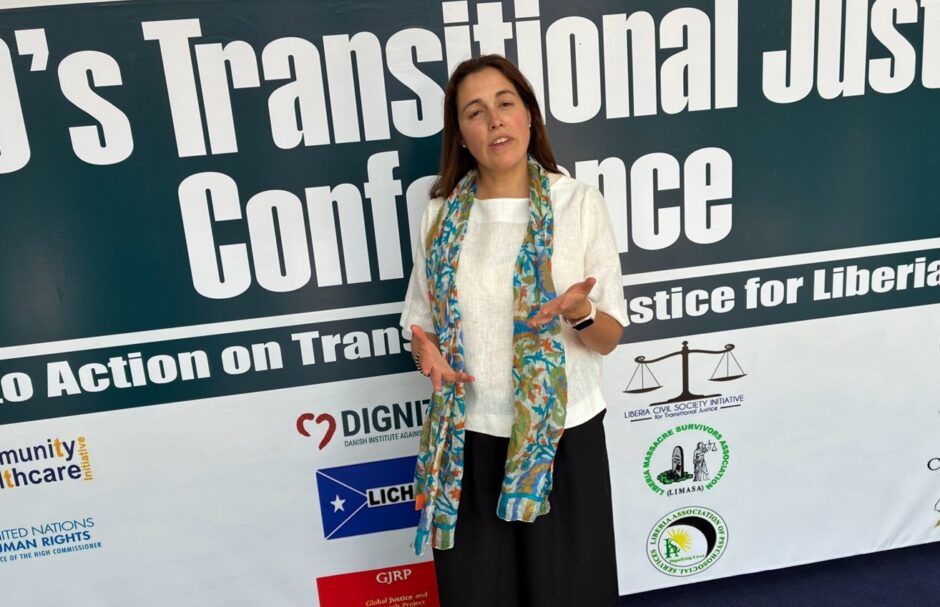
Elise Keppler, whom Reyes Milk succeeded at Human Rights Watch after 25 years covering Liberia and is now executive director of the U.S.-based Global Justice Center, echoed that view.
“We know from experience that civil society and victims have insights to offer that those who are in more technical positions, policy positions, may not have the same experience,” said Keppler in an interview. “So, bringing their input in is essential to shape this process in a way that is victim centered, that will have credibility and trust by the communities.”
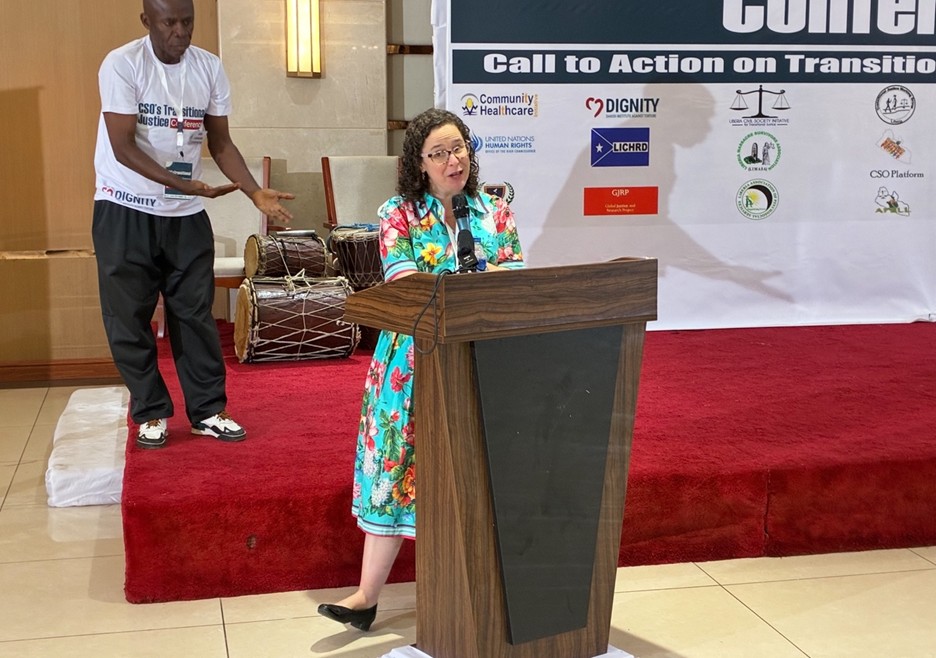
Hassan Bility, the director of the Global Justice and Research Project and a panelist at the conference, supported calls for unity but said the War Crimes Court Office should “take the lead.” He also urged Boakai to act decisively to ensure the court is established.
“Please tear down all of those people in your government who are obstructing the process,” said Bility.
He also used the occasion to restate his long-held criticism of Liberia’s lawmakers.
“Cut down your big salaries and donate some of the money for this work if you truly represent your people, as you claim,” Bility said. “How can U.S. congressmen be making around $14,500 to $15,000 and you, who beg the U.S. and European countries, you’re making around $12,000 to $14,000? Please support the court.”
Liberia’s proposed tribunal is expected to draw lessons from the Special Court for Sierra Leone, which convicted nine of the 13 people it indicted, including Charles Taylor, the former Liberian president now serving a 50-year sentence in Britain.
Binta Mansaray, registrar of the Residual Special Court for Sierra Leone, cautioned that expectations must be managed.
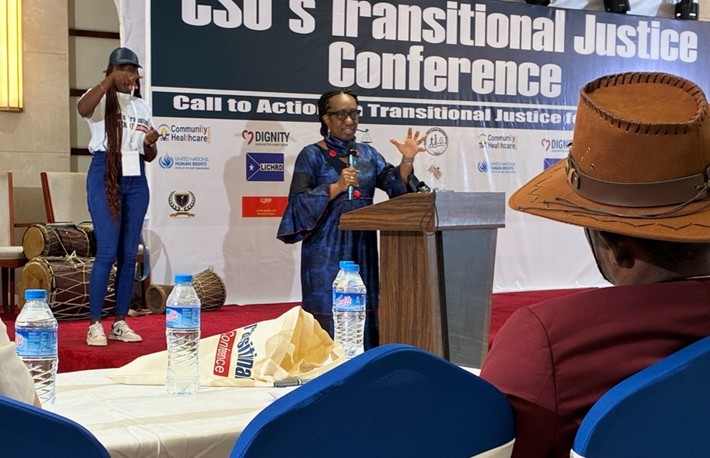
“No transitional justice mechanism can try everyone who fought,” Mansaray said in an interview. “Justice is not vengeance. Justice has to be fair.”
She urged Liberia’s War Crimes Court Office to make public education central to its outreach.
“It’s a process of education,” she said. “It’s not just sensitization. It has to be a very deliberate strategy to help people understand what a credible judicial process is.”
This story is a collaboration with New Narratives as part of the “Investigating Liberia” project. Funding was provided by the Swedish Embassy in Liberia. The funder had no say in the story’s content.