



Summary:
- Liberia’s rights groups, led by the Independent National Commission on Human Rigths, have introduced a new war-crimes bill as advocates move to block an earlier version co-sponsored by Senator Joseph Jallah and Senate Protemp Nyonblee Karnga-Lawrence.
- Experts warn Liberia lacks the laws, and public trust to prosecute international crimes, arguing only a hybrid court with Liberian and foreign judges can ensure impartiality.
- Despite President Boakai’s pledge of $USUS2 million annual budget, the Office of the War and Economic Crimes Court, has received only $US300,000, with future budgets slashed.
By Anthony Stephens, senior justice correspondent with New Narratives
In a surprise move, a coalition of advocates led by the Independent National Commission on Human Rights on Tuesday submitted a new war crimes court bill to the Legislature. It came as campaigners intensified efforts to block an earlier version that would exclude so-called “international” crimes including war crimes and crimes against humanity from prosecution.
The new draft landed before lawmakers at a moment of growing uncertainty over the courts. In late October, Senator Joseph Jallah and Senate Protemp Nyonblee Karnga-Lawrence introduced two bills — one covering wartime atrocities, the other economic crimes — that would channel all cases through Liberia’s domestic courts. Critics say the approach abandons the hybrid international–domestic model widely considered essential for credible trials of war crimes and crimes against humanity including recruitment of child soldiers, killing of civilians and sexual slavery amid myriad egregious human rights violations committed during Liberia’s civil wars. Without an international partner, the court could only try people for crimes that were on Liberia’s penal code at the time of the crime. Experts say that would preclude almost all the most egregious crimes in Liberia’s conflicts. And it would bring into play the issue of the statute of limitations – which places limits on the time that a person can bring a charge after the crime. War crimes and crimes against humanity have no statute of limitations.
Veteran human rights lawyer Tiawan Gongloe was scathing in his condemnation of the senators’ bills, calling it “a deliberate exercise to obstruct justice. If they know what impunity has done to this country… They would not have brought this novel idea of a purely national court in protection of our sovereignty.”
The fresh bill, though narrower in scope because it excludes economic crimes, echoes a 2021 bill from the Liberian National Bar Assocation. It would see the court partner with an international body such as Ecowas or the United Nations to allow prosecution for international crimes that are not in Liberian law.
Both sets of bills have come as a surprise to observers of the process. The Office for the War and Economics Crimes Court, headed by Jallah Barbu, is tasked with writing and presenting the bills to the president and the Legislature. Barbu has promised that he would have a bill ready by January. Experts say these competing bill reflect an effort to influence the final bill.
Though they did not refer to the Office’s pending bill, in Tuesday’s presentation, the backers of the new bill said they were acting now in an effort to speed the process along. Advocates had condemned a decision to include an anti-corruption court in the Office’s mandate that would take priority over the War Crimes court. Adama Dempster, secretary general of the Civil Society Human Rights Advocacy Platform, said any delay on the war crimes court now could see it run into political cloud of the next election.
“The purpose of our intervention is not only about prosecution, but about prevention — that if we move from this era, no one will again choose war or any act of violence that destabilizes our country,” said Adama Dempster of the Platform, one of the organizations that presented Tuesday’s bill, to members of the Senate Committee on Judiciary, Claims and Petitions which received the bill. “One of the ways we can sustain this country’s growth is through justice. It is not about witch-hunting.”
The earlier Jallah–Karnga-Lawrence bills remain stalled. The Senate Plenary sent them more than three weeks ago to two committees — Judiciary, Human Rights, Claims and Petitions, and Defense, Security, Intelligence and Veteran Affairs — with orders to report within two weeks. That deadline lapsed with no action.
In an interview Senator Jallah told FrontPage Africa/New Narratives that the Judiciary Committee was still conducting “a review with more consultation,” including with the Executive Branch. Augustine Chea, Committee chair, said the bills were undergoing wider consultations with civil society groups, the national human rights commission and international partners.
“Be assured that all of us are similarly situated when it comes to giving the victims of our war justice,” Chea said. “Let’s be clear about that. We are all in agreement on that so that it serves as a deterrence, this generation and for future generations that we will not have a repeat of what has happened in our country. Impunity could give rise to that.”
Other members of the committee, including James Emmanuel Nuquay of Margibi, Simeon Taylor of Grand Cape Mount and Albert Chie of Grand Kru County, Emmanuel Nuquay, Simeon Taylor, attended Tuesday’s presentation. Nuquay and Chie have been sanctioned by the U.S. government for alleged corruption, and may face prosecution by an anticorruption court. They deny the allegations.
Chie showed a preference for the senators’ bills in the meeting, warning against “writing the law in the middle of the game,” and said any prosecutions must align with laws in force at the time the crimes occurred. “When the crimes were committed, the laws that were in existence, the person will be judged by those laws.”

Prior to Tuesday’s meeting advocates said the pause in consideration of the Jallah-Karanga-Lawrence bills had given them space to intensify lobbying with senators and representatives they believe could help block the bills.
“This is the time to stand up for the hundreds of thousands of victims who were, in my view, unjustifiably murdered as a result of the two Liberian bush and bandit terror wars,” said Hassan Bility, a long-time advocate for a hybrid war and economic crimes court, to the lawmakers in an interview. “The victims are generally not going to feel comfortable with that system. We believe we need to follow the international system that has been practiced successfully in other countries around the world. I therefore call on all of the senators to try and reconsider the introduction of this bill and its passage. If it passes like that, we’re dead.”
Under Liberian law, only crimes included in the penal code at the time they were committed can be tried domestically — a reality that legal analysts say would make it nearly impossible to prosecute war crimes or crimes against humanity in local courts without an international component.
Fatou Bensouda, one of the world’s most respected voices in international criminal justice and the only woman ever to serve as lead prosecutor of the International Criminal Court, cautioned Liberian lawmakers that creating a purely domestic war crimes court would jeopardize public trust and credibility from the start.
“Even the perception of having judges from outside, sitting with domestic judges, shows that of objectivity and impartiality,” said Bensouda, in an exclusive interview with FrontPage Africa/New Narratives on the sidelines of this year’s African Investigative Journalism Conference in Johannesburg. “It can boost the credibility of any hybrid court because it’s very easy for onlookers and watchers of the court to condemn the court even before it starts when it’s all domestic… So, to ensure that you have that impartiality, it is absolutely important that you bring in also other judges from outside. It can be from the sub region.”
Bensouda cautioned Liberian lawmakers that creating a purely domestic war crimes court would jeopardize public trust and credibility from the start.
She warned that absent a credible court, the likelihood “of a cycle of violence” recurring
was real.
The second obstacle presented by the bills is Liberia’s judiciary, widely viewed as lacking the credibility and capacity to prosecute international crimes. Multiple reports from rights organizations, Liberian media, and the U.S. State Department have documented corruption, interference, and severe resource constraints within the justice system. In its 2024 Human Rights report, released in August, the U.S. State Department noted that “some judges reportedly used the possibility of bail to solicit bribes.” And few if any have been involved in the prosecution of international crimes.
“We are a party to international conventions governing the laws of war. These offenses are crimes against nations of the world,” Gongloe said. “These crimes are crimes against nations of the world. We cannot be exclusive. We need full confidence of the Liberian people and international community. And for the international community to even support the process, it has to be considered credible.” Gongloe said every successful transitional justice process in Africa — including Sierra Leone and Rwanda — relied on a hybrid model.
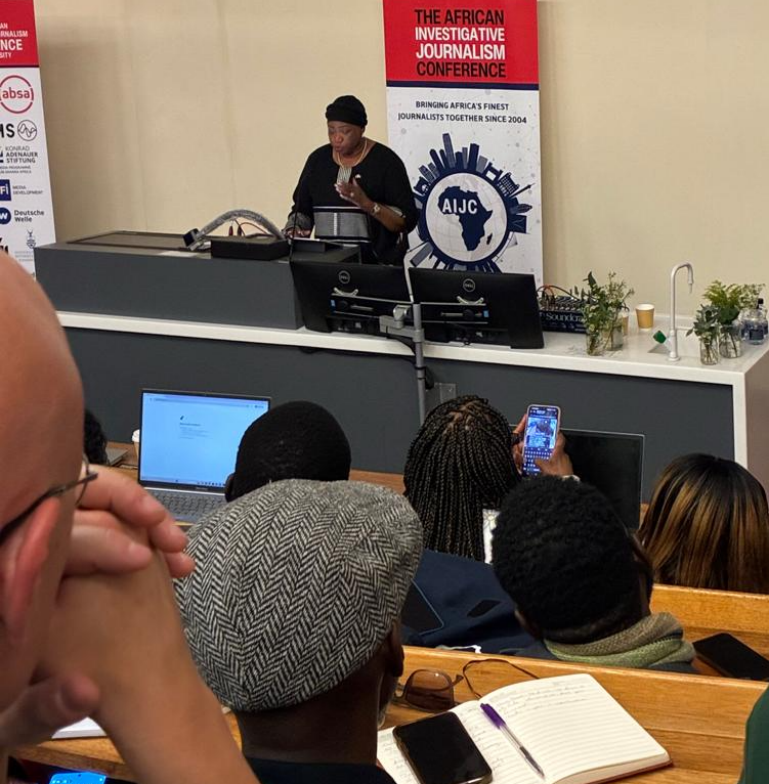
Fatou Bensouda, a former prosecutor of the International Criminal Court, says a hybrid court “is critically important” for Liberia and other conflicted- countries. Credit: Anthony Stephens/New Narratives.
The introduction of the bills comes as the lack of funding going to the effort to establish a war and economic crimes court is again casting a shadow over the process. Advocates said they are alarmed by financial signals coming from the Boakai administration. President Boakai won praise earlier in the year for a series of actions, including a national apology to victims of the civil wars and a pledge to provide the Office of the War and Economic Crimes Court with $US2 million annually.

But as the fiscal year ends, only $US300,000 — 15 percent of the pledge — has been delivered, according to Barbu. Worse, the government’s draft budget for 2026 allocates only $US1.3 million, and that amount drops further in 2027 and 2028. Most of the funding is earmarked for salaries. Advocates say the cuts threaten to push the long-awaited court to the margins.
Bility urged President Boakai to decisively reclaim momentum.
“President Joseph Boakai, I call all him to pay more attention to the creation of this court, and make sure that it works,” he said. “Take the bull by the horns… This is going to be one of your legacy issues.”
Kula Fofana, the presidential press secretary, did not respond to FPA/NN requests for comment before deadline.
This story is a collaboration with New Narratives as part of the West Africa Justice Reporting Project. Funding was provided by the Swedish Embassy in Liberia which had no say in the story’s content.