

By Anthony Stephens, senior justice correspondent with New Narratives
Summary:
- The Office of the War and Economic Crimes Court of Liberia has submitted draft bills for a War and Economic Crimes Court and a National Anti-Corruption Court to the justice minister, following weeks of public dispute with leading civil society advocates.
- The submission comes after a coalition of advocates independently presented their own war crimes court bill to a Senate committee in December.
- If forwarded to the Legislature, the Office’s proposals would bring to six the number of bills now before lawmakers concerning the establishment of the courts.
The Office of the War and Economic Crimes Court of Liberia on Tuesday submitted its long-awaited draft legislation for a war and economic crimes court and a national anti-corruption court to the country’s justice minister, following weeks of public disagreement with leading civil society groups over the pursuit of accountability for civil war–era crimes. The submission comes after a breakaway coalition of civil society organizations, led by the Independent National Commission on Human Rights, submitted its own war crimes court bill to the Senate Committee on Judiciary, Human Rights, Claims and Petitions in December. The coalition said it acted out of concern that further delays could push the establishment of the court into the next election cycle. The group accused Jallah Barbu, executive director of the Office, of not knowing “what he’s doing,” a claim he rejected, dismissing the advocates’ move as “mischief” and a “distraction.”
At a brief ceremony at the Ministry of Justice in Monrovia, whiich this reporter was only aware of at a short notice, Barbu submitted the draft bills to Oswald Tweh, the justice minister saying, “together with you, in the near future, to chart the requisite course to formally present them to His Excellency, the President.”
Barbu praised Tweh for what he described as steadfast support since he assumed his role more than a year ago.
“You’ve given me so much reason to navigate the storms and climb steep hills in reaching where we are today,” Barbu said, glossing over the Office’s long struggle to secure the $US2 million annual funding promised by President Boakai. “Honorable minister, I am very, very grateful.”
In remarks at the ceremony, Tweh welcomed the submission and reaffirmed President Joseph Boakai’s commitment to establishing the courts.
“You have delivered and we appreciate it,” Tweh said. “With all the challenges, constraints and everything, you have done your best. I assure you that your effort will not go in vain. This will be looked at. It will be submitted to the president. After everything is done, it will be submitted to the Legislature and enacted into law.”
Tweh said President Boakai remained committed to accountability for wartime atrocities.
“He knows what needs to be done to propel this nation forward, to ease the pain, to suit those hurt, to bring closure to our terrible past. Some of our people are grieving… If we don’t do this, we will not bring closure to this matter. We have to heal the wounds. And again, as a people, we commit ourselves that never again should we allow this to happen in our country.”
The Office, established by an executive order in 2024, is legally required to report to the justice minister but is described in law as “semi-independent, divorced of any and all political influence, and guided strictly by legal considerations.”
In an interview with FrontPage Africa/New Narratives after the Justice Ministry event, Barbu said he would make a separate submission to Bushuben Keita, the president’s legal adviser, “very soon,” and that the Cabinet could also review the bills and offer its input.
Neither Kula Fofana, the presidential press secretary nor Tweh responded to a request for comment on when the bills might be presented to the president.
The submission ends more than nine months of repeated assurances by Barbu that the bills would be ready “very soon.” He said in the interview that he expected President Joseph Boakai to address the issue in his upcoming State of the Nation Address, scheduled for three weeks from now.
If transmitted to the Legislature, the Office’s bills would raise to six the number of proposals currently before lawmakers. In 2021, the Liberian National Bar Association submitted a hybrid court bill widely praised by international experts.
In October, Senate Pro Tempore Nyonblee Karnga-Lawrence and Senator Joseph Jallah, introduced two bills— one addressing wartime atrocities and the other focused on corruption and economic crimes — that would route such cases through Liberia’s domestic courts while excluding the prosecution of international crimes. The bills were widely condemned as weakening accountability and sheilding accused perpetrators, including some serving in the Legislature, from prosecution for the most serious offenses.
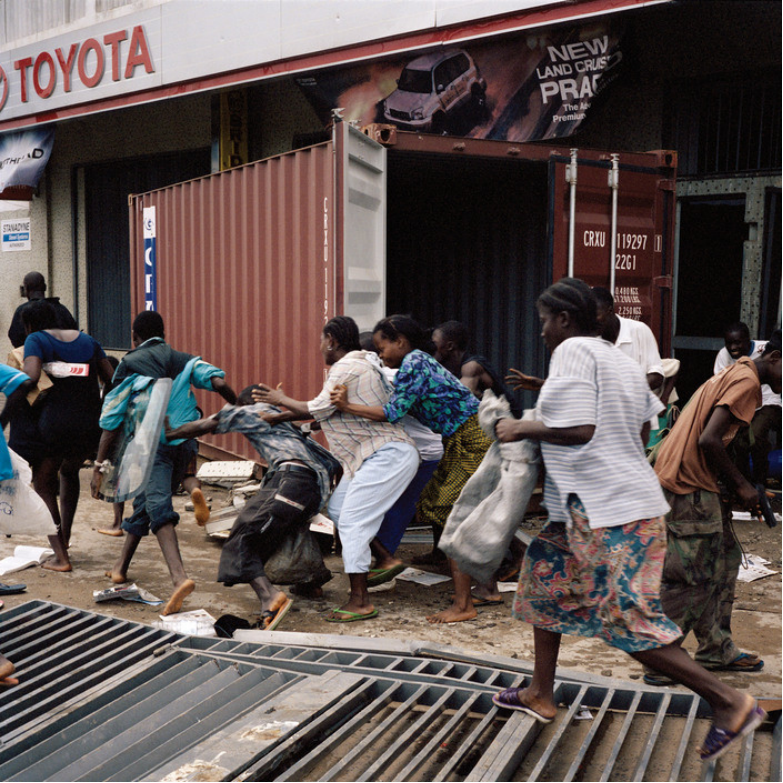
Liberia’s courts lack the laws to prosecute international crimes such as war crimes and crimes against humanity, including the recruitment of child soldiers, torture, rape as a wepon of war, sexual enslavement and the killing of civilians — offenses that were not defined in Liberian law at the time they were committed. Critics argued the proposals conflict with both the Legislature’s joint resolution calling for a “UN backed Special War Crimes Court of Liberia” and the executive order that created Barbu’s Office, which envisioned “a war crimes court of an international nature and of an international mix.”
The senators’ bills remain before specialized Senate committees, their futures uncertain. They were expected to return to plenary debate within two weeks but have yet to reappear. Senator Jallah told FPA/NN in November that the bills were undergoing “a review with more consultation.”
In his latest interivew, Barbu, who had openly critcized the Senators’ action, said he did not want to “dwell or delve into” the senators’ proposals, saying “I believe they were setting the pace for a number of things to happen positively for the Liberian people.”
But he reiterated the case for an internationally supported “hybrid” court.
“Liberian laws do not address questions of war crimes. This is going to be the first time we’re doing this. It means, therefore, we’ve got to look at it from a broader perspective.”
A consulting firm to be hired through the United Nations Development Program is expected to deliver a report by mid-February on the court’s security, budget, and location. Barbu said the court would be based in Liberia and would cost at least $US20 million, covering infrastructure, security equipment, vehicles, furniture, and utilities.
“We want value for money,” he said.

Funding remains a major challenge. The United States, which was Liberia’s largest donor, has said it will provide no immediate support for the court, while Sweden, the only international donor to the process so far, announced in December that it would shut down its embassy in Liberia at the end of August—though it said support would continue through the European Union and other multilateral organizations that fund Liberia.
Barbu said he was confident the government would ultimately fulfil Boakai’s pledge of $US2 million in annual funding for the Office. Only $800,000 was released in 2025, while $1.3 million was allocated in the recently approved 2026 national budget. Allocations for 2027 and 2028 are projected to decline further as the government struggles to meet a range of pressing costs, including those that were previous covered by donors.
“This government has been very strong in supporting this process and this office,” he said. “We clearly see that the government has competing priorities.”
Barbu said other elements of the Office’s roadmap were also moving forward, including plans to recruit 50 independent investigators. Dduring the ceremony at the Justice Ministry he met with the deputy justice minister and the leader of a group of “very highly trained investigators” on the next steps.
“We have close to 50 persons that have been earmarked, not necessarily selected,” Barbu said. “So hopefully, between now and the end of January, we should now say, ‘Yes, we’re ready to go.’”
He added that training would require international support.
“We can’t depend on Liberian trainers alone,” he said. “So we are also engaging the international community, the partners to provide us highly technically qualified trainers in that direction.”
This story is a collaboration with New Narratives as part of the “Investigating Liberia” project. Funding was provided by the Swedish Embassy in Liberia. The funder had no say in the story’s content.