
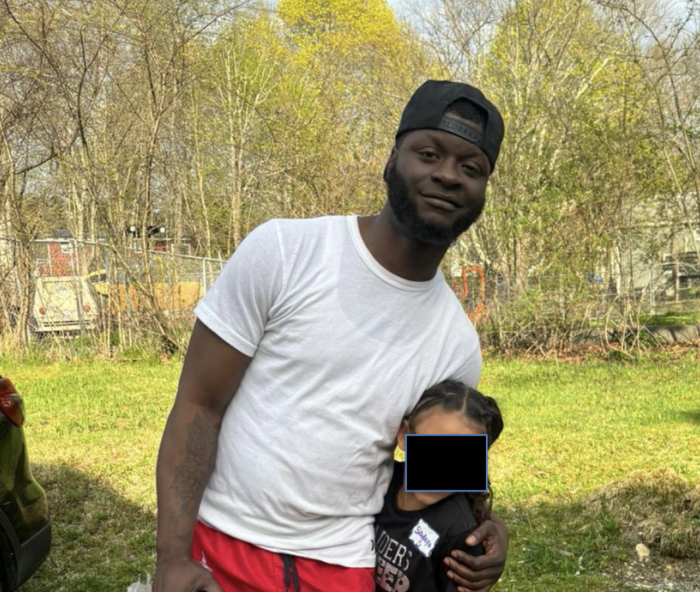
By Anthony Stephens and New Narratives editors
It was Kayla’s birthday. She was putting her baby son into his car seat, her daughter climbing into the back, her fiancé Eriah Nahnie behind the wheel. It was just after 8 in the morning — a routine school run on a cold winter’s day in United States state of Massachusetts, on what should have been a day of celebration.
Then the vans appeared.
“It was like a movie,” Kayla said. “Probably three or four cars — vans, a truck. I don’t even know where they came from. And they had took guns out. Not little guns. Huge guns.”
Men in Immigration and Customs Enforcement vests surrounded the car, screaming. They pulled Eriah from the driver’s seat, slammed him against the vehicle, and forced him into one of the vans. An American citizen, born in Puerto Rico who happened to live in the same apartment building, was also thrown to the ground. Kayla, still holding her baby, ran toward them screaming. Her daughter lay on the ground.
“Where are you taking him?” she kept demanding. As the van pulled away, an agent threw her the car keys. “You’ll find out,” they said.
That was more than a year ago. Eriah, a Liberian who came to the United States as a child refugee fleeing the civil war, remains locked in an immigration detention center. His case — along with those of other Liberians now facing removal to a country they have not seen in decades or never knew at all — raises urgent questions about where the Trump administration’s sweeping deportation campaign will end, and what awaits those sent back. (FrontPage Africa and New Narratives are withholding the last name of Kayla and her children for their safety. Eriah agreed for his name to be used.)
Since taking office in January 2025, the Trump administration has launched the most aggressive immigration enforcement campaign in modern American history. Immigration authorities made roughly 393,000 arrests in its first year — a surge driven not primarily by dangerous criminals, but by a dramatic expansion of who is targeted: less than 14 percent of those arrested had violent criminal records, while an estimated 153,000 had no criminal record at all. The number of people held in immigration detention climbed nearly 75 percent, hitting a record 66,000 by December 2025. The government claims more than 605,000 people have been formally deported, with another 1.9 million having “self-deported” under pressure, bringing the total it counts as removed to more than 2.5 million. Alongside mass removals to home countries, the administration has pioneered a new tool: deportation to third countries with which deportees have no connection, striking financial deals with nations including El Salvador, Rwanda, Eswatini, Ghana, and South Sudan — and Liberia.
“HE DOESN’T REMEMBER ANYTHING OF LIBERIA”
Eriah arrived in the United States as a small boy. He remembers the refugee camp, being carried on his mother’s back, running through the rain. He remembers getting off the plane in New York and having his first slice of pizza. That, his fiancé says, is essentially all he knows of Liberia.
“He has no connection to anyone in Liberia,” Kayla said. “He has said that he has reached out to people his aunt has spoken to down there, but everyone has basically hidden things about his mom and dad.”
He was told his parents died in murky circumstances tied to the civil war. His father, named Ballah Scott, Kayla was told, worked with the government of Charles Taylor and died behind JFK hospital in Monrovia. War crimes investigators believe he may still be alive. His aunt, who eventually brought Eriah to America and adopted him, has said only that his father was not a good person and that the family should be forgotten.
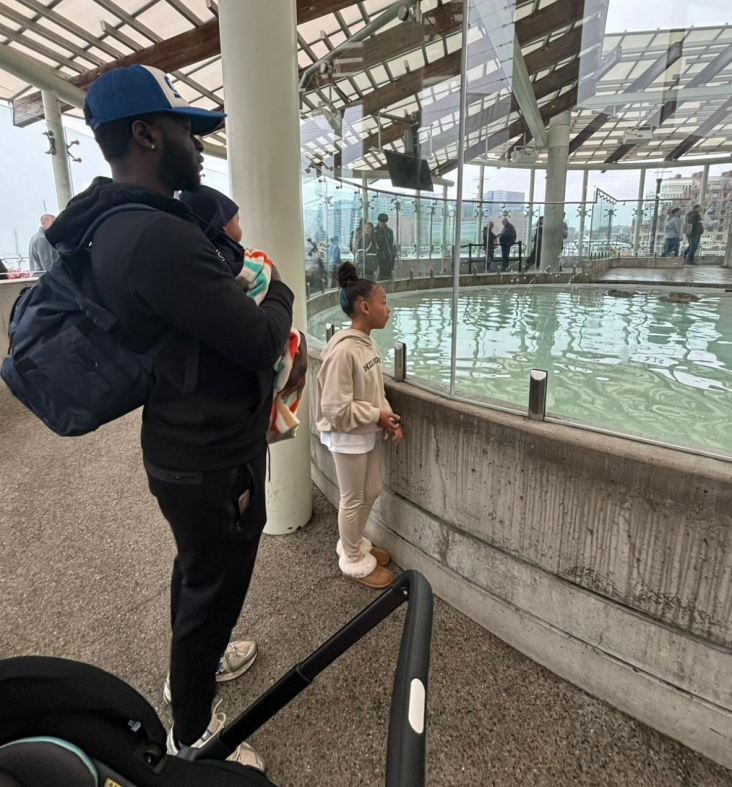
Eriah grew up believing his asylum paperwork gave him the right to stay in the United States indefinitely. After two nonviolent criminal convictions in his youth he built a life: a stepfather to Kayla’s daughter, whom he took to every father-daughter dance and cheered at cheerleading. When their son was finally born, after years of trying, Eriah sat up through the nights just staring at the baby.
“He loved being a dad so much,” Kayla said. “He would call the doctor every week — is this normal? Is this normal?” Their son was just six months old when the vans came.
“He has no type of thought process of what his life would be like if he was to go back to Liberia. He has nobody there. He has nowhere to go back to.”
PRESSURE TO SIGN
Since his detention, Eriah has been held in conditions Kayla describes as designed to break him. At the first facility, detainees slept on the floor with no beds and no blankets, surviving on fish sticks. There was no time outdoors. Phone calls cost $10 for five minutes.
When the family finally received approval to visit, they drove an hour to the facility. They were told Eriah had just been transferred. When they tracked him to a second facility five hours away and made the journey with the baby and Kayla’s daughter, they were told there was no visit on the schedule — despite written confirmation.
Every day, ICE agents visit Eriah and tell him to sign deportation papers. He has refused. His mental health is deteriorating. When Kayla sent him a Bible and photographs of his children, guards confiscated them during a transfer. A mental health evaluation was conducted, but the facility has refused to release the results to his lawyers.
A PATTERN TARGETING LIBERIANS
Eriah’s case is not isolated. As the Trump administration has dramatically expanded deportations Liberians have increasingly found themselves targeted.
The New Yorker magazine reported that last September, that a Liberian they called Jim, a car salesman and real estate agent who had lived in Miami since the early 1990s, was among a group of migrants violently loaded onto a military flight in the middle of the night in Louisiana. Jim said he had fled to Miami at age 23 after his parents were murdered during Liberia’s civil war. He had won asylum, become a lawful permanent resident, and raised five American citizen children. Despite a bank fraud conviction, immigration courts had determined he could not be safely deported.
According to reporting by The New Yorker, immigration agents woke Jim and other detainees in darkness and forced them onto a plane at gunpoint. Jim, who begged to speak to his attorney and said he feared for his life if returned to Liberia, was beaten, placed in full-body restraints, and — in his own words — carried “like cargo” onto the aircraft. He had no idea where the plane was going.
It landed in Ghana. For weeks, Jim and ten others — many holding legal protections barring their deportation home — were held in Bundase Training Camp, a military compound in a forest outside Accra, under armed guard. “I have five U.S.-citizen children, and they don’t know where their father is,” Jim said in a call to the New Yorker from the camp. Eventually, he and others were quietly pushed across the border into Togo with no documents, no money, and no language. The U.S. government had confiscated Jim’s ID, making it impossible even to collect funds his family was trying to wire him.
LIBERIA AS A DUMPING GROUND
Even as Liberians face removal to their homeland, another dimension has emerged: the Trump administration is now proposing to deport people with no connection to Liberia at all.
Kilmar Abrego Garcia, a Salvadoran man whose case has become one of the defining legal battles of the immigration crisis, has been earmarked for removal to Liberia by acting ICE Director Todd Lyons. Abrego Garcia was originally deported to El Salvador in what the Trump administration itself admitted was an “administrative error.” Returned to the United States, he has been fighting removal ever since. Costa Rica, which has already granted him asylum status, offered to accept him. He agreed to go. But the Trump administration refused.
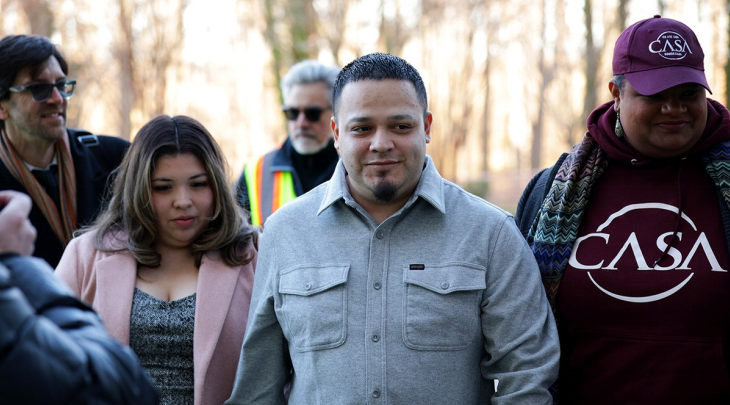
Instead, the Department of Justice filed court papers this month seeking to dissolve an injunction protecting Abrego Garcia from removal so he can be “promptly” deported — to Liberia, on a continent he has never set foot in.
The move illustrates a broader strategy that lawyers and human rights advocates say is deliberate: use African nations as convenient destinations for people the U.S. government cannot easily remove elsewhere.
“I HAVE TO. BECAUSE IF I DON’T, NOBODY ELSE WILL.”
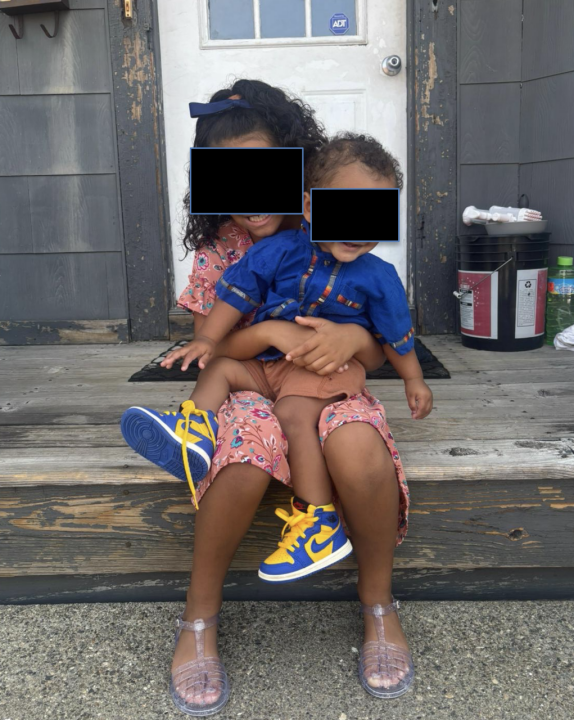
Kayla has lost friends over her refusal to stay silent. Some friends, supporters of Donald Trump, have grown distant; others unsympathetic. She has had to explain to her daughter — who has known Eriah as her father her whole life — why he is gone. Her son celebrated his first birthday without his father.
She speaks to Eriah for five minutes a day, every day at 7pm. Eriah is losing the will to fight.
“I’m trying to be the strength for him. I’m trying to be the strength for my children,” she said. “And I don’t even know where I’m getting my strength from, because I don’t have anyone to be the strength for me. But I have to. Because if I don’t, nobody else is going to do it.”
“He remembers rain. That’s it. Running in the rain. That’s all he has of Liberia.”
Eriah’s lawyer is trying to have the criminal convictions quashed. But even that may not be enough. His lawyer has secured him a meeting with the state governor next month. He said some Africans who have agreed to be deported have still stayed on in detention for months. It’s impossible to get any answers.
Meanwhile the family is in heartbreaking limbo, their future uncertain. Kayla lives with the daily terror that each day might be the day that she becomes a single mother, with a fiancé in a far-off land he does not know and two American children who will grow up without a father.
This story was a collaboration with New Narratives as part of the Investigating Liberia project. Funding was provided by the Swedish International Development Cooperation Agency. The funder had no say in the story’s content.