


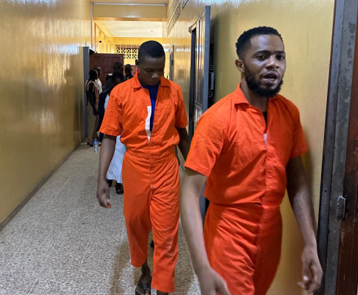
By Anthony Stephens, senior justice correspondent with New Narratives
Summary:
- A 12-member jury unanimously convicted the eight remaining defendants in Liberia’s largest human trafficking trial on Monday after just 23 minutes of deliberation, finding they trafficked 57 victims. They face a minimum 20 years in prison.
- Victims celebrated the verdict as long-awaited justice after weeks of emotional testimony detailing allegations of beatings, torture, rape, forced recruitment and financial exploitation.
- The landmark case was also a test of Liberia’s judicial system after a FrontPage Africa/New Narratives investigation exposed allegations of corruption that nearly derailed the case, prompting international scrutiny and a government investigation into claims that traffickers attempted to bribe officials.
Jurors hearing Liberia’s largest human trafficking trial on Monday unanimously found the remaining defendants guilty, bringing to a close a nearly month-long trial marked by emotional testimony from victims and fierce legal battles between prosecutors and defense lawyers.
The 12-member jury returned its verdict after just 23 minutes of deliberation at Criminal Court “A” at the Temple of Justice, the seat of Liberia’s judiciary, in Monrovia, against Bill Plato, Wuo Zekarso Garteh (also known Daniel Davis), Alexander Plato, Jerome Genseh, Rudolph (Luther) Flomo, Alexander Plato, Blessing Favior Suah and Daylue Kargon. The defendants face a minimum prison sentence of 20 years.
Outside the court, victims gathered together and expressed joy at the end of after a battle for justice that had taken nine months and, for a long period, appeared unlikely to happen.
“I feeling good,” said one of the victims known only by her first initial P. in court proceedings to protect her from retaliation. “At least because of what I go through, the way my money was taken from me, the way I was treated, at least, I tell God thank you that my efforts of going to court every morning, at least I thank God that I get justice.”
The case was a landmark in Liberia’s fight against human trafficking. It involved 57 victims—the largest number ever brought together in a single human trafficking prosecution in the country’s history. It comes as Liberia faces a cut in U.S. aid after spending the last two years on the U.S.Trafficking in Persons Watch list. The latest U.S. Trafficking Report is due this month. During the trial, Shelley Jonny, one of the defendants who pleaded guilty on day two and testified for the prosecution, told the court that as many as 150 people had passed through the compound at the center of the trafficking operation. The jury agreed with the prosecution and the victims that the defendants took hundreds of thousands of dollars from the victims through fraud.
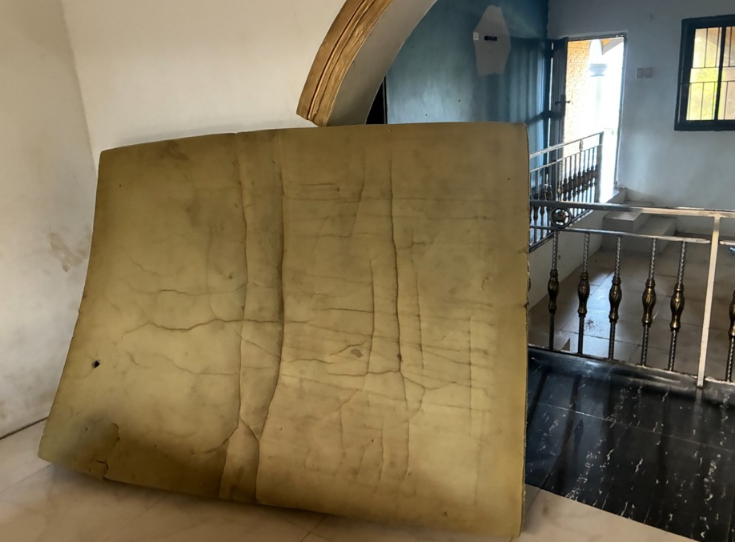
The case first drew national and international attention after a FrontPage Africa/New Narratives investigation exposed allegations that corruption had stalled the prosecution long enough that defendants were due to become eligible for bail. Serious charges had also been removed from the original chart sheet.
Nine victims alleged they had been told by a prosecutor that public defender Bestman Juah had offered him a US$7,000 bribe to reduce and drop charges against the defendants. Seven victims also gave police statements, reviewed by this reporter, saying that defendant Daniel Davis had openly boasted that they were paying Juah $500 a week to keep them untouchable. Davis boasted they “owned the government”.
The victims alleged that after the prosecutor rejected the payment, Enoch Dunbar, head of the Liberia National Police’s Anti-Human Trafficking Unit, accepted the money to alter their original police statements and reduce or drop the charges against most of the defendants.
Juah denied the allegations. Dunbar, who testified for the state, but was not questioned about the alleged bribery, also denied the allegation.
On Monday the courtroom was packed as the decision was announced. The verdict, sealed in a white envelope, was handed to the court by the jury’s forewoman and read aloud by the assistant clerk of court. One by one, jurors rose and affirmed the guilty verdict in open court, as required under Liberian law.
Although 12 defendants were originally charged, only eight stood trial through to the verdict. Four others—Shelley Jonny, Maxson Wonlebaye, Martherline Tompia and Preston Godfred—had pleaded guilty during the proceedings.
Prosecutors dropped the charges against Jonny after she admitted in day two of the trial to her role in the trafficking operation and agreed to testify for the state. They refused to offer the same arrangement to Wonlebaye, Tompia and Godfred, who followed Jonny’s lead and confess to the crimes the next day, arguing that victims had identified them as principal perpetrators and their testimony was no longer of any value to the case that prosecutors were then convinced was overwhelming. Their sentences will be determined separately by Judge Roosevelt Z. Willie.
Tears, shock and joy in the court as the verdict was read
In a written verdict signed by all 12 jurors, the jurors said that prosecutors had proved beyond a reasonable doubt that all 57 victims, some of Liberia’s poorest citizens, were recruited from their homes and transported to a compound just steps from the residence of Vice President Jeremiah Koung in Margibi county, where they were beaten, tortured, raped, sexually abused, subjected to degrading and inhumane treatment, and forced to recruit relatives and friends to send money to the alleged traffickers.
“We, the trial jurors, after careful consideration of the evidence adduced at trial, do hereby unanimously agree that the defendants are adjudged guilty of the crimes of trafficking in persons, theft of property and criminal conspiracy,” the verdict read. Judge Willie thanked the jury for what he described as their “exemplary work” before ordering the clerk to notify the probation office “to conduct a character examination on the defendants” ahead of sentencing on Friday.
As the guilty verdict was read emotions rippled across the dock. Davis, whom the jurors also found raped two of the victims, fought back tears. Kargon’s eyes were red.
Bill Plato, whom prosecutors told the court was one of the leaders of the trafficking network, stood silently. Convicted of trafficking and the rape of one of the women, he stared at the jurors with a stunned expression. Rudolph Flomo struck the wooden bench inside the dock and muttered, “Damn.”
The defendants face a mandatory minimum sentence of 20 years’ imprisonment under Liberia’s Revised Trafficking in Persons Act. Another 15 accused have yet to be located to face charges.
The verdict drew sharply contrasting reactions from the two sides.
“I am so happy. That’s a victory for the rule of law,” Augustine C. Fayiah, Liberia’s solicitor general, who led the prosecution, said in an interview with FrontPage Africa/New Narratives after the verdict. He had conceded that the international community had put pressure on the government to ensure justice was served in the case. “We have very capable men to deal with crimes of any nature,” he said. “We are part of the community of nations. We have to work to make sure that whatever the nations don’t like, we should not like it here, and we should not condone it.”
Sennay Carlor, lead defense lawyer appointed by the government to represent the defendants, declined to comment on the verdict.
Jacob Humphrey, a distant relative of the Plato brothers who attended the trial, said he accepted the jury’s decision.
“The ruling came as a result of what the law says about the actions demonstrated,” Humphrey said. “So I don’t want to say I am disappointed. If I say I am disappointed, that means I discredit the credibility of the law. I think the law has taken its course.”
Outside the courtroom victim P. said she hoped this verdict would give her some peace.
“You know how many of my friends, family members against me because of what Bill Plato them put me through?” she asked “Using my phone, instructing me to call other people to travel. You know how many enemies he created for me? I am very, very happy that he is going in cell. Even if got 100 years, I will be too happy. The matter of fact that he was not my husband and he was sleeping with me, doing all kinds of things to me, I am happy for what he is going for. What he sowed is what he reaped.”
Another victim, MZ, said the outcome had changed his view that there was no justice for the poor in Liberia.
“I am overwhelmingly happy. I feel today that Liberia has got a justice system. It was no surprise today. We the victims who didn’t even have money to even go through this kind of case, we can get justice at this level, I feel that the justice system is credible.”
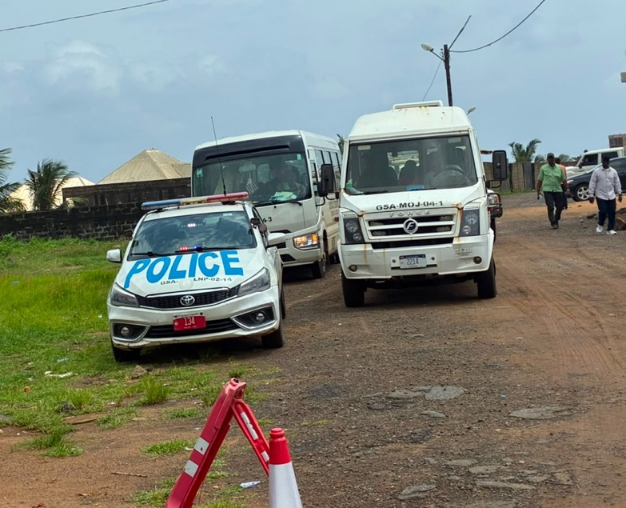
Earlier, prosecutors and defense lawyers had delivered sharply contrasting closing arguments, each urging the six men and six women on the jury to rule in their favor.
“The traffickers clearly deceived, coerced, convinced, harbored and transported,” prosecutor Randolph D.M.O. Johnson told the jury. “They were promised traveling opportunities and, at the end of the day, exploited the victims.”
During his closing argument, defense lawyer Carlor, tried to muddy the state case by focusing on testimony from government officials who confirmed that Infinity Millennium Platinum Star Limitless Institution was registered with the Liberian government. He argued that any failure to pay taxes or comply with regulatory requirements should have been handled administratively, not through criminal prosecution. Prosecutors rejected that argument, saying a legally registered organization could still be used to commit crimes.
Government says case sign of commitment to fighting human trafficking while official accused of taking bribes is promoted.
The case had also been shadowed by Liberia’s broader record on trafficking prosecutions: just six of 22 cases that reached Liberian courts since 2020 had ended in conviction before Monday’s verdict. In 2023-2024 Uganda, by contrast, had won 230 convictions.
Fayiah commended the international community, particularly the U.S. embassy in Liberia, for supporting them as well providing “tips” to the government. He said with this case, they had taken a proactive action to thoroughly fight human trafficking.
“We have desk in my office for human trafficking,” said Fayiah. “It is headed by my special assistant. The international community has downgraded us to tier two. So we have to fight hard to bring us up to standard. And because of that we have the desk there. And that desk is very effective.”
But ongoing actions by government may complicate that picture. As the trial got underway Sumo C. Kutu Akoi, a senior human trafficking prosecutor, told FrontPage Africa/New Narratives that Fayiah had ordered the creation of a special investigative panel “to establish the authenticity of those statements by the victims” accusing Juah and Dunbar of taking bribes. To date Juah and Dunbar have continued in their roles. Last week, Juah was promoted to the role of national coordinator of the Public Defense Program by Supreme Court Chief Justice Yamie Quiqui Gbeisay, Sr.
Since the allegations were published Juah has also run training programs for public defenders involved in cases of sexual and gender-based violence funded by the EU-Funded Spotlight Initiative supported by UN Development Program and UN Women.
This story was a collaboration with New Narratives as part of the Investigating Liberia project. Funding was provided by the Swedish International Cooperation Development Agency. The funder had no say in the story’s content.