

By Aria Deemie with New Narratives
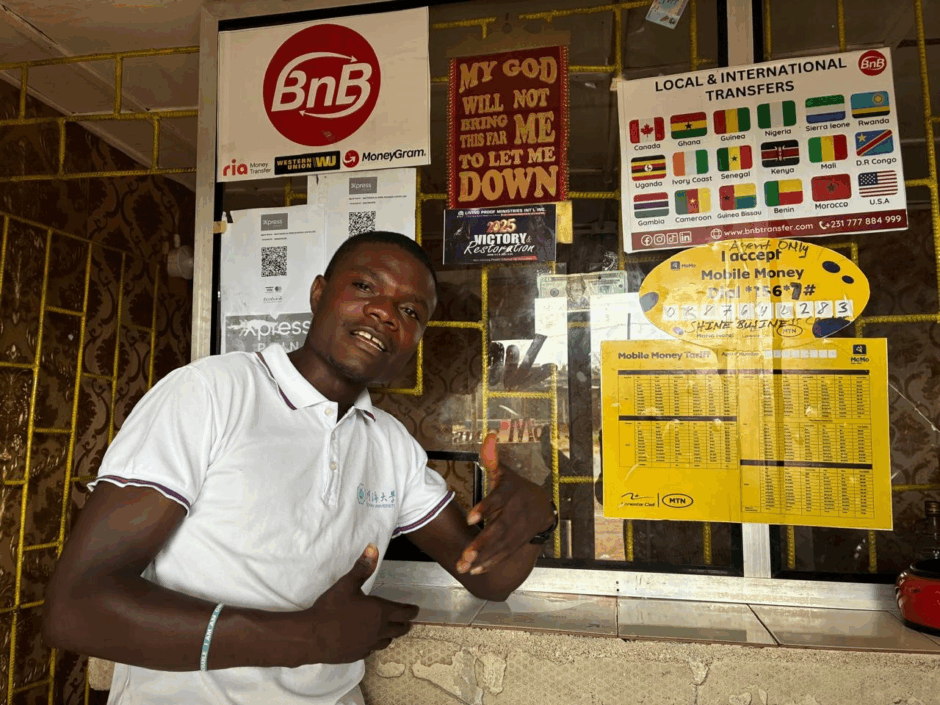
In a quiet office on the outskirts of Monrovia, Isaac Success Yomah manages a stream of transactions from Liberians collecting money sent by loved ones abroad, mostly from the United States. It’s steady business, and for many of his customers, essential.
But a provision in President Trump’s so-called “Big Beautiful Bill“ put to the U.S. Congress last month could soon change that.
The bill, passed by the U.S. House of Representatives and now awaiting action in the Senate, would place a 3.5 percent tax on remittances sent out of the U.S. by non-citizens (green card and other visa holders). U.S. citizens would not pay the tax. The bill originally had the tax at 5 percent but was reduced to 3.5 percent in Congressional negotiations. If it becomes law, the tax will take effect in 2026.
In Liberia, where remittances are a vital economic lifeline, few are aware of the proposal. But economists and industry operators say the consequences could be serious.
“It would directly reduce household income for many Liberians,” said William H. Dassin, a Monrovia-based economist. “People who depend on remittances will have to make hard spending choices. The U.S. sender will likely reduce the amount or stop sending altogether because of the added cost.”
Remittances from the diaspora play a crucial role in Liberia’s economy. The Central Bank reported nearly $60 million in personal inward remittances in September 2024 alone, much of it flowing through money transfer operators, mobile money services, and informal networks.
Liberia received approximately $800 million in personal remittances in 2023, marking an increase from $689.74 million in 2022. That is equivalent to the government’s entire national budget and accounts for nearly 20 per cent of the economy, one of the highest rates in Africa according to the World Bank.
Liberia is not alone. In 2023, remittance flows to Africa reach $54 billion, with Liberia being one of the nations where these inflows constitute the highest share of the economy.
“Our Business Could Drop”
At Shine Business Center in Mount Barclay, Yomah facilitates money transfers through Western Union, RIA, BNB, and mobile platforms. He says the proposed tax will have chilling effects.
“I receive about 30 persons daily for remittance withdrawal, the majority of which is sent from the USA,” Yomah said. “Customers aren’t talking about it yet, but if it becomes more expensive to send money, people might reduce what they send or find other ways. Our business could drop. People might even start avoiding the formal system altogether.”
He added that any uncertainty tends to spark anxiety among customers, many of whom live “payment to payment.”
A Blow to Small Enterprises
Dassin warned the ripple effects could extend beyond households.
“There are businesses here that rely on remittance payments from customers or partners abroad, especially those doing small-scale cross-border trade or e-commerce,” he said. “If the U.S.-based sender feels it’s too expensive to continue, those businesses may lose capital or sales.”
The Ministry of Finance and Development Planning acknowledged receiving questions from New Narratives/FrontPage Africa but did not respond before publication.
What Comes Next?
The provision is one small part of President Trump’s controversial overall tax and spending bill formally titled the The bill, which still faces hurdles in the U.S. Senate, has faced opposition from U.S. lawmakers and Elon Musk, President Trump’s billionaire advisor. Even if the overall bill fails, experts expect the provision will be included in whatever bill eventually passes. They warned it could reshape global remittance flows and deeply affect communities that rely on them.
“The government and vendors in Liberia should start preparing now,” Dassin said. “Even if this version doesn’t pass, similar policies could return. The dependency on remittances leaves us vulnerable.”
This story was a collaboration with New Narratives. Funding was provided by the American Jewish World Service. The funder had no say in the story’s content.