
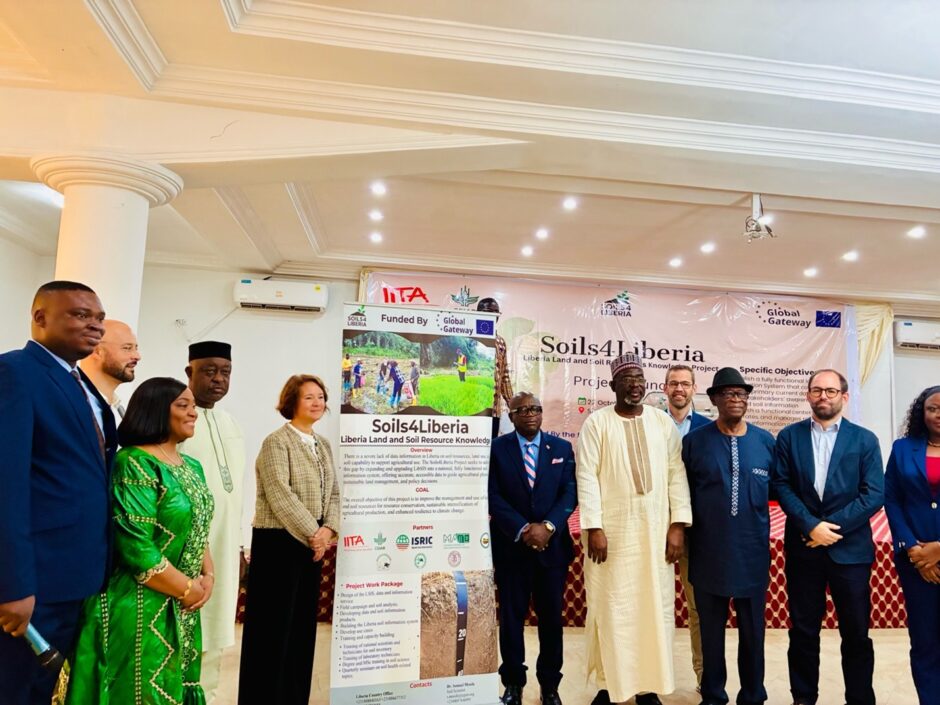
Summary:
- Liberia’s Agriculture Ministry has launched the Soils4Liberia Project to map and classify soils nationwide and build a database to guide farmers and boost yields.
- The $4.3 million EU-funded initiative, implemented with the International Institute of Tropical Agriculture, aims to promote climate-smart and data-driven farming.
- The University of Liberia and other national agencies will conduct soil research and farmer training to improve land use and restore degraded farmland.
Among the many issues plaguing Liberia’s farmers, the health of the soil has long been at the top of the list. For decades, farmers have worked with little information about the nutrients, fertility, or moisture in their land, leading to low yields and widespread soil degradation. With as many as seven in every ten Liberians engaged in agriculture, experts say protection of farming productivity is crucial for food security.
In an effort to address this the Agriculture Ministry has launched a nationwide effort called Soils4Liberia to map and classify its soils in a bid to revive depleted farmland. The new initiative aims to build a national soil database that will guide farmers on what crops grow best where, reduce wasteful fertilizer use, and help restore land damaged by deforestation, mining, and shifting cultivation.
The project would be a “a transformative and visionary initiative aimed at restoring the very foundation of our nation’s agriculture, our soils,” Solomon Hedd-Williams, deputy minister for Technical Services told a launch event attended by government agencies, the European Union among others this week. “Without healthy soil, we cannot talk about food security, economic progress, or climate resilience.”
Officials say the project will also help government make smarter, data-driven decisions about land use and agricultural planning. With reliable soil data, Liberia can attract investment, target irrigation and infrastructure projects, and design programs to protect fragile ecosystems. Experts say healthy soils are key to boosting harvests and building resilience to climate change — and that the effort could transform the way Liberia feeds itself in the years ahead.

Liberia’s National Climate Adaptation Plan 2020–2030 warns that agricultural productivity, already suffering from land degradation and extreme weather, is increasingly vulnerable to climate change, with rising pests, diseases, and more frequent droughts and floods. The Food and Agriculture Organization of the United Nations, a global agency that works to improve food security, support farmers, and promote sustainable agriculture worldwide estimates that insects destroy 10–30 percent of all food produced in Africa each year.
Farmers are already feeling the effects. In Margibi County, cassava farmer Gleekeh Peters said her harvests have dropped from 100–150 bags to barely 50 due to soil disease and changing weather. Rice farmers like Fatu Darmo face persistent pest infestations, while vegetable growers in Kakata, including Jackson Williams, contend with unpredictable rainfall disrupting planting cycles.

Experts caution that these challenges will worsen. Garmonyou A. Sam, an entomologist at the Ministry of Agriculture, explained that rising temperatures are helping pests thrive, putting crops at greater risk and reducing yields.
A Data-Driven Approach to Climate-Smart Agriculture
The Soils4Liberia Project aims to address these problems at their root. Through a nationwide soil survey and the creation of a National Soil Information Platform, the project will provide critical data for farmers, policymakers, and researchers to guide climate-smart practices, improve soil health, and enhance crop resilience.
The initiative builds on earlier efforts, including the Liberian Soil Information System launched in 2023. Developed in collaboration with the Ministry of Agriculture, University of Liberia, Food and Agriculture Organization of the United Nations, and the Global Soil Partnership, the Liberian Soil Information System compiled soil data using digital mapping techniques and is integrated with the Global Soil Information System, but its reach was limited by funding challenges.
The new Soils4Liberia Project, funded by the European Union with a $4.3 million bilateral grant in partnership with Nigeria-based International Institute of Tropical Agriculture, will expand coverage to all 15 counties. According to Halala Willie Kokulo, director of Land Development and Water Resources at the Ministry of Agriculture, the initiative builds on years of groundwork, including a Food and Agriculture Organization of the United Nations -supported pilot in Nimba County, which developed the Liberia Soil Information Platform but became inactive after funding ended.
“We’ve been pursuing this project for nearly six years,” Kokulo said. “With support from the European Union and International Institute of Tropical Agriculture, we can now expand it nationwide to build a reliable soil database that informs policy and research.”
The European Union Ambassador to LiberiaNona Deprez described the project as a critical step toward sustainable agriculture, noting that it will guide policy and strengthen livelihoods for Liberian farmers. “Liberia’s potential for agricultural growth is immense,” the Ambassador said. “With over 70 percent of the population engaged in agriculture, this sector can drive economic diversification and development.
The project is being implemented in collaboration with the University of Liberia’s College of Agriculture and Forestry, which will lead laboratory analyses supported by the Central Agricultural Research Institute. Other partners include the Environmental Protection Agency, Liberia Land Authority, Forestry Development Authority, Bureau of Concessions, and the National Fisheries and Aquaculture Authority, all expected to use the soil data for sustainable land-use planning.
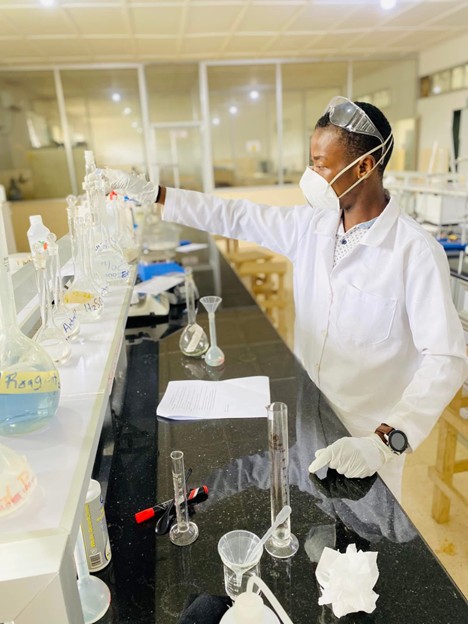
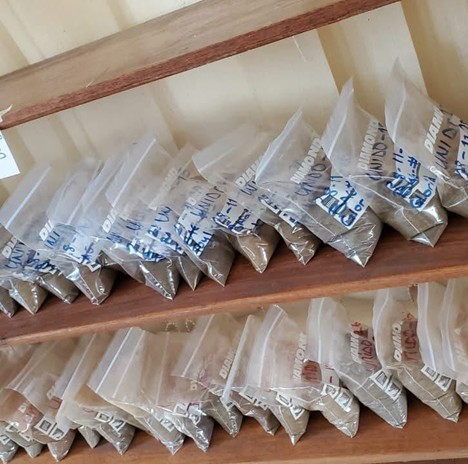
With more than 70 percent of the population employed in agriculture, the Soils4Liberia Project aims to establish a baseline on soil conditions across the country.
“Before we can analyze how rainfall or erosion impacts our soil, we must first know what we have,” Kokulo said. The project will also introduce career awareness programs in soil science and farmer training in soil conservation, particularly during World Soil Day in December.
Closing the event, Deputy Minister Hedd-Williams reaffirmed the government’s commitment to prioritizing soil health. “Healthy soil means healthy crops; healthy crops mean healthy people; and healthy people build prosperous nations,” he said. “Together, let us work hand in hand to secure Liberia’s agricultural future.”
This story was a collaboration with New Narratives. Funding was provided by the American Jewish World Service. The donor had no say in the story’s content.