

By Aria Deemie, climate change reporter with New Narratives
At the close of the second Africa Climate Summit, with brought African leaders together in Addis Ababa, campaigners are warning governments not to fall for “false solutions” such as carbon offsets markets that they said can worsen the climate crisis.
In a press statement, ActionAid International a global justice organization working in over 40 countries on poverty and climate issues, urged African governments to pursue a just transition away from fossil fuels and industrial agriculture, while focusing on the rights of communities, women, Indigenous peoples, and youth.
“Africa continues to bear the brunt of the climate crisis. The time has come to demand a just transition from fossil fuels and industrial agriculture,” said Emmaqulate Kemunto, Africa Regional Campaigner at ActionAid International. “Deals and commitments must deliver a just transition for Africa, by Africa. This means centering the needs and rights of the people, not polluting countries and corporations.”
ActionAid called on governments to reject carbon offset markets, which it described as “false solutions” that shift risks onto vulnerable communities while failing to meaningfully reduce emissions. The caution comes just weeks after Liberia announced its own plan to launch a national carbon market, a move that could place the country at the center of Africa’s growing controversy over carbon trading — a system in which companies or countries pay for the right to emit greenhouse gases by buying “credits” from others who reduce emissions. In Liberia, this often means compensating local communities to protect forests or plant trees while the companies themselves continue burning fossil fuels. A FrontPage Africa/New Narratives report shows that many forest communities remain excluded from negotiations and worry that carbon trading could threaten their livelihoods.

At the National Carbon Dialogue in Nimba County in August, Emmanuel K. Urey Yarkpawolo, Liberia’s Environmental Protection Agency boss, outlined a national policy framework to pay communities for protecting forests.
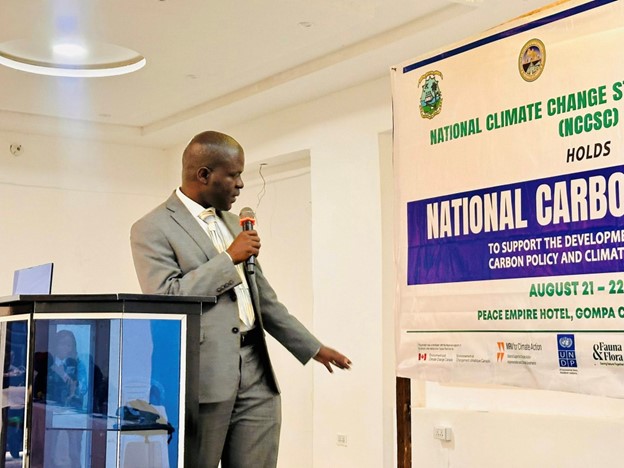
“Climate change is one of the greatest challenges of our time,” Yarkpawolo told participants. “Liberia needs clear rules on who owns the carbon stored in trees, how funds would be distributed, and which institutions would manage the process.”
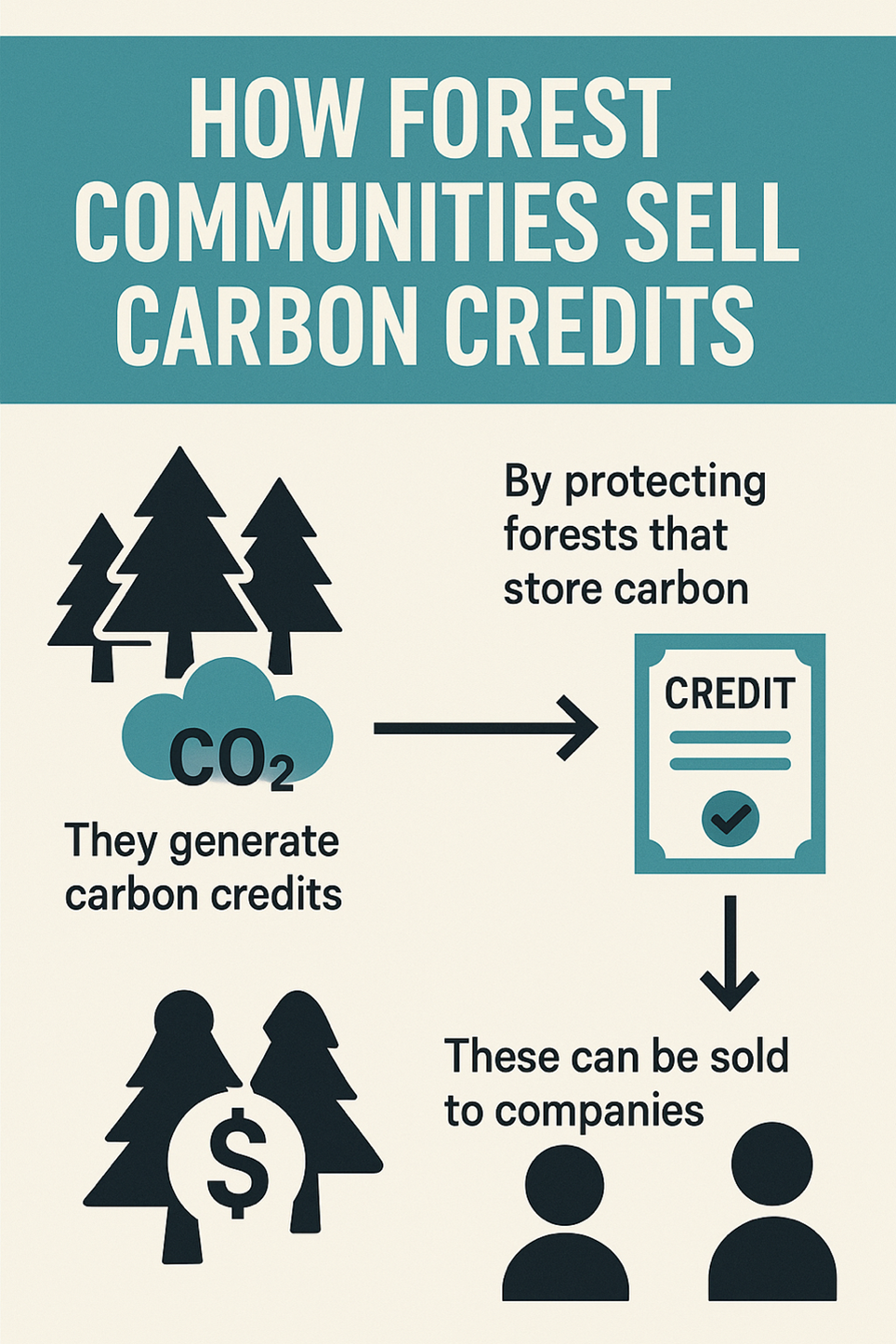
Liberian officials at the dialogue emphasized the economic stakes by highlighting what climate experts say is Liberia’s powerful asset in the fight against climate change. “We cannot own the largest share of the Upper Guinea Forest and live in poverty,” said Dehpue Y. Zuo, Deputy Finance Minister, to applause. Old growth forests like the Upper Guinea forest play a powerful role in absorbing the fossil fuels that are being trapped in the atmosphere and causing climate change. Carbon trading promises to pay communities to protect trees. But many experts warn that existing frameworks fail because of a lack of enforcement allowing international companies to sell carbon “credits” and do nothing to protect the forests.
Rudolf J. Merab of the Forestry Development Authority added that Liberia’s economic future depends on managing timber, gold,and carbon alike. Speaking at the gathering in Addis Ababa he said, “We are finalizing a National Carbon Market Policy and Article 6 framework to attract green investment while safeguarding transparency and equitable community benefits. This is a carbon market with integrity.”
The Article 6 framework refers to rules under the Paris Agreement that allow countries to trade carbon credits internationally, ensuring that emissions reductions are real, measurable, and benefit both the environment and local communities.
Liberia is one of the world’s most forested nations. About 69 percent of its land, 6.6 millionhectares remains under tree cover, making the country a net carbon sink. Its annual emissions account for only 0.1 percent of global greenhouse gases.

Yet Liberia remains one of the poorest countries in the world. Officials argue that a well-regulated carbon market could bring sorely needed revenue, a perspective not shared by all.
Civil Society Caution
Outside government hall, civil society voices warned of pitfalls. At a June ActionAid carbon market training in Monrovia, youth activists, Indigenous groups, and women’s rights advocates urged caution, saying carbon trading often fails to cut emissions, excludes forest communities, and shifts risks onto them.
“Where carbon CO2 is coming from, we must first eliminate the source. Once you cut off the source, you can now cut off the problem,” said Frances Tarpeh, a climate activist with Youth Go Green Network Liberia, a youth-led environmental group in Liberia. Through a communique, participants demanded transparency, direct community benefits, and that no deals move forward without free, prior, and informed Consent.

“Forests are not just carbon sinks,” said Loretta A. Pope-Kai, chair of the Liberia Civil Society Council. “They are homes, history, and livelihoods. Those who have protected them for generations must be at the center of any climate solution.”
Across Africa, the results of carbon offset projects have been uneven. In Uganda’s Kachung region, rows of young trees stretch across the hills, yet many farmers reported receiving little of the money promised for planting them. In Zimbabwe, the Kariba REDD+ project raised millions in carbon credits, but local villagers still rely on firewood and subsistence farming, seeing few benefits from the windfall. Meanwhile, in Tanzania, Indigenous communities carefully tended forest plots, monitoring wildlife and marking boundaries, while earning income through verified carbon credits. Liberia now steps into this patchwork of successes and failures, where the fate of its forests and the livelihoods of those who protect them hang in the balance.
Diverging Climate Paths Between Liberia and the U.S.
While Liberia watches the lessons across the continent, its climate change adaptation trajectory now diverges sharply from that of the United States, its major ally. The U.S. is now responsible for about 14 percent of global emissions but under the administration of Donald Trump it is severing engagement with international fossil fuel reduction efforts and threatening to put already slow international climate change action even further behind.
In July, the head of the U.S. Environmental Protection Agency announced plans to overturn a 2009 scientific ruling that recognized greenhouse gases from burning oil, gas, and coal as a danger to human health. For over 15 years, that ruling has anchored U.S. climate policy. According to experts, the reversal could strip the U.S. government of its authority to limit emissions from cars, power plants, and factories.
“This is the biggest deregulatory move in U.S. history,” said Lee Zeldin, Trump’s appointment to head the EPA, arguing that rolling back the rules would lower costs for businesses and drivers. Environmental lawyers, however, warned that it could undermine efforts to combat climate change for decades.
Next Steps
Backed by the European Union and the United Nations, Liberia plans to present its finalized carbon market policy at COP30 in Brazil later this year.
“With strong oversight and the application of ‘Free, Prior, and Informed Consent’, we aim to prevent exploitation and build a sustainable carbon market that meets the aspirations of the Liberian people,” Yarkpawolo said.
This story is a collaboration with New Narratives. Funding was provided by the American Jewish World Service. The donor had no say in the content of this story.