
By Augusta S. Lafalay, senior reporter with New Narratives
Summary:
- At least 800,00 Liberians have kidney disease according to experts. Doctors say most kidney failure in this country is preventable and can be detected early with a simple urine test, but most Liberians do not know; Many damage their kidneys by overmedicating with common painkillers.
- Health officials say most Liberians diagnosed with kidney failure do not survive, and preventable diseases and weak screening are driving more people toward the same fate.
- Liberia’s only public dialysis center opened in 2022 as a national breakthrough, but four years later, it cannot keep up with the number of patients who need it.
In 2021 Anthony Gbeh had never heard the word “dialysis”. Today, it has become the center of his life. The 45-year-old goes to the country’s only dialysis center here at John F. Kennedy hospital, every Tuesday, Thursday, and Saturday, spending about 12 hours a week connected to the machine that cleans toxins and waste from his blood, because his own kidneys no longer can.
The family scrambles to find the $US300 he needs to pay for it every week. The illness cost Gbeh his teaching job at the University of Liberia and left him dependent on his sister-in-law. The financial strain has shattered the family. Most have distanced themselves from him.
Gbeh also begs for money. He has no choice. “It is either you beg to survive, or you die,” he says.
Chronic kidney disease is often called a silent killer because it can destroy the kidneys for years before a person feels anything is wrong. By the time symptoms appear — swelling, fatigue, high blood pressure, foamy urine — the damage is advanced. No one knows exactly how many Liberians have kidney disease, because the country has never done a nationwide count. But researchers looking at the West Africa region have found that about 1 in every 6 to 8 adults has some form of kidney disease. That would be 800,000 people in Liberia living with the condition, many without knowing it.
Liberia carries a double burden. It is seeing more diabetes and high blood pressure — the two leading causes of kidney failure worldwide – but with far less public information on how to prevent or control them. Layered on top are causes more specific to this region: malaria, HIV, hepatitis B and C, sickle cell disease, and the widespread use of herbal remedies and painkillers that can quietly poison the kidneys.
Gbeh is an example. He originally thought he had malaria. He became weak and tired and could barely get out of bed. Doctors at Fidelity Hospital, in Sinkor, where he lived, said it was typhoid. Gbeh moved from clinic to clinic as his legs swelled and his blood pressure climbed, until doctors finally found the real problem: his kidneys were failing.
Doctors determined that what caused his kidney failure was uncontrolled high blood pressure.
That is the cause in almost all cases in Liberia. Uncontrolled high blood pressure, infection and diabetes, in that order, are the biggest factors.
Doctors also warn that some medicines can damage the kidneys, particularly when they are taken excessively or for long periods without medical supervision. These include common non-steroidal anti-inflammatory painkillers such as ibuprofen, diclofenac and indomethacin. Long-term daily use of paracetamol has also been linked to kidney damage.
Some traditional or herbal preparations whose ingredients may be unknown, as well as medicines containing aristolochic acid, which can be found in some traditional Chinese medicines, can also be a cause according to specialists at JFK.
Prednisolone, a steroid often taken without medical supervision for conditions such as joint or knee pain, can also contribute indirectly to kidney problems by raising blood pressure and blood sugar.
They warn its yet another result of Liberia’s unregulated pharmaceutical industry where Liberians can buy any medicine without a prescription and without any knowledge of the damage they may be causing.
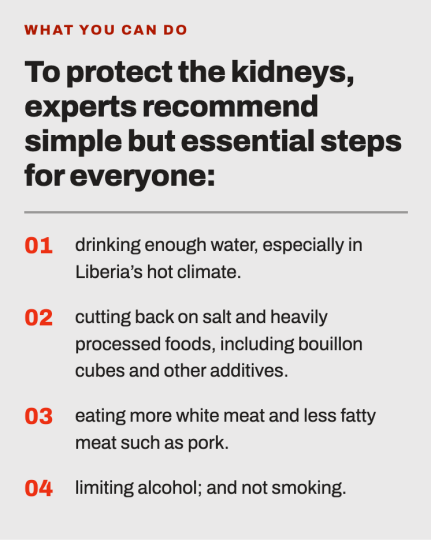
The tragedy, said experts, is that most kidney failure in Liberia is preventable.
“The commonest cause is ignorance,” said Dr. Ejikeme Arodiwe, a Nigerian consultant physician at JFK. Liberia has no kidney specialists though several are now being trained. “People don’t go for routine medical checkups. They come when the disease is already advanced.”
Health experts say Liberia urgently needs its own study to know the real numbers. And an awareness campaign to save lives.
Doctors at John F. Kennedy said people’s best defense is prevention: routine blood pressure and urine checks that can catch trouble years before kidneys fail. Until that kind of screening reaches ordinary Liberians, doctors warn, more families will learn about kidney disease only after it has already taken hold, and will be left, like Gbeh negotiating between staying alive and staying afloat.
“If they remember one thing,” Dr. Arodiwe, said, “it should be prevention.”
“Kidney is life,” Dr. Comfort Nyenetu Cooper, administrator of the dialysis center warned. “Take care of your kidney, take care of yourself.”
Gbeh is one of those who use the dialysis center now. When ten dialysis machines arrived here in 2022 for the opening of the Ellen Johnson Sirleaf Dialysis Center, many people thought wrongly that kidney disease could now be treated and even cured.
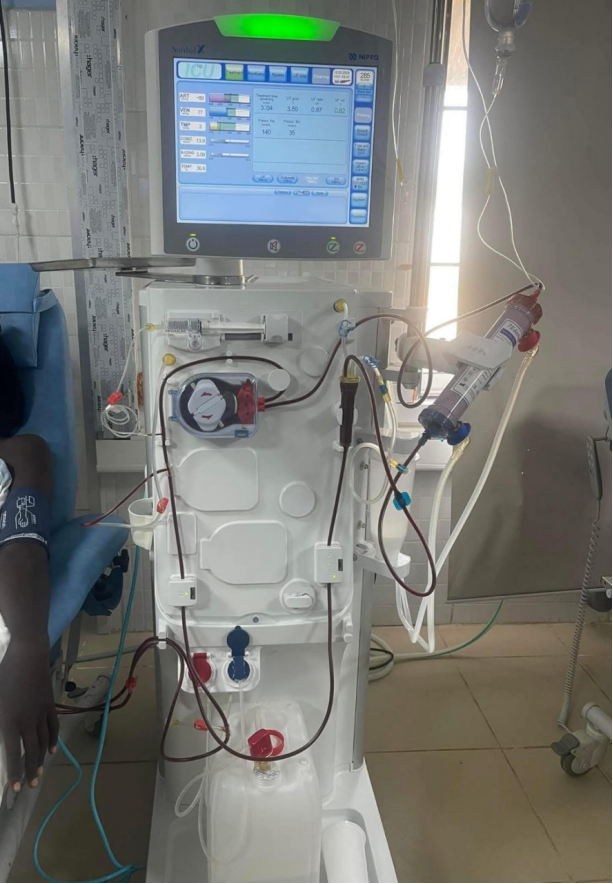
But doctors warn that it is a dangerous misconception. Dialysis machines act in place of kidneys, filtering the body’s blood when the kidneys can no longer do so. They keep people alive, but they are not a cure.
Right now almost all patients here are eventually handed a death sentence not because medicine failed them, but because the cost of staying alive is more than an ordinary Liberian family can bear. Many eventually receive a transplanted kidney from a family member, or deceased donor. In Liberia that is not available. In developed countries with health insurance costs can be reduced. The burden of keeping people alive is carried by families.
Many families eventually have no choice but to give up.
Staff here suffer as they watch patients die unnecessarily. Dr. Arodiwe is treating one patient whose family could not afford treatment. Ultimately they decided as a family that they could not continue.
“We lost that patient this morning,” he said sadly.
Dr. Arodiwe described another man who kept a strict three-times-a-week schedule in his first year, then slipped to once a week, then to “occasionally,” as the cost wore down his family’s savings. “You can now see he started going down,” Dr. Arodiwe said. “He looks sicker. He looks weaker.”
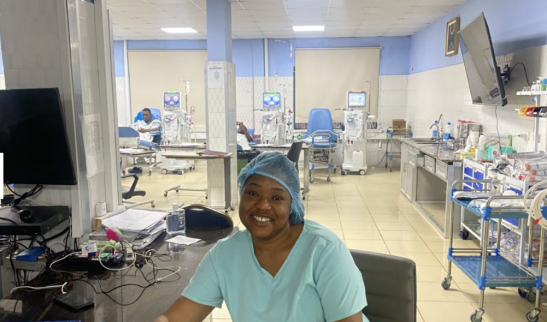
Even when patients can afford it, the unit cannot keep up with demand. It now runs three shifts a day on eleven machines about 300-400 dialysis sessions monthly, according to Dr. Cooper. It is far more than the unit was designed to handle when it opened.
Patients line up as early as 2 a.m. to secure a place in the day’s first shift. When the unit is full, some are turned away and sent home to wait for another day. Gbeh said two of the center’s machines were out of service when conducted the interview.
“The hospital suffers daily,” Dr. Cooper said, describing a facility that spends far more on imported, single-use dialysis supplies — bloodlines, dialyzers, concentrate — than it recovers in patient payments each.
Dr. Cooper said ignorance about the disease remains as dangerous as the disease itself. “What you do not know, you cannot prevent,” she said.
Many patients, she said, only discover their kidneys are failing after being treated for something else entirely, often the very high blood pressure or diabetes that caused the damage in the first place.
New Narratives made a written request for the Ministry of Health’s response to issues raised in this story to Augustus Walker, communications director of the ministry’s communications office. As of publication, the ministry had not responded.
The strain of kidney failure is placing intolerable strains on families
Momolu Kormah, a restaurant operator in his 20s, was diagnosed with kidney failure in 2023. He became one of the few Liberians who have received a kidney transplant.
The possibility of a transplant came through an unexpected network of friends. Kormah, who had lost both parents and was known in his community from his days as a dancer, turned to Facebook for help. He posted about his illness; friends shared the appeal and formed a group to raise money for him. An interview arranged through that effort eventually led to someone offering to sponsor his trip to India and pay the US$70,000 costs for the transplant.
The kidney came from his younger brother, Ahmed, who volunteered to donate. People have two kidneys and can live long healthy lives with only one. Kormah said doctors in India explained that transplantation would mean taking medication for the rest of his life, following dietary restrictions and undergoing regular medical monitoring. The hospital also screened both him and his brother before the operation, including blood-type and kidney-compatibility testing.
India faces a serious illegal kidney trade problem, fueled by scarce legal supply—only about one in 300 kidney patients get a donated organ. While law limits donation to close relatives or approved cases, brokers routinely fake documents and even DNA results to bypass this. A major 2024–2025 India-Bangladesh trafficking investigation revealed that transplant tourists often receive kidneys from poor, indebted people recruited through deception or coercion, including migrants from Bangladesh. Recipients pay around as much $26,000, but donors see only $2,500–$4,000, with brokers and corrupt officials pocketing the rest.
The hospital required Kormah to provide documents including a family tree, bank statement and authorization from the Liberian government because of concerns he and his brother may have been involved in fraud.
The transplant was performed at Marengo Asia Hospital in Gurugram. Kormah remained under observation for about two months before returning to Liberia.
But once he got home Kormah’s struggle didn’t end. Transplant patients must take anti-rejection drugs for life. Konneh said some of his drugs were not available in Liberia and had to be sent from India. He spent about US$400 a month on the medications.
Friends and relatives sometimes contributed, but delays in getting the medicines from India added another problem. Eventually, he could no longer afford them.
“Having HIV is better than kidney failure,” he said. If you take HIV medication you will live a healthy life. But with kidney failure, the medicines just keep you barely alive.
In 2026 Konneh’s luck ran out. He became one of the one in five people in whom the transplant is rejected in the first five years. He was forced to return to dialysis at John F. Kennedy Medical Center.
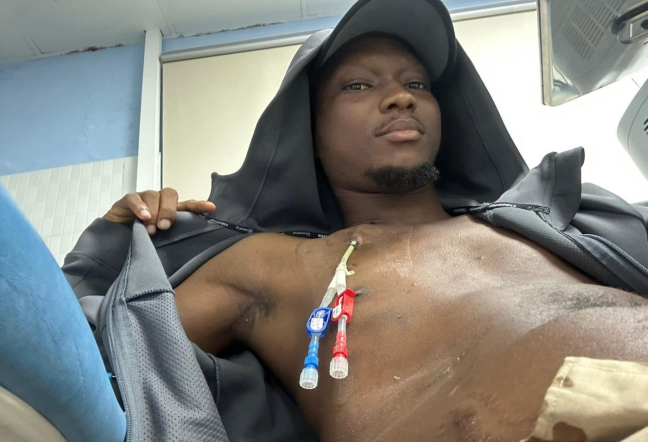
Since then his life has since been a misery. He walks this journey with a grim brigade of the almost-dead. He watched recently as a fellow patient, robbed of his belongings and money on his way to an early-morning session, grew weaker and died making the same trip weeks later.
“If somebody like me who is doing dialysis, being stronger, more stable than me can pass away (die), what more can I do?” Kromah said.
Doctors urge better screening, early diagnosis and awareness raising. Kidney specialists at JFK were eager to make clear that a few steps could save people from ending up here. Liberia is treating kidney failure at the final stage, when the cost is highest, and survival depends on money instead of catching the disease early when a simple test and a change in habits could still save a life.
Dr. Arodiwe said there are warning signs every Liberian should take seriously, especially anyone who already has high blood pressure or diabetes:
Passing little or no urine, or noticing urine that foams like soup which is a sign of protein leaking from damaged kidneys.
Swelling in the face or body, especially noticeable first thing in the morning.
A test that can catch the disease early is simple and inexpensive. A basic urine test that takes under five minutes, alongside a blood pressure check. Both are available at most Liberian clinics, but neither is routinely offered unless a patient specifically asks. Dr. Arodiwe would like to see that change.
“Any patient that comes to any health facility, even for something else, must have the person’s blood pressure checked,” Dr. Arodiwe said. “It’s very easy to check pressure. A lot of people with high blood pressure could be picked up just by that simple policy.”
Liberia’s severely stretched health budget has just 1.2 million for every Liberian. That is now facing even greater strain due to cuts in international donor funding. A national health insurance scheme seems very far off. But experts say a public health campaign would be a low-cost solution that could go a long way.
Gbeh says that would have helped him. “If I had known more about this disease earlier, I would have paid closer attention to my health.”
This report is a collaboration with New Narratives as part of the “Investigating Liberia” project. Funding was provided by the Swedish embassy in Liberia, which had no say in the story’s content.