


By Augusta S. Lafalay with New Narratives
Summary:
- Thousands of Liberian women are living with obstetric fistula — a preventable childbirth injury that causes constant leaking of urine or feces.
- Survivors wait years — sometimes decades — for care that basic hospitals in other countries provide routinely.
- Experts say more than 80 percent of fistula cases could be prevented with timely maternal care, but without urgent investment in emergency obstetric services, referral systems, and trained staff, women across Liberia will keep paying with their bodies and their dignity.
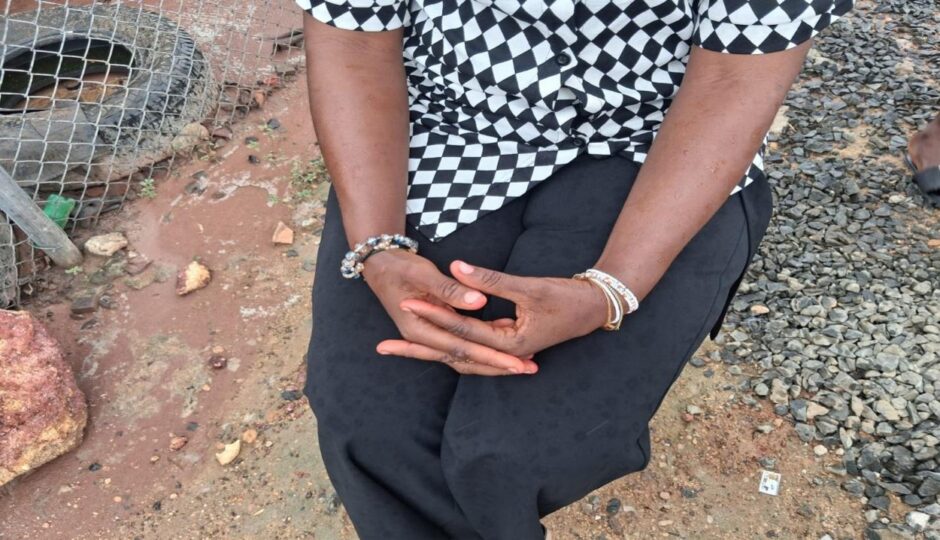
For fourteen years, S. said she woke up every morning to wet and smelly sheets. She had no name for what was wrong with her. She had no doctor to visit, no clinic that could help. All she had was shame — and silence.
It started with a difficult birth in 2011. After an agonizing labor that she thought might kill her, the baby did not survive. When S. came home, something inside her had broken. She was leaking urine — constantly, uncontrollably — and she did not know why.
“I woke up and saw my bed cover with urine,” S. said. “I did not know what was wrong with me. That was the beginning of my nightmare.”
She was forced to wear rags all day every day to catch the urine. There was no hiding the smell. The now 42-year-old woman isolated herself from the community, stopped sitting with neighbors, and eventually left the city altogether. FrontPage Africa is using only her first initial because of stigma.
“I felt very bad,” she said in Liberian English. “The bad talks and feeling from people was too much. I could not bear it. I thought I did something to God.”
S.’s story is not rare. Liberia has no reliable estimate of how many women are living with fistula. The Ministry of Gender did not respond to requests for data but in 2o25 Ruth Walker, the ministry’s fistula coordinator, told the Observer that the Health Management Information System did not keep a record of fistula cases or surgeries. Sub-Saharan African prevalence rates suggest somewhere in the range of 2,000 Liberian women may currently be living with the condition with more added every month.
Obstetric fistula is one of the most serious consequences of poor maternal health care. Experts say it happens when a woman labors for too long without medical help. The baby’s head presses on the surrounding tissue for so long that it cuts off blood flow. The tissue dies, leaving a hole — a fistula — between the bladder and vagina, or between the rectum and vagina. The result is constant leaking of urine or feces, with no way to stop it. In four out of every five cases the baby dies. Sometimes the mother dies.
Female genital cutting, which remains prevalent in parts of Liberia, compounds the risk — the scarring and tissue damage it causes can narrow the birth canal and obstruct labour, making prolonged delivery and fistula more likely.
The age of the woman is also a factor. Experts say young girls, whose bodies have not fully developed, are more likely to have birth obstructions that lead to fistulas because they’re not big enough for the baby to pass safely. Often these girls have become pregnant through rape or, because there is little sex education, they have no knowledge of how women become pregnant. And access to abortion is still strictly limited. One in every three Liberian women is pregnant before they’re 19 – one of the highest rates in the world. The higher the number of births by teenagers, the higher the number of fistulas.
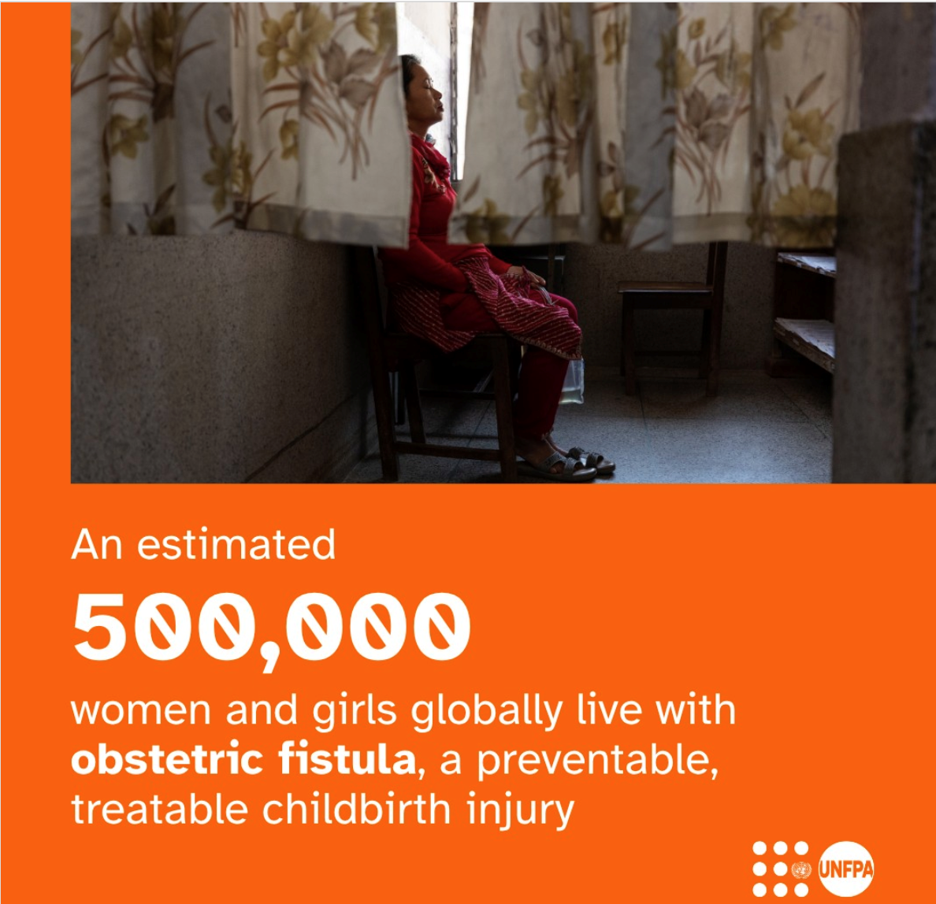
The United Nations Population Fund estimates that 80 percent of cases could be prevented — if women got the right care in time. Tragically, that is rarely happening in Liberia.
“Fistula is preventable. No woman should go through prolonged labor for days and come home leaking urine or feces. When that happens, something has failed in the system.”
— Dr. Wilmont L. Smith, obstetrician-gynecologist, JFK Medical Center
Liberia’s maternal health system has been shaped by decades of civil war, poverty, and under-investment. The 2014–2016 Ebola crisis wiped out much of the progress that had been made, closing facilities and driving health workers away. Rebuilding has been slow. Most rural counties lack trained midwives, functioning ambulances, or hospitals with surgical theaters open around the clock.
Doctors and health experts describe a pattern known as the “three delays.” The first delay happens at home.
“A woman may wait at home because her husband is away, because there is no money, or because the family believes she will deliver naturally,” says Dr. Smith. “Then transportation is a problem. Some are carried in hammocks for hours. And when they finally arrive, the facility may not have surgical staff or supplies ready.”
In Sinoe County, A. went into labor as Ebola was raging. Her family took her to a local drugstore. A person with no medical training tried to deliver the baby using scissors. “He cut something inside me,” she says.
By the time her family tried to move her to a hospital, her condition had become critical. The baby did not survive. She went on to develop both urinary and fecal leakage. Despite multiple surgeries, she still has unresolved symptoms. She has lived in isolation from the rest of her family and community for 12 years.
“Only my mother stayed with me,” she says.
Another victim, H., is 20years old. She lives in a rural community in Grand Bassa County with no health facility nearby. When she went into labor, her family took her to a traditional midwife. For two days, she stayed there in pain while her condition grew worse.
“They checked me and later said they could not handle it,” she recalls.
She was eventually loaded onto a motorbike and driven to a distant hospital. The baby could not be saved. After delivery, H. began leaking urine and feces — clear signs of a fistula. Doctors at Phebe Hospital told her that her bladder is severely damaged. She may need a catheter or a urine bag for the rest of her life.
“I cried many days because I did not feel normal.”
— H., 20, Grand Bassa County
According to Woseh Gobeh-Weah, sexual reproductive health specialist at the United Nations Population Fund office in Liberia, efforts are now underway to improve fistula tracking through a partnership with the Ministry of Health. She says the UNFPA recently supported the ministry in adding fistula-related indicators to the National Health Information Management System, allowing health workers to begin recording and tracking new and existing fistula cases reported at both community and health facility levels.
But help for victims needing repair is limited. Phebe Hospital in Bong County, the country’s only facility equipped to treat the condition, saw around 2,000 patients over fourteen years before dedicated $US3.5 million programme funding from UNFPA dried up in 2018. It repaired 400 women between 2022–2025, according to Dr. Minnie S. Ricks, medical director of Phebe Hospital.
In 2025, the Economic Community of West African States committed $US245,000 to for treatment raising hopes that help would be more widely available.
It was not possible to get any information from the government about efforts to reach victims and repair injuries. Benedict Roberts head of ECOWAS national office in Liberia declined to speak on whether the funding was received and how it was spent. She referred this reporter to Ophelia Kennedy, fistula focus point at Ministry of Gender, who promised to get back with the information but did not respond to follow up texts and calls.
Dr. Nowiah Gorpu-Dolo Dennis, a health policy consultant at the ministry referred this reporter to Walker. Walker, however, said Dr. Dennis should address questions on the issue.
Health experts say the path forward requires major investment in emergency obstetric care: more trained midwives and doctors, functional ambulances, maternal waiting rooms, accessible roads, and surgical facilities that are open 24 hours a day. They say prevention is far cheaper and more humane than trying to repair the damage afterward.
Dr. Smith says particular attention must be paid to young women, girls who are malnourished or physically underdeveloped, and those living far from hospitals who should be kept in maternal waiting rooms near a health facility. “In some communities, by the time they reach a hospital, the baby has died, and the mother already has severe injuries,” he said. “A well-functioning health system can drastically reduce fistula in Liberia.”
After fourteen years of suffering, S finally received treatment at Phebe Hospital.
“I feel free now. I can sit with people again,” she says. But her recovery left her feeling guilt at the women who were not helped.
“Some of the women are still there. Their work is not done,” she says. “People should not suffer like this before getting help.”
This story was a collaboration with New Narratives as part of the Investigating Liberia project. Funding was provided by the Swedish International Development Cooperation Agency in Liberia. The founder had no say in the story’s content.