
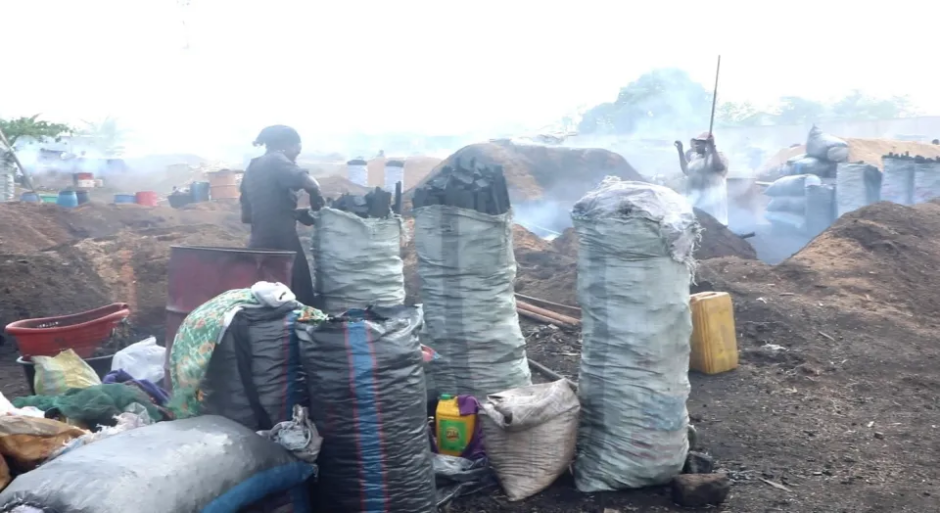
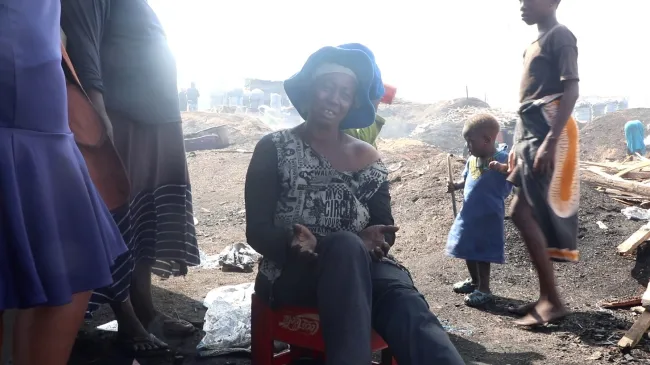
Margaret Awuni sits close to a heap of burning wood, her face masked by despair. Thick smoke curls around her as she coughs again and again as the wood burns down to charcoal that she then sells to workers here.
Awuni, 48, has been doing this work since she lost her job as a trader three years ago. She says the danger this job poses to her health became real in a recent visit to a local clinic. She was diagnosed with chronic bronchitis. The first question the doctor asked was whether she smoked marijuana.
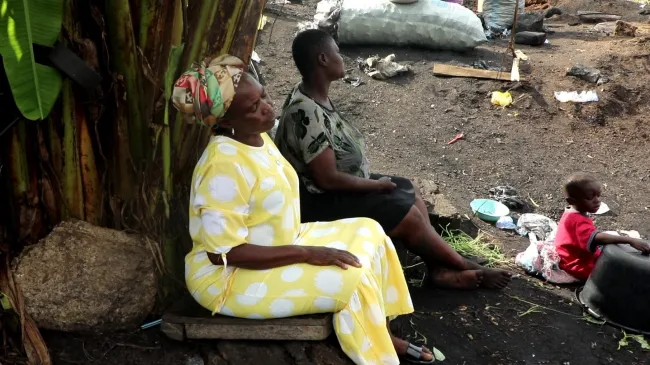
“How can an old woman like me smoke weed?” she laughs now at the memory. “I can only link it to the work I do, so I told him I burn charcoal for survival… But what can I do? My grandchildren and family depend on the little I get from this place.”
Margaret’s story exposes a deeper public health and environmental crisis tied to Ghana’s informal charcoal trade. As residents complain of worsening air quality and related illnesses, women who depend on charcoal production for survival say they are being forced out of the business with no alternative livelihoods.
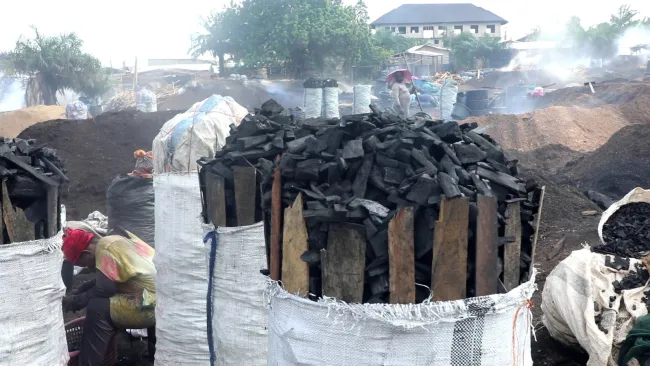
They also understand that staying in the business poses serious risks to their own health. Experts are increasingly warning them that prolonged exposure to charcoal smoke can cause serious respiratory diseases, placing vulnerable workers and nearby communities at risk.
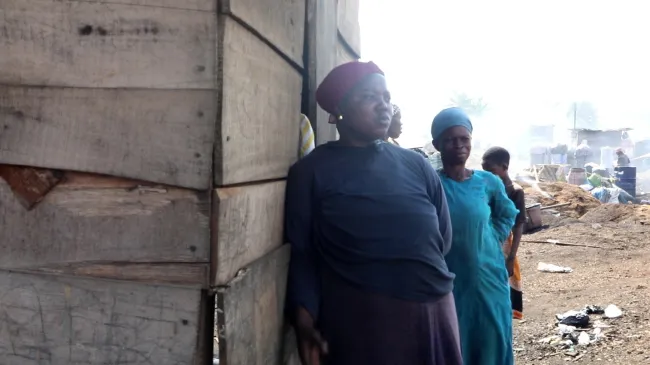
As awareness of the dangers of air pollution has grown in Sokoban in the last two years, women charcoal producers have become a focus of community anger. Some residents have moved out of their homes to get away from the dangerous smoke. They have lodged complaints. In November 2025, a court here issued an injunction ordering women like Margaret to stop burning wood in areas close to residents’ homes. Most have refused to abide by the ruling.
“The sad truth is there are lots of single mothers and women involved in this charcoal trade,” says Kojo Boateng, assemblyman for the Sokoban municipality. “You would also find young children who are with their mothers at these charcoal sites, but evacuating them has always been a challenge. They say they have no place to go.”
While Boateng has sympathy for the women’s situation, he says a solution needs to be found. “I believe someone’s work should not negatively impact others.”
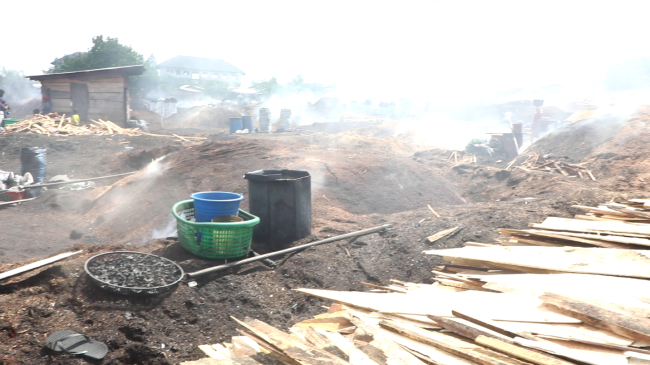
Margaret and the other women here are among thousands of women across Ghana who depend on charcoal production to survive. For decades, it has provided income for rural women and affordable fuel for cooking in urban homes and street food vendors. But experts say traditional earth kilns, which dominate production, are inefficient, wasting up to 85 percent of the wood’s potential energy and releasing huge amounts of toxic gases into the air. Women spend long hours inhaling toxic smoke from burning wood. It is indisputably sickening and killing them, according to experts.
“We are seeing increasing cases of asthmatic attacks and lung infections, especially among women and children in these areas,” says Dr Agyei-Mensah, a medical professional at the Wood Village Clinic. “Last month, we lost a woman who, according to reports, was a charcoal producer. She had an attack and was rushed here, but unfortunately, we lost her. We are also managing the case of one lady who almost died following her exposure to air pollutants here at Sokoban.”
Experts say the toxic smoke from charcoal doesn’t just impact the lungs. It is also causing illnesses such as blindness, heart disease, infertility, and cancer, and damaging the health of children and unborn babies. Cutting down trees also fuels deforestation, which risks destroying biodiversity that supports food production.
According to the World Health Organization, smoke from polluting fuels like wood and charcoal causes 3.2 million premature deaths each year, and women and children who are most exposed to the smoke bear the greatest share of that burden. A study published in Energy for Sustainable Development found that women in charcoal-producing communities report higher rates of respiratory illness and chronic cough compared to women in farming areas — a reality Margaret knows too well.
There are cleaner ways to make charcoal, but most producers in Ghana can’t afford them. Instead of the old earth-mound kilns that fill communities with thick smoke, improved kilns use less wood and create far fewer fumes. Even cleaner options—like retort kilns or “green charcoal” made from coconut shells, corn husks, or sawdust—protect workers’ lungs and reduce pressure on Ghana’s forests. But these methods cost more money and require training, so many producers are forced to stick with the smoky, traditional way of making charcoal.
Charcoal production is just one of the pollutants here: dusty unpaved roads and wood dust are also major factors. At its peak in 2024, levels of PM2.5 – the most dangerous air pollution particles – soared to 53 times higher than the WHO safe daily limit, according to Kwaku Poku, Metro Environmental Health Officer at the Assembly, which has been monitoring air quality in the area since January 2021.
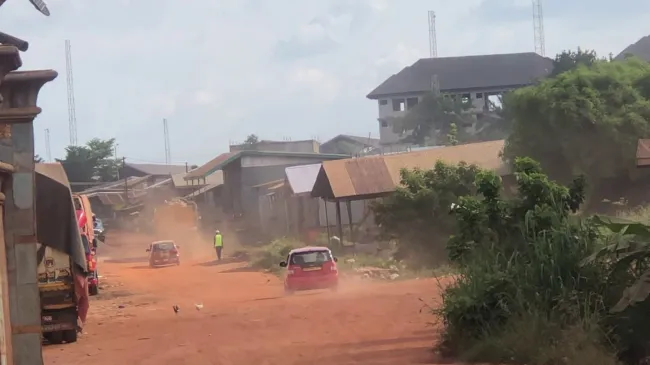
The Environmental Protection Agency also confirmed that a joint EPA–Stockholm Environment Institute survey showed Kumasi’s air quality is dangerously deteriorating. Concentrations recorded at selected locations in Kumasi, such as Adum, Suame Asokwa, indicated periods of hazardous air quality.
Ashanti EPA Programme Officer Asher Mustapha says community anger and an increase in air pollution-linked cases at local hospitals and clinics prompted the Assembly and the EPA to engage with the women in 2025 to educate them about safety and provide personal protective equipment. But talk of relocating the women caused distress.
In an interview, Joseph Amoako Addai and Asher Mustapha, EPA officials, confirmed that some women came to the agency in tears, afraid that they would be displaced with no alternate livelihood options. The pressure has prompted the Agency to explore grants and appeal to NGOs for support, so the women can access cleaner ovens.
‘We can look at the positive aspect of making charcoal, especially when we have women involved with that as their only source of livelihood,” says Joseph Amoako. “But we also have to use the right approaches so our environment is sustained, and our air quality is at its best. It becomes a win-win situation for us all.’
Here in Sokoban, mounds of burning wood line the edges of the settlement, releasing thick clouds of smoke that drift through nearby homes and shops. Residents say the air is never clean; the constant burning has turned Sokoban into a haze of soot and ash. The smoke makes the charcoal producers here nervous.
‘In this country, there are no lucrative jobs for old women like me” says Margaret. “I have no option but to do this job, even with all these risks I know of. If I die, I die!’
Yaa Asare, a mother of six and another charcoal producer here, says she understands the danger and will give up the job if she is given an alternative.
“If the government says he will build a market for us and equally give us startup capital, we will humbly accept, Yaa 38 says in her native Twi. “This job is very tedious, but I cannot stop. My family and children depend on this trade.”
Sokoban’s story is not isolated. Charcoal remains a key source of household fuel in Ghana, used by more than 70 percent of urban homes, according to the Ghana Statistical Service. The Food and Agriculture Organization estimates that the country loses approximately two percent of its forest cover every year, much of which is linked to fuelwood and charcoal demand.
The lack of progress has meant Ghana is struggling to meet the United Nations Sustainable Development Goals on good health and well-being (SDG 3), clean energy (SDG 7), and climate action (SDG 13), which call for cleaner household fuels, safer environments, and urgent steps to curb deforestation and air pollution.
“We have to start looking locally,” says Frederick Agyemang, a technical advisor from the People’s Dialogue on Human Settlement, an African NGO that is working with the Assembly to tackle the problem. “If we can build the capacity of local manufacturers to produce affordable clean cook stoves, more women can switch from charcoal without losing their livelihoods.”
Back in Sokoban, children cough as they play near the burning mounds, their laughter breaking between gasps for air. Margaret watches them quietly, her eyes heavy with worry. For her, charcoal is more than smoke — it is survival. But with every rising plume, she is reminded that the same fire that feeds her family is also slowly consuming her health and the environment.
This story was a collaboration with New Narratives as part of its Clean Air Ghana Reporting project. Funding came from the Clean Air Fund. The donor had no say in the story’s content.