
By Joyce Gyekye
Summary:
- A landmark 2023 study found over half the children tested in nine Ghanaian communities had unsafe lead levels — some needing urgent treatment.
- Years on, communities say they still don’t know what happened to the affected children, as government guidelines remain unfinished.
- Experts warn every delay in enforcement and treatment means more children’s development is put at risk.
TEMA, Greater Accra Region — In this community and others around it, a threat that cannot be seen is quietly harming adults and children. E-waste and battery recycling operations are a growing industry in West Africa as the region becomes a dumping ground for waste products from Europe and the United States. But without proper ventilation and hazardous waste management, the lead dust and fumes are poisoning local communities like this.
Lead poisoning is estimated to kill more people worldwide each year than malaria and H.I.V./AIDS combined, causing seizures, strokes, blindness and lifelong intellectual disabilities. The World Health Organization is clear that no level of lead in the body is safe.
In 2023 concern about the growing industry here prompted the Ghana Health Service to conduct a major blood lead level survey here and in communities across three regions. But the government took two years to release the results, and, another year on, experts say the slow pace of reforms means Ghanaians, especially children, are paying a heavy price.
“A child that has high lead level impairment — because the neurons cannot join together to store information — so today you teach the child one plus one, he says two; the next day, he has forgotten because he cannot do the recall,” said Dr Emmanuel Kyeremanteng-Amoah, a health specialist with UNICEF. “It goes for everything. The child cannot learn new things, and soon they want to drop out of school.”
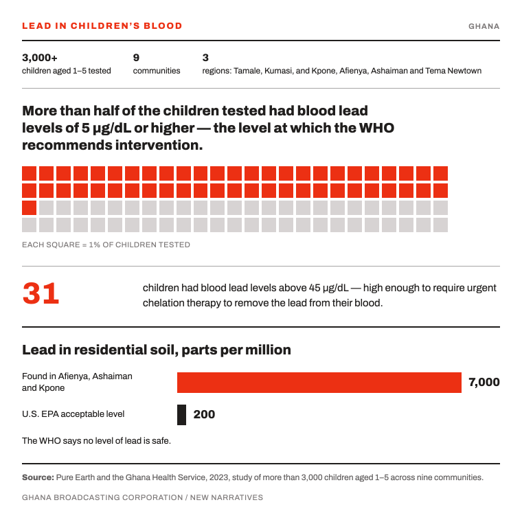
The study, conducted by Pure Earth and the Ghana Health Service, of more than 3,000 children aged 1–5 years across nine communities in three regions: Tamale in the north, Kumasi in the middle belt, and Kpone, Afienya, Ashaiman and Tema Newtown, found more than half of the children tested had blood lead levels at which the World Health Organization recommends public health action to reduce or eliminate lead exposure.
More than half had blood lead levels of five micrograms per deciliter or higher – the level at which the World Health Organiztion recommends intervention. For 31 of the children, blood lead levels exceeded 45 micrograms per deciliter – so high they require urgent treatment called chelation therapy to remove the lead from their blood.
“In Afienya, Ashaiman and Kpone, we discovered that some of the residential soil had lead as high as 7,000 parts per million,” said Rev. Dr. Esmond Quansah, Pure Earth’s Africa Director. “When we talk about 7,000 — the U.S. EPA’s acceptable level in residential soil is 200.”
Battery recycling plants emerge as danger zones
Experts say there is no question that the most dangerous lead exposure is tied primarily to one industry: acid battery recycling.
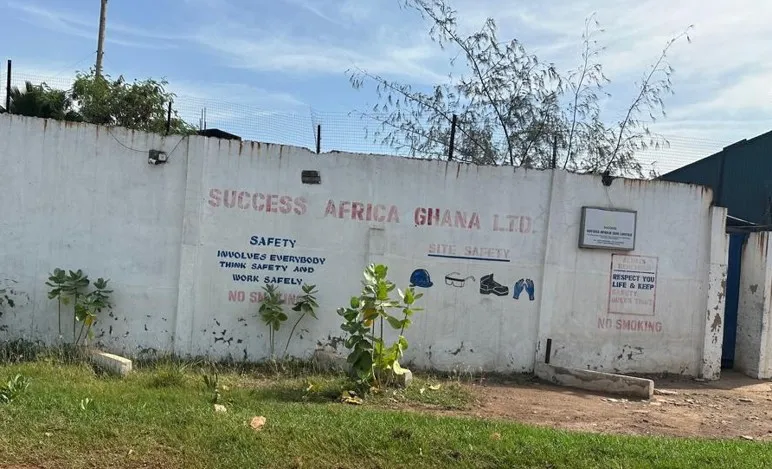
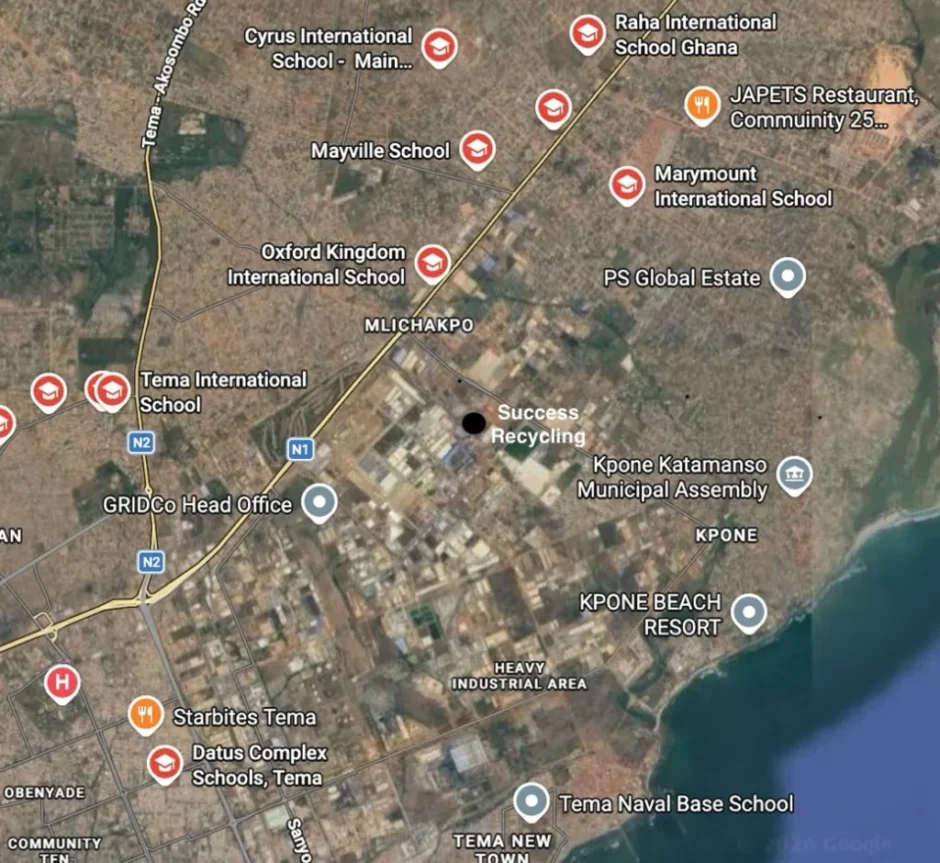
The highest levels were found among children living near three formal used lead-acid battery recycling companies in the Greater Accra Region — Success Africa Ghana Ltd, White Star Global Ltd and Recyclers Ghana Ltd — within the Shai-Osudoku District and Kpone-Katamanso Municipality, near Tema.
Ghana’s 2025 Enviromental Protection Act governs the management of used lead-acid batteries and other hazardous waste. The country also has guidelines that set out requirements for the collection, storage, transportation and processing of batteries. They address occupational health and safety, pollution prevention, emissions control and emergency preparedness. But experts say most companies have largely abandoned the standards they once committed to and no one is enforcing them.
“Some of the companies started off very well. They had state-of-the-art machines, pollution control systems that could recycle batteries in an environmentally sound manner,” said Dr Sampson Atiemo, environmental researcher and CEO of the Mountain Research Institute in Koforidua. “But what we’ve seen in Ghana is that companies start well, then regulators stop keeping an eye on them, and they also join the bad practices.”
Dr Atiemo visited five recycling companies in May 2026 – White Star Global, Huanguang New Energy Battery Ghana, Non-Ferrous Metal Ghana, Recyclers Ghana and Success Africa and saw serious violations of the rules.
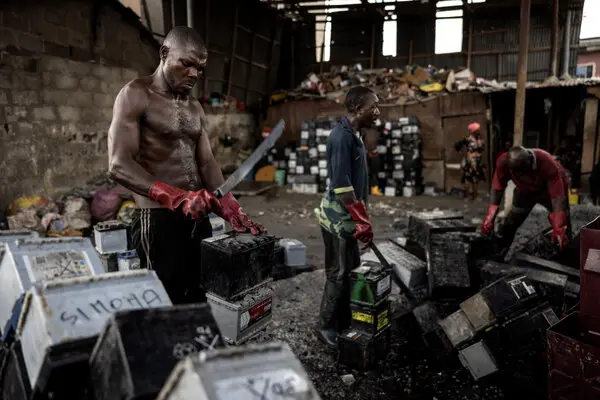
“You go there, the batteries that come in with acid — they use cutlasses to cut them. You see acid all over the floor, with lead. When they’re doing the recycling, some of the plants don’t have very good emission control systems, so you have leaded smoke all over the facilities. Even those who have the so-called emission control systems don’t maintain them, and so the smoke escapes and spreads around the communities.”
Dr Atiemo said two companies — Success Africa and White Star — had shut down as at the time of filing this report, not as a result of non-compliance with regulations, but because they were running at a loss due to low intake of batteries. They could restart operations if that changed.
Here at MTN Junction, a small, rapidly growing settlement within the Kpone-Katamanso Municipality, that is close to Success Africa, children had some of the highest levels of lead of any in the study – 87 percent of children living near Success Africa had lead poisoning.
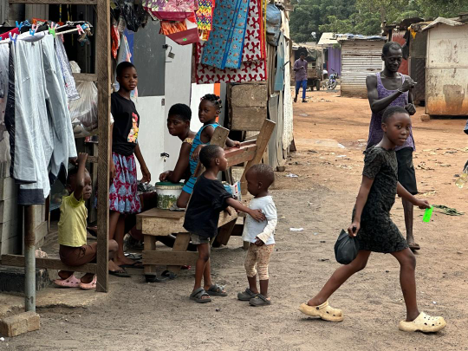
The settler community sits close to a decommissioned dumpsite and another landfill nearing capacity. The neigbourhood is reached by untarred, dusty road without proper drainage, along with heavy tracks and heay fuel tankers constantly ply to and from nearby industrial facilities and oil refineries. For many residents, the living conditons are harsh. Makeshift structures built with aluminium sheets and wood serve as homes, while many households have no proper toilet facilities. The only health facility, Kpone Municipal Hospital is a distance away, making access to health facility difficult.
It is in this environment that children identified with elevated blood lead levels live, study and play.
But three years after the study community leaders say there has been little information shared. Regina Dede Amanquah, assembly woman of Lalooi Electoral Area, Kpone, who was part of the team that conducted the community exercise, says she was simply informed that some children had been affected but received no further information on what will be done to assist them. “It ended there. They didn’t come again for us to know whatever they have done for the people, whether they are treating them.”
Madam Amanquah expressed grave concern about their health.
“It worried me, and I would never sleep. So if they could come in quickly …so that we could take these children to be treated, give them medicine; do whatever we could to save them.”
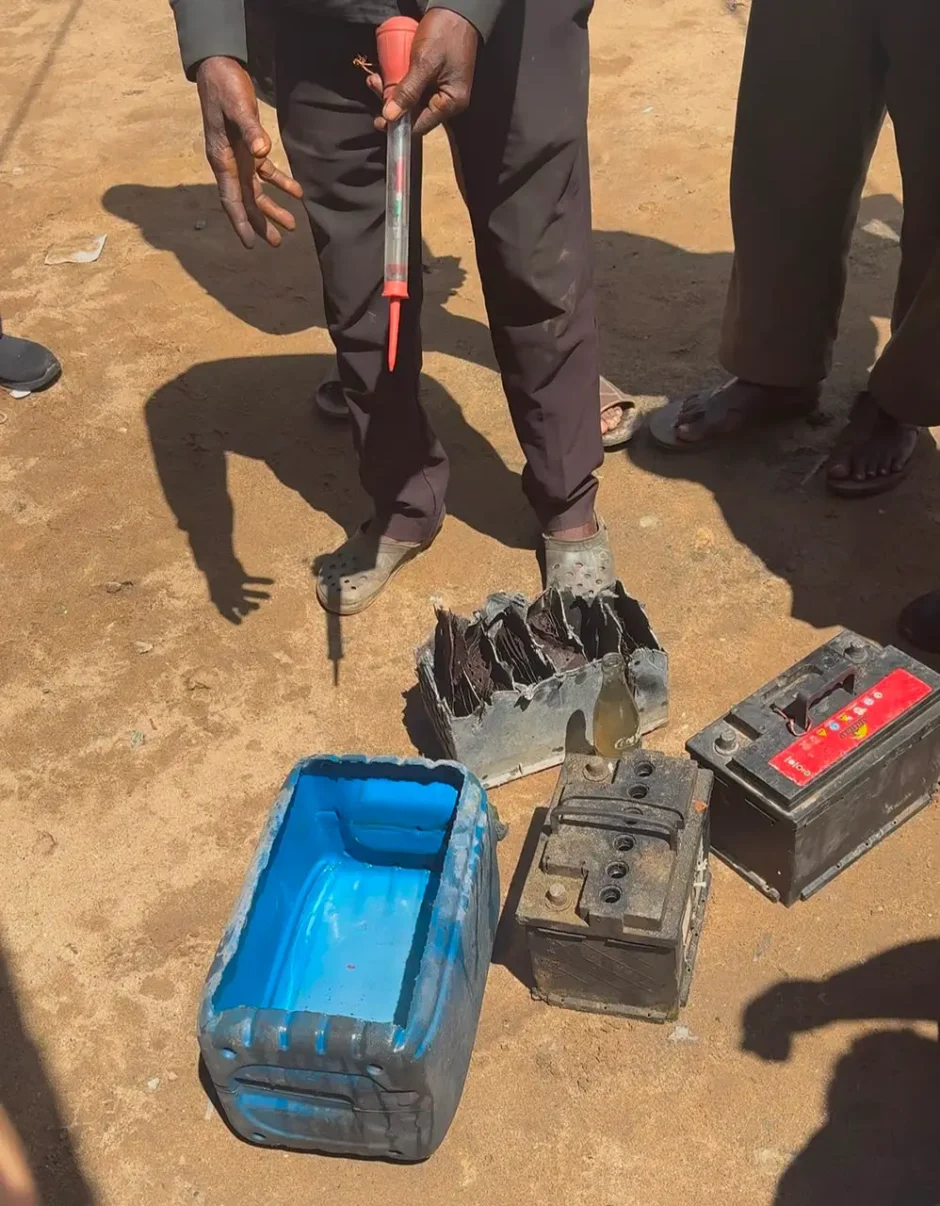
Families in the community who learned about the report say they have lived in fear.
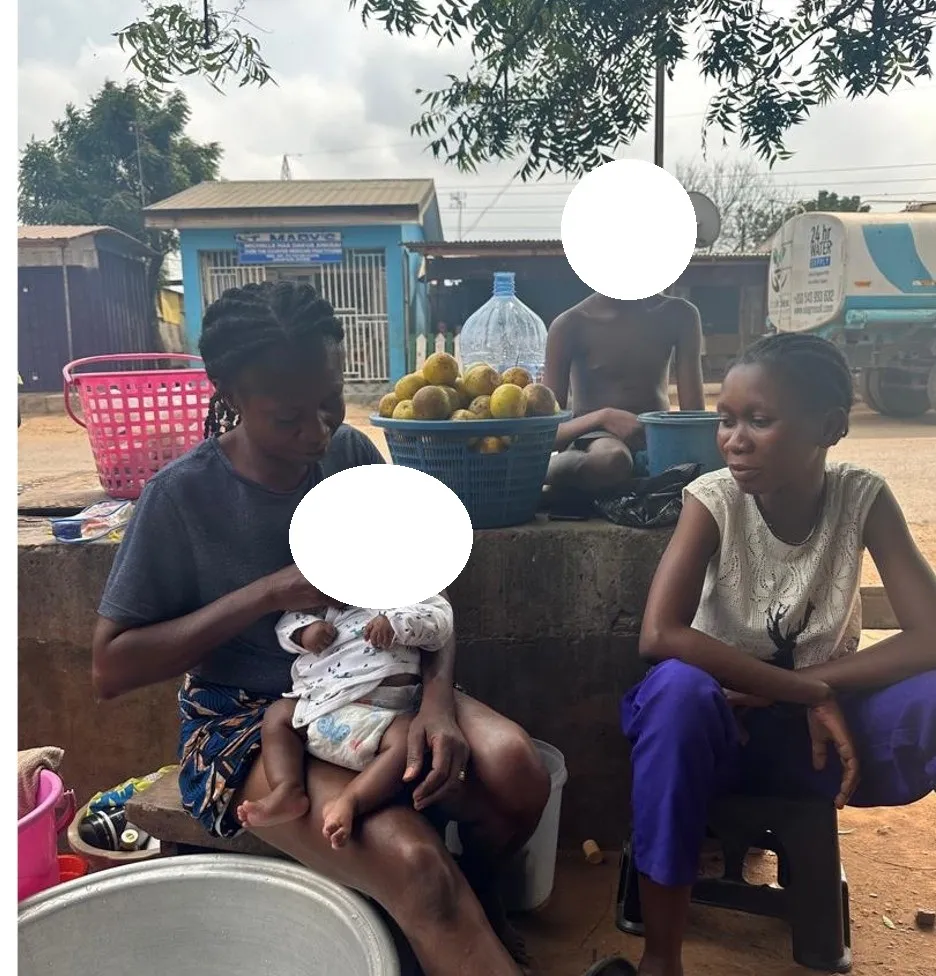
“I keep thinking about what would happen if my own chld were among those affected. I may not have the money to take the child for treatment,” said one mother speaking in Twi. She asked not be named fearing retaliation from polluters.
Another woman who also spoke on condition of anonymity criticized the Ghana Health Service for not coming to share the results of the study with them. She compared the scenario to a child who has written an exams but didn’t bring a report card home. “How do we assess the performance of the child and offer intervention if the child is not doing well?”
The 2023 findings were not the first warning the government had about the problem here. A 2018 peer-reviewed soil study tested soil at Success Africa directly and found lead concentrations up to 130,000 mg/kg inside the plant — among the highest of any site in the seven-country study.
A spokesman for Success Africa said the company is no longer operating as a recycling company and declined to comment. No contact details could be found for Non Ferrors, and Recyclers Ghana, two other companies. A spokesperson for White Star said the company had been shut down.
Waste from other countries becomes a problem for Ghanaians
As with many of Ghana’s pollution problems, the lead battery recyling industry is built on imports of discarded batteries from wealthier countries that are then shipped here. Lead recycling is one of the most polluting industries in the world.
Lead-acid batteries are recycled because the lead inside them can be melted down and reused to make new batteries, which is cheaper and easier than digging up new lead from the ground. To recycle a lead-acid battery, workers crack open its plastic casing, drain out the acid, then melt the lead plates inside in a furnace so the metal can be poured into bars and made into new batteries. They are then sold to lead car manufacturers overseas.
Batteries are often hacked open by hand with machetes or axes, and lead melted over open fires without proper pollution controls — which releases toxic lead dust.
“The exposure pathways are in three forms: air, soil — because it can enter through the skin — and food,” says Dr Sampson Atiemo, CEO of Mountain Research Institute, “Air pollution is a big issue because the particles, once you breathe them in, can enter your bloodstream straight away.” There they can cause or exacerbate a wide range of chronic illnesses such as heart disease, diabetes, stroke, kidney failure, infertility and cancer.
The toxins settle on the homes and businesses – kiosks, container shops, and mechanic workshops in the area as well as the soil and waterways.
Lead poisoning has no visible face — a child can look perfectly healthy while the metal silently disrupts brain development, impairs learning, and in high concentrations causes irreversible damage. The consequences show up in classrooms and in communities with consequences for everyone.
“There’s aggression. There’s criminal tendencies, and they have done the mapping of children who, when they were growing up, had high lead levels, and their rate of imprisonment and re-imprisonment,” said Dr Emmanuel Kyeremanteng-Amoah of UNICEF Ghana. “And if you’re having children who cannot learn, cannot develop their social skills, and are also sick, then you’re having a nation whose productivity is going down.”
Beyond formal battery recycling companies, informal scrap dealers operating within communities add another layer of risk. The Pure Earth report specifically identified the breaking open of used car batteries by informal scrap dealers as a significant source of lead contamination in affected communities.
In a recent visit to Ashaiman Fitter Line, another study area and a hub for e-waste recycling, all workers denied opening used car batteries. The denials could not be verified, as this reporter did not witness the act, though car batteries were seen in small wooden mechanic shops and the soil was polluted with black engine oil.
The regulator responds
The Environmental Protection Authority was not part of the study by Pure Earth and partners but it says it is exercising oversight. In an interview Selina Amoah, head of the EPA’s Air Quality Department, said the Authrotiy shut down two businesses in 2023 for failure to comply with standards. She said the Authority monitoring had shown improvement. “In 2024, when we did the assessment, the lead levels at the fence of the facilities we focused on were all above the standard. But we repeated the monitoring in 2025, and it indicated that the level of lead in the air had come down.”
But Madam Amoah conceded that the Authority’s monitoring capacity is still severely limited. She pointed to the lack of high quality air sensors in the areas. “Monitoring itself is expensive — the equipment, the maintenance. We started with a few sensors and we’re adding on. Last year, for instance, we installed a monitoring network in Tema with a number of low-cost sensors.”
Low-cost sensors are not as reliable as so-called reference-grade sensors, which cost about $150,000 a year to operate. Madam Amoah said a reference-grade monitor would be installed in the area “hopefully this year.”
Ghana has become one of a number of countries that are part of a global initiative on lead poisoning funded by Bloomberg Philanthropies, headed by former New York City mayor Michael Boomberg. Based on successful project in New York which saw lead poisoing drop by two thirds, the group has funded a coalition that includes the World Health Organization, the CDC Foundation, and Vital Strategies to help governments test blood lead levels, trace contamination sources, and push for regulations on products like paint and spices. According to an annual report the group has assessed Ghana’s laboratory capacity for blood lead testing and has run community testing and journalist training sessions, while Ghana’s own regulatory push, including a draft rule to enforce its lead-in-paint standard, is being driven by the country’s EPA and Ghana Health Service, with UNICEF cited as a partner.
Another set will be guidance for health professionals to identify and treat lead poisoning.
“We’ve been developing the standard guidelines for the management of lead exposure and poisoning,” said Dr Caesar Nyadedoz, toxicologist and head of Poison Control at the Ghana Health Service.
Dr Dora Dadzie of Vital Strategies, said national guidelines should be passed “very soon” and will provide “standardized procedures across the country clearly outlining who should be tested, how blood lead levels should be interpreted, the appropriate clinical management at different levels of exposure, or the follow-up schedules, referral pathways, and even procedures for caregiver counseling. So this would ensure that every child, regardless of where they live, whether in rural setting, urban setting, receive the same quality of care.”
Experts say impacted children cannot afford to wait for oversight, air quality monitoring and treatment protocols to be put in place. Thousands of children’s lives are being devastated with lifelong consequences for them, their families and communities.
This story was a collaboration with New Narratives. Funding was provided by the Clean Air Fund. The donor had no say in the story’s content.