
By Clankson Acheampong
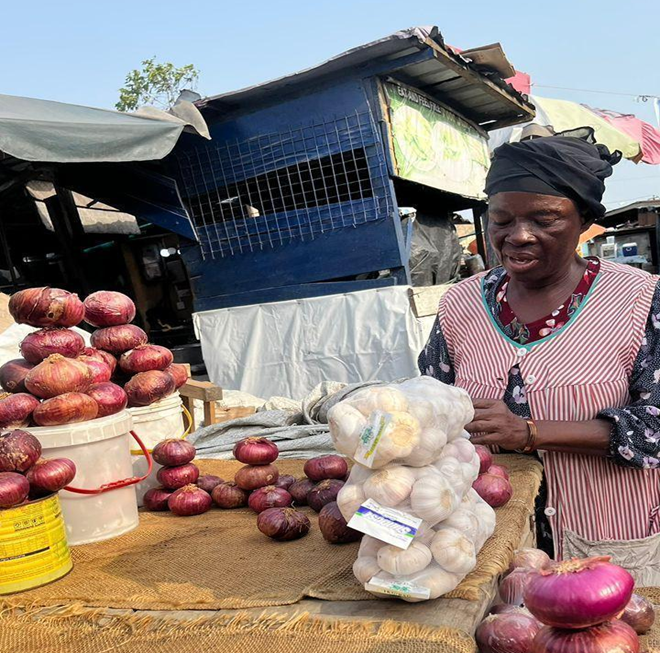
MALLAM MARKET, Accra – By 7:30 a.m., Gladys Ahugah has already arranged her onions, ginger and garlic neatly on a wooden table under the scorching sun here at Accra’s biggest food market.
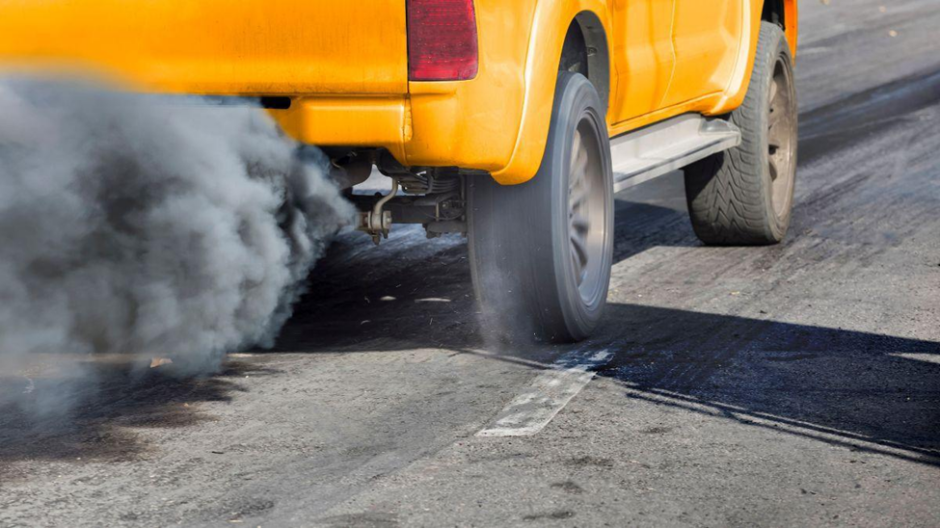
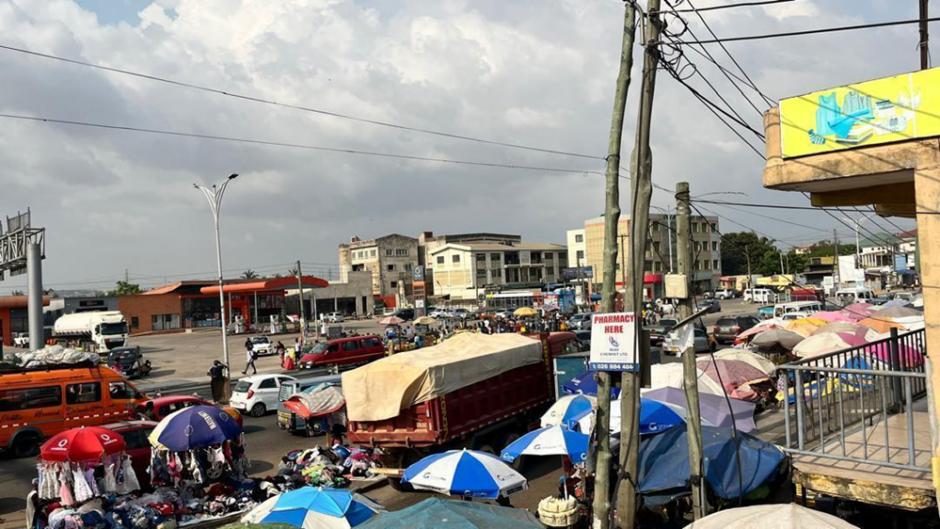
Behind her, a pepper grinding mill roars to life. Dust rises. Vehicles crawl past on the busy Mallam-Kasoa road, releasing exhaust fumes into the already thick air.
For more than 15 years, this has been her routine. But recently, her body has begun to protest.
“I see changes in my health… when I breathe, you can hear my heartbeat. I cough too. The air here is not good,” says Ahugah, speaking in Twi.
Mallam Market is one of Accra’s largest trading hubs, drawing thousands of traders and shoppers daily. But it is also among the city’s most polluted environments. From dawn to dusk, traders work amid a mix of grinding mills, vehicle emissions, open waste burning and swirling dust. Smoke from cooking stoves drifts between stalls. Waste smoulders in corners. Few traders wear the nose masks that would protect them.
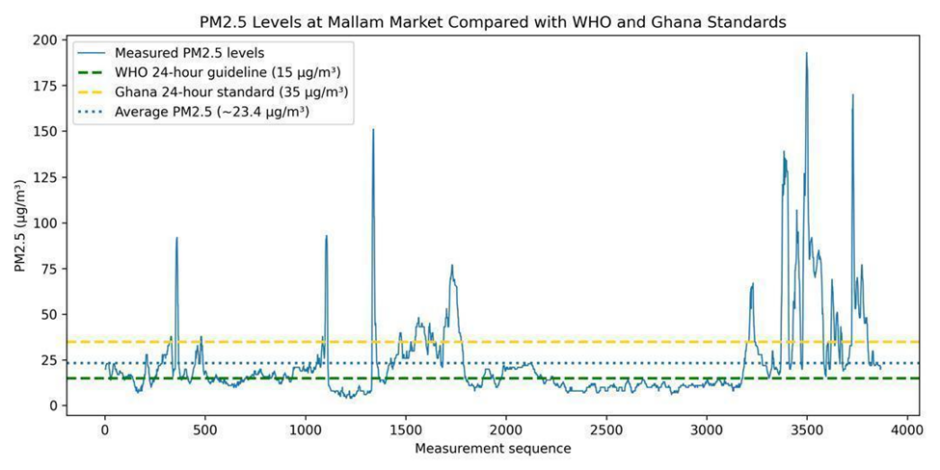
Markets like Mallam are among the dirtiest places in the city. Air quality tests at Mallam in December 2025 found that the average levels of the smallest and most dangerous particles, known as PM2.5, were well above the World Health Organization’s safe limit. But the worst spikes were far higher. Near grinding mills and busy roadsides, pollution shot up to more than 12 times the WHO limit.
PM 2.5 are microscopic particles that penetrate deep into the lungs and bloodstream, increasing the risk of respiratory and cardiovascular diseases. Prolonged exposure to levels this high are comparable to smoking one cigarette every day. At the spikes it is equivalent to nine cigarettes a day.
Most say they have little knowledge of the health risks, or how to protect themselves.
For Ahugah, 45, the impact is already visible. She now relies on cough mixtures and local remedies, including chewing fresh mango leaves, to ease persistent chest discomfort she believes is linked to the air she breathes.
Experts say what is happening at Mallam Market is not isolated.
“This just confirms why we say Accra is polluted, especially at our marketplaces. And this should be an issue of concern,” said Dr Caleb Mensah, head of the Department of Atmospheric and Climate Science at the University of Energy and Natural Resources. Grinding mills, open waste burning, heavy traffic and dust all contribute to elevated pollution levels. “People who are closer to these sources are more exposed… and this can have severe impacts on their health conditions”.
Accra’s rapid urbanization, traffic congestion and poor waste management have contributed to worsening air quality. According to the Air Quality Life Index 2025 report, dirty air is the country’s sixth biggest external health threat, just behind malnutrition and HIV/AIDS and contributes to Ghana’s exploding rates of so-called noncommunicable diseases including heart disease, stroke, lung cancer, asthma, chronic obstructive pulmonary disease (COPD), pneumonia, type 2 diabetes, dementia, depression, and premature birth.
A silent but widespread danger
Prolonged exposure that these workers are exposed to, rather than one offs, significantly increase the dangers according to experts. For traders and shoppers who spend hours in such environments daily, the risks are not just immediate, but long-term.
“If someone stays in that environment for eight hours daily over weeks and months, it is very likely that air pollution may contribute to their condition,” said Reginald Quansah, associate professor of Global Health at the University of Ghana.
To reduce exposure, Prof. Quansah recommends practical measures including wearing nose masks, hydrating and limiting time in highly polluted areas.
“Wearing nose masks would be one of the solutions… and staying away from areas that are polluted could also help,” he said. “You should do as much as possible to protect yourself.”
He also advised reducing exposure at home by avoiding smoke and ensuring proper ventilation.
“Make sure you stay in a well-ventilated area with very little smoke,” he added.
Quansah noted that even small lifestyle adjustments can make a difference, especially for those who cannot completely leave high-risk environments.
“You should do as much as possible to protect yourself,” he said.
Living with the risk
For Ahugah, avoiding the polluted environment is not an option. She spends more than 10 hours a day at the market, six days a week, supporting her two children. She has not yet sought formal medical care because she doesn’t have enough money.
“I’ve taken three bottles of cough mixture already… I go from one pharmacy to another to find the cheapest,” she said.
Knowledge of the dangers of air pollution are rising in the medical profession. Quansah urged anyone who works in heavily polluted environments suffering from illness to seek care. He warned against relying on unverified remedies.
“The first thing is to see a doctor… Some doctors can now identify diseases related to air pollution by looking at your work environment and symptoms.”
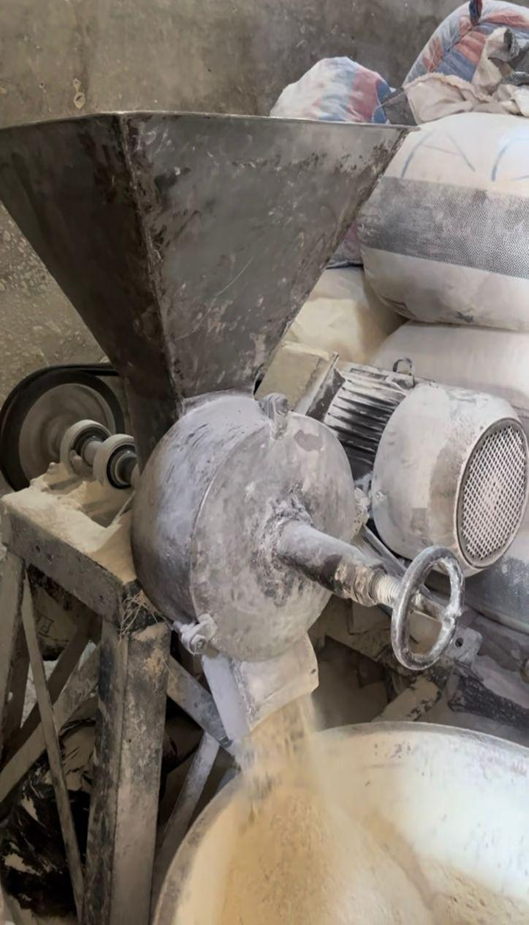
A corn grinding mill at Mallam Market. One of several sources of air pollution from smoke, heat and particulate matter in the trading area.
As air pollution levels have risen in recent years the Ghanian government has taken significant steps to create policies to improve air quality. But experts say laws are useless unless they are enforced. Open burning, poor waste management and polluting activities such as grinding mills and woodworking still go largely unpoliced.
“The laws are there… but the issue has always been enforcement,” Dr Mensah said, calling for stricter controls on open burning, relocation of grinding mills and improved waste management.
The Environmental Protection Authority’s Public Affairs Unit and officials at the Weija Gbawe Municipal Hospital did not respond to multiple requests for comment by deadline.
For now, traders like Ahugah continue to work, breathing in air they cannot see, but that experts warn is likely to be sickening them in ways that will impact them for the rest of their lives.
The story was a collaboration with New Narratives. Funding was provided by the Clean Air Fund which had no say in the story’s content.