
By Nemenlah Cyrus Harmon, climate and environment reporter with New Narratives
Summary
- Liberia’s Environmental Protection Agency says it uncovered an unlicensed gold mine allegedly using the toxic chemical cyanide without permits, leading to a shutdown and the arrest of 20 Chinese nationals. The mine, Green Forest Mining denies the allegations.
- The investigation began after a university student detected cyanide in a water sample, with inspectors tracing to a mine in Todee District, that the Agency had ordered to shut down a few months earlier.
- Agency chief Yarkpawolo has warned the case has shown the limits of his underfunded agency to curb the rapid expansion of illegal mining.
GEORGE MOKO TOWN, Montserrado County – When the Environmental Protection Agency Executive Director Emmanuel Urey Yarkpawolo stepped onto the sprawling mining site here in Todee District, he was stunned by what he saw.
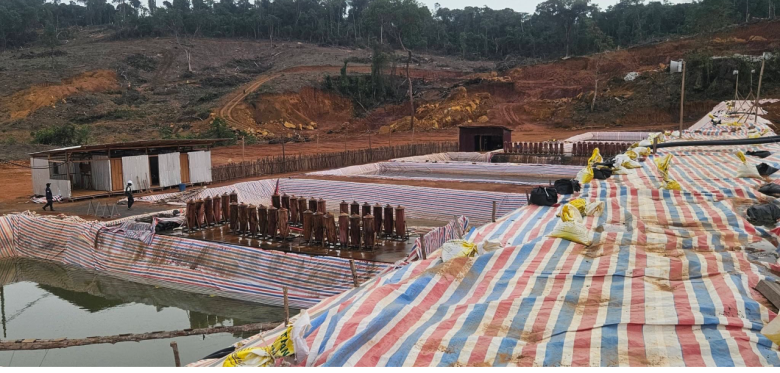
Before him lay acres of freshly cleared forest, excavators still at work, and, he said, the dangerous chemical cyanide being used without the environmental permits required under Liberian law.
“These people are carrying on what seems to be Class A mining (a large-scale mining) without any environmental permits,” Yarkpawolo said of the company Green Forest Mining. “They are using cyanide, and those chemicals are leaching directly into the water,”.
Experts say the raid has become one of the clearest tests yet of Liberia’s ability to regulate a fast-expanding mining sector increasingly powered by foreign investment and heavy machinery. What the EPA uncovered that day, as told to FrontPage Africa/New Narratives, was the culmination of a lucky find by a university student undertaking research as part of his degree, and not the work of a robust monitoring system employed by the government.
As the Agency chief warned himself, the case exposes the limits of Liberia’s environmental enforcement system, where a shortage of inspectors, weak enforcement powers, and slow permitting processes have left regulators struggling to keep pace with illegal mining, and communities questioning who will protect their land and water.
Looking across the destroyed landscape, a visibly angry Yarkpawolo abandoned the language of bureaucracy.
“This is unacceptable,” he said. “You don’t behave like that. In China, you don’t behave like this.”
Lucky laboratory discovery reveals an illegal operation
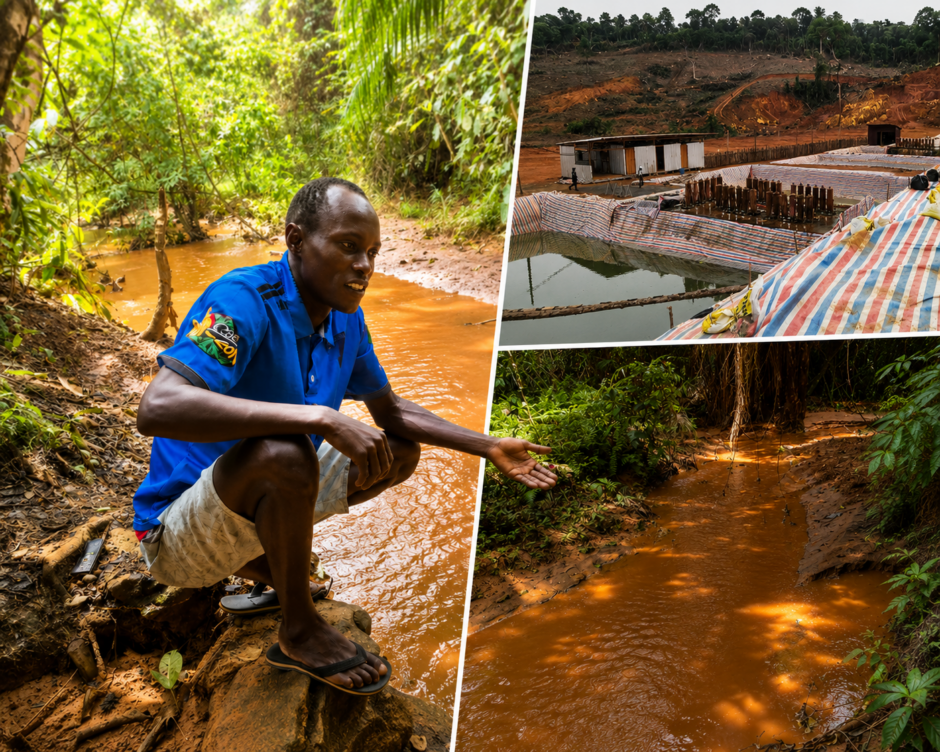
Before the company started mining nearby in 2025 the creek here sustained this quiet farming community here in Todee District for generations, families drew drinking water from it, bathed in it, washed their clothes and caught fish to feed their households.
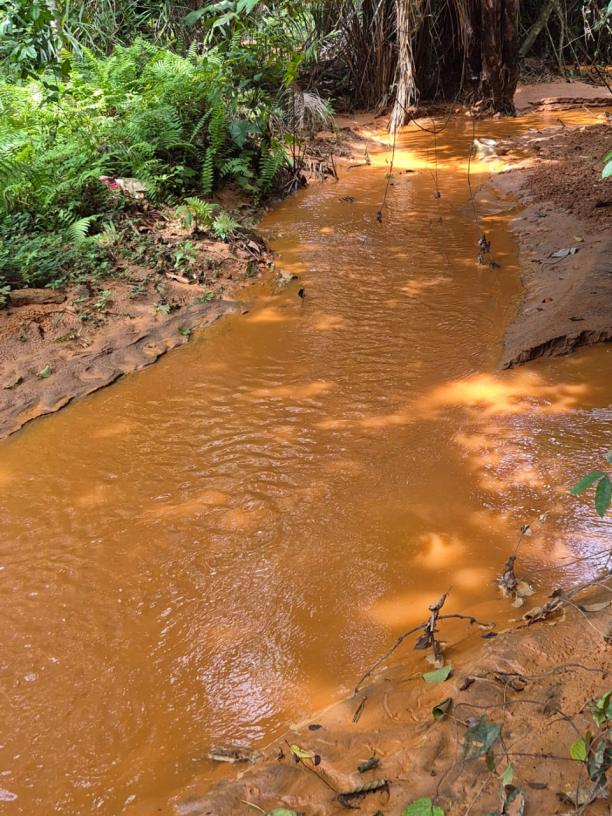
Today, the fish are gone, the water has turned murky, and fear has replaced routine.
“We don’t get no water,” said Lorpu Philip, the town chief’s wife, summing up the hardship that residents say began after a Chinese-owned mining company expanded its operations nearby.
“When we say it’s the chemicals, they will say no,” said Town Secretary Julius Lekpele who complained to the company. “But right now, no fish in the water. You can’t see crayfish or crab.”
The community grew frustrated over the water pollution. Unknown to the community a university student doing research for his degree was quietly taking samples of their water. Several of the Agency’s managers serve as lecturers at the University of Liberia and other higher education institutions so students routinely use their lab for testing. Earlier this year a student found something concerning.
“One student’s analysis — we saw cyanide,” Yarkpawolo said. He will not identify the student, for fear of retaliation, but he said, the Agency quickly followed up. “We asked the student where this sample came from.”
The answer led investigators to Todee District, where the EPA had already ordered a smaller mining operation shut down months earlier. When inspectors returned, they found something very different.
“Behold, they had actually expanded,” Yarkpawolo said, surprised at how little regard the company had for the Agency’s authority.EPA investigators found extensive land clearing and what they described as Class A-scale mining activity, with active operations continuing despite the absence of environmental permits or approvals governing chemical use or wastewater discharge.
A Closure Order Ignored
Yarkpawolo said inspectors initially chose the administrative route. The EPA identified itself, ordered operations halted, and removed the keys from heavy equipment. But within hours, according to the agency, the machines were running again.
“As soon as we left, we got intelligence. We verified that they had resumed active work even though we put a halt order.”
Because the EPA has no authority to make arrests, Yarkpawolo requested police assistance. The following morning, EPA inspectors returned with armed officers from Monrovia. They arrested 20 Chinese nationals and the over to police for investigation.
Yarkpawolo said the company had failed to obtain multiple approvals required before conducting large-scale mining. Investigators found no environmental permit, no approved Environmental and Social Impact Assessment, no authorization governing chemical discharge, and no licensing covering the importation and management of hazardous chemicals.
The permitting process requires field inspections, environmental assessments, reviews of chemical management plans, and consultations with affected communities before approval is granted. “In this case we didn’t really see any of that.”
President Joseph Boakai has established a national taskforce to crack down on illegal mining, citing growing concern over widespread environmental destruction caused by unlicensed operations, many of them Chinese.
It followed reports of river diversion, deforestation, contaminated waterways, and the illegal use of hazardous chemicals such as mercury and cyanide. The new “Protect Our Resources Taskforce” is mandated to investigate illegal mining, seize equipment, and support the arrest and prosecution of offenders.
Why Cyanide is Controlled and Dangerous
Cyanide is widely used in industrial gold mining, but it comes with risks. “If cyanide is improperly discharged into water, it can kill fish,” Yarkpawolo said. “Cyanide is a poison. That’s why it’s highly regulated.”
He said properly operated mines using cyanide require storage facilities capable of containing and treating contaminated waste before water is released back into the environment. Investigators found no such system at the Todee operation. For the EPA, that was the central concern — not simply that cyanide was present, but that it was allegedly being used without the infrastructure required to manage it safely.
The company denies it was using cyanide and blames slow government permitting
Green Forest Mining disputes the EPA’s findings.
“We’re not using water. We don’t mine in water,” said Chris Zanga, the company’s public relations officer. “How can we pollute water? That is not true.”
Zanga said the company had applied for a Class B permit in July of last year but did not receive a response before equipment was deployed to the site. He said Green Forest Mining later paid a US$30,000 fine to the EPA through the Central Bank of Liberia, and a separate US$50,000 payment to the Ministry of Mines and Energy connected to its mining license.
Regarding cyanide, Zanga denied the water was polluted and said the company was waiting to see the laboratory results from the EPA.
“Nobody can tell me what kind of chemical it is until the EPA tells us exactly,” he said.
He also pointed to community projects that company had undertaken— including building wells and hand pumps, palaver huts, and to a memorandum of understanding it claimed to have with local leaders — as evidence the company had acted responsibly. “We’re not doing anything illegal,” he said.
Residents say no company interventions have solved their water problem
Resident Bendu Sackie conceded the company installed a hand pump, but said that has done little to solve the community’s water crisis. She said the pump rarely produces enough water, forcing families to spend hours searching for water or buying drinking water despite living in a rural community surrounded by streams.
Residents said they have never seen scientific evidence confirming their creek was contaminated. What convinced them was what they witnessed over time: fish floating dead, water turning murky. So when the Environmental Protection Agency shut down the mining operation and arrested 20 Chinese nationals, many in George Moko Town said they welcomed the intervention.
“We want the government to come to our rescue,” Sackie said. “Since this company came here, they have not done anything good for us. We are suffering.”
Julius Lekpele, the town secretary, said the government’s action should not end with the arrests.
“Let them continue arresting them until they pass through the proper channel,” Lekpele said. “If they don’t follow the proper process, let the government continue taking action. We are human beings too. We deserve to live.”
A discovery exposes systemic failures
Yarkpawolo said the case highlights broader weaknesses in Liberia’s environmental enforcement system. The EPA has only a handful of inspectors assigned to monitor the entire country and depends on the Liberia National Police to enforce closure orders because it lacks arrest powers.
He said the agency is pushing for tighter regulation of excavator imports, arguing that heavy machinery has allowed small operators to cause damage on the scale of industrial mines. It is developing a mine reclamation bond that would require companies to set aside funds for environmental restoration before beginning operations.
“You created damage,” Yarkpawolo said. “You are responsible.”
For now, the Todee operation remains closed while the EPA’s compliance process continues. The agency says no mining can resume until environmental requirements are met. The company says it is waiting for clearance.
Meanwhile, residents of George Moko Town continue to wait for answers about the water flowing past their community and whether the damage they believe they witnessed can be reversed.
This story was produced in collaboration with New Narratives as part of the Investigating Liberia Project. Funding was provided by the Swedish International Development Cooperation Agency. The funders had no say in the story’s content.