
By Tetee Gebro with New Narratives
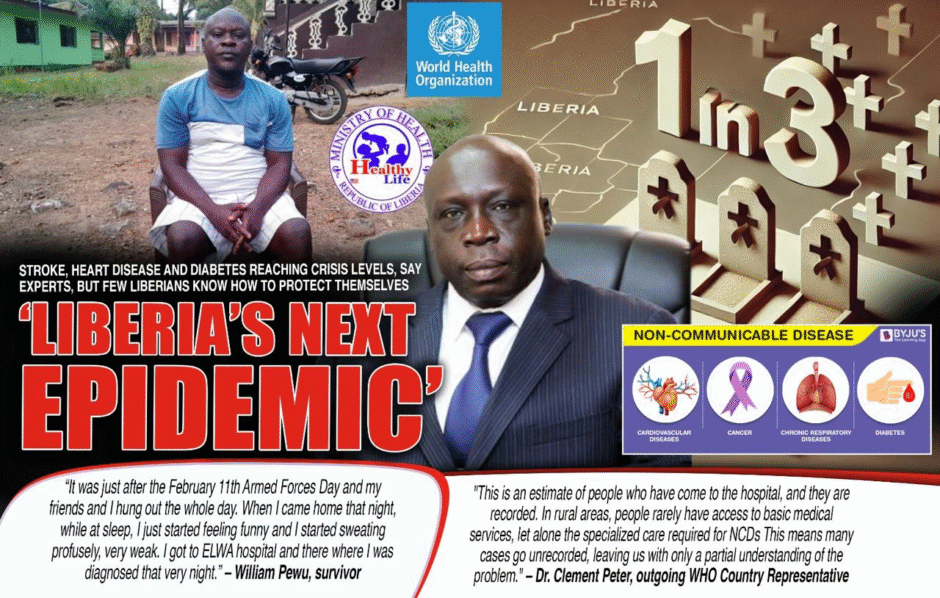
- Heart disease, diabetes, stroke and hypertension – so-called “non-communicable diseases” or NCDs – are Liberia’s “next epidemic,” according to WHO Representative
- NCDs are rising; now second most common cause of death in sub-Saharan Africa accounting for about 35% of all deaths.
- Fewer than 1/3 of hypertension patients are treated
- More than 40% of patients with diabetes are not aware of their diagnosis
- Experts say there is an urgent need for awareness of lifestyle dangers
In a three-part series Tetee Gebro, senior reporter with Front Page Africa and New Narratives, examines what health experts call Liberia’s “next epidemic” and the barriers to helping Liberians retake control of their health.
NEEZOE, Montserrado County —In 2018, William Pewu was living a regular life like most Liberians. The 54-year-old father of five ate a diet heavy in white rice and stews made from meat and oil. He rarely ate fresh fruit and vegetables. He drank beer almost every day at a bar he ran in his yard to earn extra income. He rarely had time for medical checkups and, because of stress, usually slept less than seven hours a night.
William had no idea his lifestyle was dangerous. But one night at 1am, the danger became all too clear. William’s hands and feet started tingling, his heart was racing. William’s father rushed him to nearby ELWA Hospital in Paynesville.
“It was just after the February 11th Armed Forces Day and my friends and I hung out the whole day,” he says. “When I came home that night, while at sleep, I just started feeling funny and I started sweating profusely, very weak. I got to ELWA hospital and there where I was diagnosed that very night.”
Doctors told William he had hypertension, also known as high blood pressure, and diabetes. Had he not made it to the hospital he could have died from a stroke or heart attack.
Despite the fact that he spent his working hours as an accountant at Liberia’s Health Ministry, William had no idea that his lifestyle made his health a ticking timebomb. After his diagnosis William undertook an exhausting journey that has taken him from one health facility to another. He has battled problems with his eyesight, with numbness in hands and feet that doctors say might eventually force them to be amputated. He must use expensive test scripts multiple times a day to monitor his blood sugar levels, take insulin and go to the clinic for regular monitoring to control blood sugar levels, or risk a stroke.
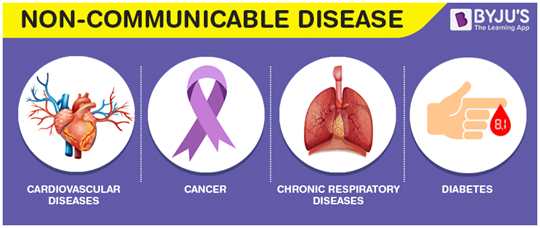
William is one of a rapidly growing number of people globally who suffer from what are known under the umbrella term – “noncommunicable diseases” or NCDs for short. Hypertension, diabetes, cardiovascular disease, chronic respiratory disease, mental illness and cancer are among them. NCDs killed 41 million people in 2021. Unlike the better-known killers like malaria, cholera, typhoid and Ebola, NCDs cannot be passed from human to human. They are known as “lifestyle” diseases because they are caused by diet, exercise, sleep and exposure to environmental factors such as air pollution. NCD deaths and illness are rising across the world, but experts are particularly alarmed by their rise in poor countries like Liberia.
NCDs are Liberia’s “next epidemic,” according to outgoing WHO Country Representative Dr. Clement Peter. Unlike infectious diseases, he says, which often spark immediate and coordinated responses, NCDs are insidious. They infiltrate households quietly, affecting multiple family members and stretching limited resources to breaking point.
“If you have a family of five and two or three has any of these NCDs, it’s a crisis,” Dr. Peter explained in a recent interview. “Because a single family cannot cope with this kind of problem which requires more money given that a lot of people cannot afford the services, and the facilities are not there so the best approach is prevention this is the next epidemic.”

The true scale of the problem in Liberia is unknown. Liberia’s Health Ministry does not have data on NCD prevalence or deaths according to Anthony Tucker, Director for NCDs and Injuries at the Ministry of Health. The WHO reports that one in three deaths in sub-Saharan African are from NCDs but Dr. Peter warns the true number in Liberia is likely much higher. Liberia’s healthcare infrastructure lacks the capacity for widespread testing and accurate data collection. Most diagnoses occur only when patients seek care for severe complications, often too late for effective intervention.
“This is an estimate of people who have come to the hospital, and they are recorded,” says Dr. Peter. “In rural areas, people rarely have access to basic medical services, let alone the specialized care required for NCDs This means many cases go unrecorded, leaving us with only a partial understanding of the problem.”
Sadly, most Liberians do not know they are living with NCDs. Many, especially those in rural areas with limited access to medical experts, die without ever knowing the cause. Without a diagnosis people will struggle with poor health until the diseases take their eyesight or mobility and, eventually, their lives.
Several factors make Liberians particularly vulnerable: the traditional diet – heavy in white rice, white baked goods like doughnuts, red meat and oil – decreasing physical activity and a cultural admiration for weight gain. Liberians are also getting access to more sugar – especially in the form of sugary soft drinks – and alcohol than they did in decades past. And growing air pollution: tiny particles of pollutants can get into the bloodstream and exacerbate or cause NCDs.
“One of the risk factors we have in town is the white rice and the white sugar and the white flour. Those are the deadly unholy trinity,” says Dr. Philip Ireland, a staff endocrinologist and primary care physician at John F. Kennedy hospital in Monrovia.
While people can acquire NCDs without being overweight, it is heavily correlated. Excess fat in the diet can line arteries and make it harder for the heart to pump blood – leading to hypertension. Diets heavy in refined carbohydrates like white rice, sugar and flour can strain the pancreas causing diabetes.

Liberians are fat and getting fatter. A 2020 Global Nutrition report estimated nearly two in every three women and one in three men are overweight or obese. That was an increase from the year before. It’s a very dangerous mix, according to Dr. Ireland.
“And after eating the torborge (a Liberian dish containing palm oil, bitter balls and red meat) and the huge bowl of rice or eating the entire huge pizza or burgers and other junk food and you sit down behind the computer and drink Coca-Cola and sleep,” says Dr. Ireland. “In a very few short years, you will see that the heaviness and all the pounds you have compounded on yourself will come down with something like obesity, high blood pressure, probably a stroke here or diabetes there.’’
Dr. Ireland says people are missing opportunities to prevent sickness and death by skipping routine medical checkups.
“For every patient with a diabetes diagnosis you see at JFK that represents about a thousand or two thousand patients in the community that can’t get to the hospital,’’ says Dr. Ireland. “NCDs in Liberia is a crisis, and what exacerbates the problem is that we don’t have all the solutions we need right now.”
Among the overdue solutions, say experts, is a major awareness campaign and a series of measures that can help Liberians take control of their health.