
Summary:
- President Boakai, returning from a US trip where he received a peace prize for his commitment to post-war justice, has made a bold public statement reaffirming his support for establishing a War and Economic Crimes Court — pledging $2 million in annual funding and renewing the mandate of the Office driving the process.
- The announcement came amid a public dispute between the head of the court Office and senior government officials, with six enabling bills stalled and no funding reaching the office — prompting fears among victims’ groups that the government had lost its commitment to the court.
- Boakai moved to dispel those fears, setting a 90-day deadline for the office to provide the Legislature with a framework to pass the court into law and challenging all players to accelerate a transitional justice process that survivors have waited decades to see delivered.
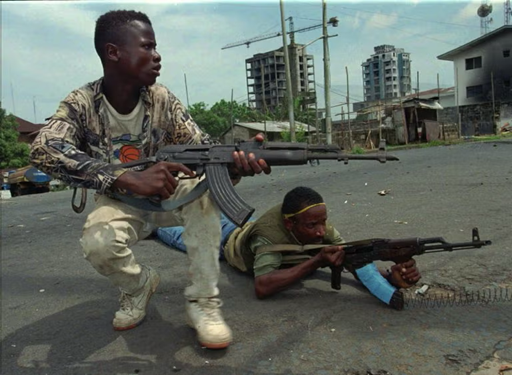
- The move came as Mohammad Jabateh known as “Jungle Jabbah” exhausted all appeals to his conviction and 30-year sentence for war-related crimes in the United States.
By Anthony Stephens, senior justice correspondent with New Narratives
President Joseph Boakai returned from the United States on the weekend with a peace prize in hand and a pointed message for his own government: the War and Economic Crimes Court is happening, and it is happening now. Renewing the mandate of the Office established to create the court, pledging $2 million in annual funding, and giving the Office a 90 day deadline to come up with a plan to push the bills that would establish the court through the Legislature, Boakai moved to silence mounting fears — among victims groups and justice advocates — that his administration had lost its nerve on the country’s most consequential transitional justice commitment.
In the new directive, Boakai ordered the Office of the War and Economic Crimes to begin working immediately with the Legislature to push the draft bills toward passage, with a 90-day deadline to produce a plan for doing so. The Legislature would set its own timeline for the votes, but the Executive Mansion made clear the administration’s support would not waver until the bills were passed.The Office, originally created by an executive order in May 2024 to establish a war and economic crimes court, later had a national anti-corruption court added to its mandate. Its second mandate expired on April 30, raising concerns among justice advocates amid silence from the Executive Mansion.
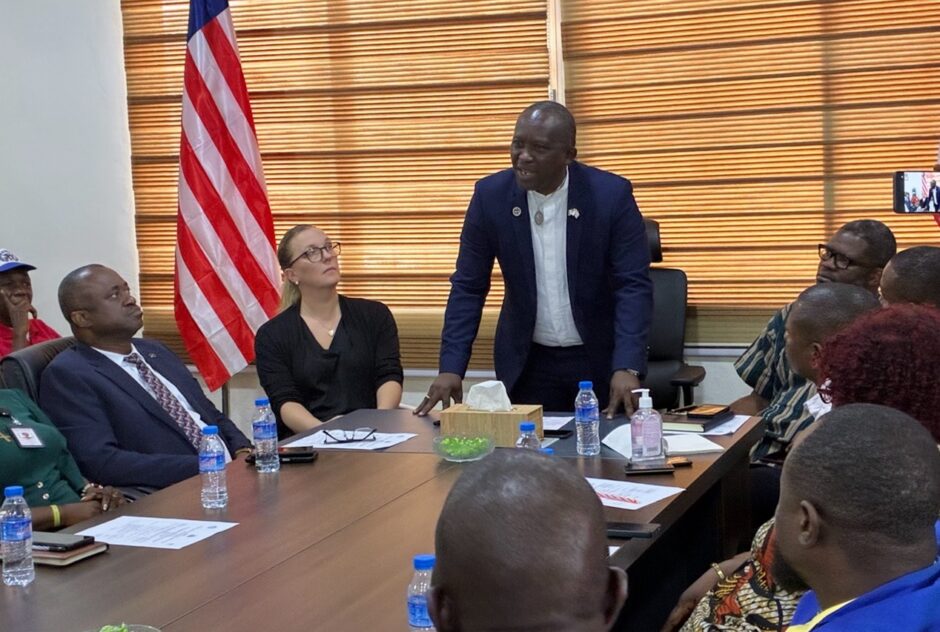
Presidential executive orders last one year but can be renewed indefinitely. Last year, Boakai issued a renewal just two days before the previous order expired.
Jallah Barbu, whose tenure as head of the Office has been under fire by critics in civil society and government in the last week after a dispute with senior government officials spilled into public view, could not be reached for comment by late Sunday night.
Justice advocates welcomed the president’s robust statement.
Toe, executive director of the Transitional Justice Working Group — a coalition of more than 25 civil society and victims’ organizations — described the move as a sign of progress.
“We believe that President Boakai’s renewal of the mandate of the Office for the Establishment of War and Economic Crimes Court with a restructured and refocused flavour indicates that the president means well and that accountability has to be the hallmark of the new Office,” Toe said in a phone interview. “By telling them ‘You need to report at so, so and so time,’ that means the president is serious about impact.”
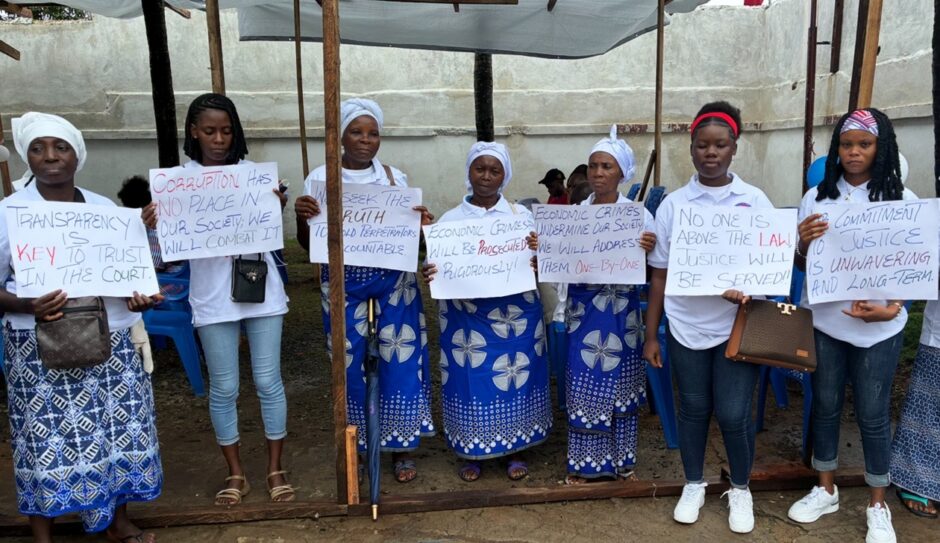
In the lead up to the president’s announcement the coalition had added to pressure on the president with a statement calling for the Office to be restructured to “strengthen institutional capacity, eliminate performance inefficiencies and waste of national resources,” saying that “Liberians deserve a credible institution that prioritizes their voices, and delivers on the promise of transparency and accountability.”
The renewal comes at a delicate time.
A public dispute erupted last week between Jallah Barbu, the office’s executive director, and senior government officials. The Office had been in a widening dispute over funding, performance and internal coordination. Under last year’s mandate, Boakai pledged $US2 million annually to the Office. So far, it has received only $US800,000 — 40 percent of that amount.
Barbu exploded the dispute into public view when he accused senior government officials of undermining the process in a live radio appearance on Okay FM. Barbu said he had circulated draft bills for the courts months ago to senior officials, including Oswald Tweh, the justice minister; Bushuben Keita, the president’s legal adviser; Samuel Kofi Woods, the national security adviser; Sam Stevquoah, minister of state for presidential affairs; and Nathaniel Kwabo, cabinet director. But Barbu said he has not had a response.
“Some people, they protecting themselves,” Barbu said. “Some people, they don’t want this government to get this particular thing to go.”
Government officials strongly rejected those claims. In a statement from his office Woods rejected Barbu’s allegations, calling them “false, unfounded, and ill-fated.” He called for an independent performance evaluation, an audit of the office and an investigation into the allegations.
Tweh, under whose supervision the office operates, also rejected Barbu’s claims, describing them as “far-fetched, false and misleading.”
But Tweh acknowledged that money had been withheld saying it was because Barbu had failed to meet a government requirement that the Office was spending the government money on. The lack of transparency of spending by the Office had been a concern of all stakeholders in the process.
Keita, Stevquoah and Kwabo did not respond to requests for comment.
The president’s announcement came on the heels of his acceptance a prestigious award from the Center for African Peace and Conflict Resolution at California State University which had lauded his decision to break with previous presidents to support the establishment of a court to try those most responsible for crimes during the country’s two decades of civil strife. In his speech Boakai said his government was “working to establish a war and economic crimes court so that accountability and reconciliation move forward together.”
The new executive order did not directly address the dispute, but it imposed stricter reporting requirements.
“The Office shall submit quarterly operational and financial reports to the President through the Minister of Justice, beginning no later than July 31, 2026,” the order said. “And every three months thereafter. All reports shall be subject to independent verification and audit by authorized government institutions. A midterm report is also required within six months.
Boakai maintained the Office’s $US2 million annual allocation in the national budget, with quarterly disbursements of $500,000, and directed that the funding remain a line item under the Ministry of Justice.
Advocates, who had voiced concerns about Barbu’s transparency in his leadership of the Office, welcomed the government’s new requirements.
“It’s the necessary thing to do,” said John Stewart, a commisioner of Liberia’s Truth and Reconciliation Commission. “I do not want to believe that the executive director of the Office of of the War and Economic Crimes Court, Jallah Barbu, will be shying away from audit. I don’t think so.”
One of the central points of contention has been delays in submitting draft legislation. Barbu took more than nine months to submit the office’s bills after repeatedly assuring the public in March 2025 that they would be ready “very soon.”
During that period, competing proposals emerged. In October, Senate Pro Tempore Nyonblee Karnga-Lawrence and Senator Joseph Jallah introduced two bills that would route cases through Liberia’s domestic courts, excluding international crimes.
In early December, a breakaway civil society coalition led by the Independent National Commission on Human Rights, submitted its own war crimes court bill, warning that further delays could push the process into the next election cycle, in 2029.
Advocates still warn that the legislation could face resistance in the Legislature, where some lawmakers have been accused of wartime or economic crimes. Among them are Senator Thomas Yaya Nimely of Grand Gedeh County, who was accused of war crimes in the 2009 Truth and Reconciliation Commission Report , and Senator Edwin Snowe of Bomi County, who was recommended for prosecution over alleged economic crimes.
Toe, whose organization joined the Human Rights Commission-led coalition to submit their own version of the bill, said the Office should have acted earlier.
“This is long overdue,” he said. “The president has spoken. He holds the gavel of the country and the process. It is left with the Office now to cooperate and engage the National Legislature, the civil society, including transitional justice trained civil society actors. I think President Boakai means business for the establishment of this court now there is a particular timeline in the executive order.”
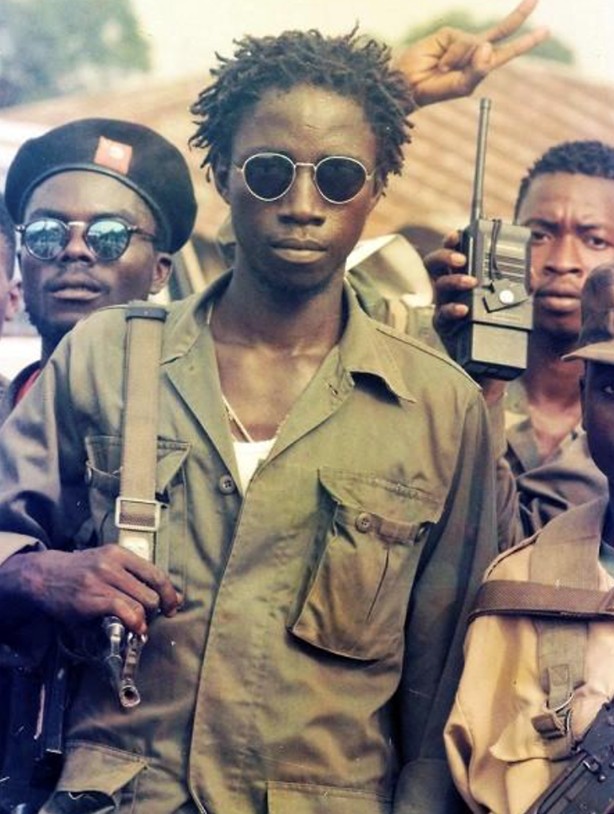
The uncertainty in Liberia comes as Mohammed Jabateh, the first of five former warlords convicted over war related crimes in courts in the United States and Europe, finally exhausted all his appeals.
In March, the United States Court of Appeals for the Third Circuit upheld the 30-year sentence given to Jabateh, a former commander with United Liberation Movement of Liberia (ULIMO), known as “Jungle Jabbah”, in 2017. Jabateh was convicted of immigration fraud and perjury for lying about his wartime role in immigration proceedings. It was the second of two appeals he filed.
Civitas Maxima, which worked on the case with Liberia’s Global Justice and Research Project, said the appeals were unexpected because the case had appeared final.
“But standards of review exist for a reason — to make certain that the decisions of the trial court … are not too easily changed or overturned,” the group said. “Unfortunately for Jabateh, this means there is now true finality regarding all of his convictions.”
This story is a collaboration with New Narratives as part of the West Africa Justice Reporting Project. Funding was provided by the Swedish International Development Cooperation Agency which had no say in the story’s content.