
By Joyclyn Wea and Tetee Gebro with New Narratives
Summary:
- A new global survey has found that Liberia ranks among the world’s top ten countries for worry and sadness, a sign, experts say, of a deep emotional health crisis gripping the population, with women hardest hit.
- Experts say Liberia faces a silent mental health epidemic among women following years of civil war and crisis, with thousands carrying invisible emotional burdens that cause physical exhaustion and chronic diseases.
- The government’s mental health chief warns that stress can lead to conflict.
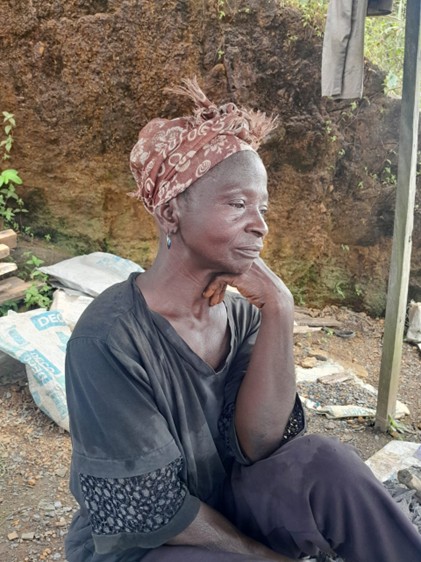
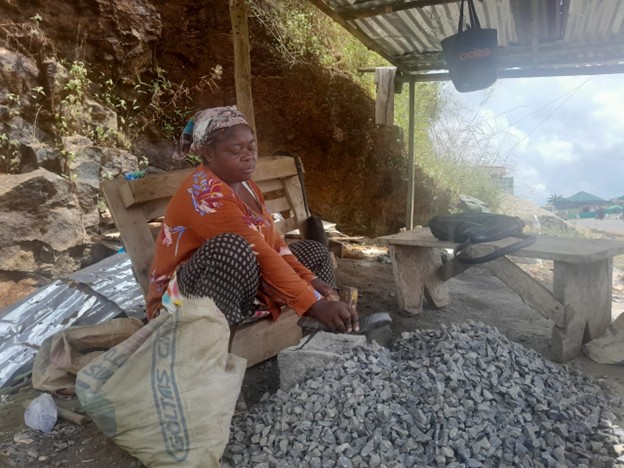
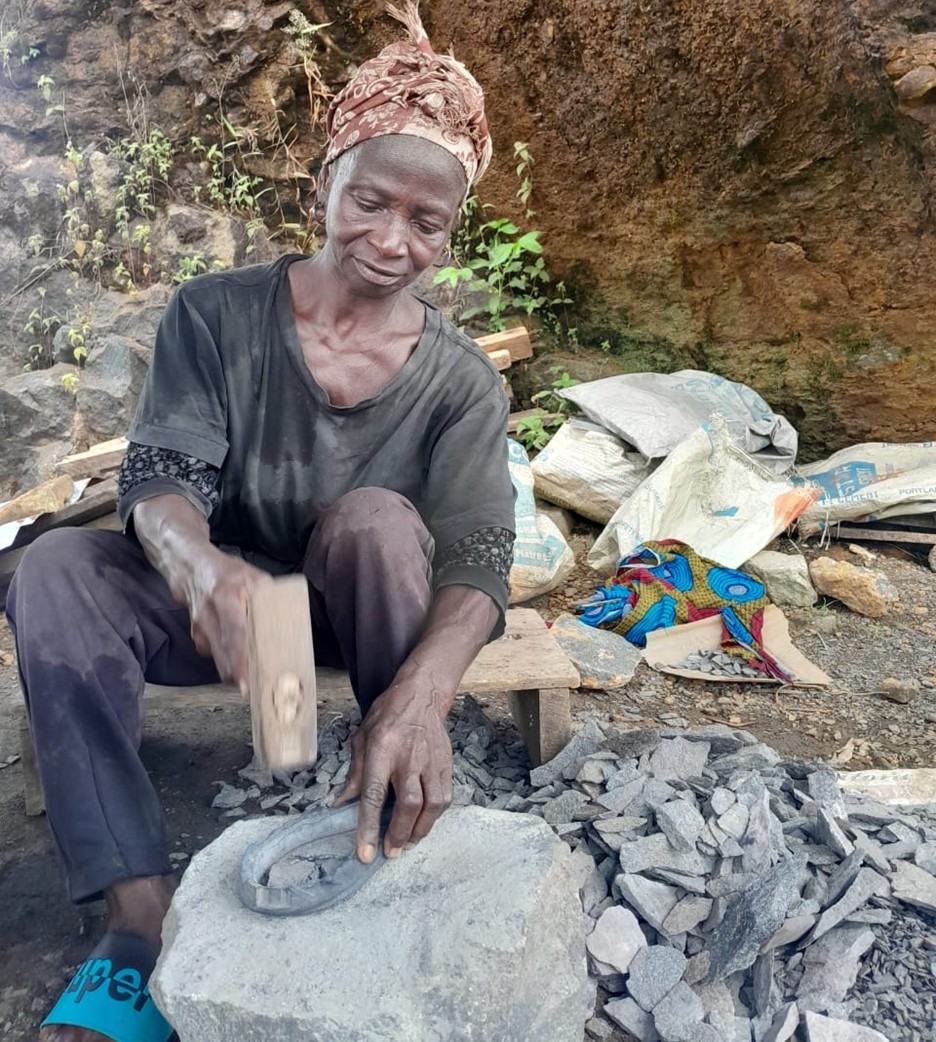
MOUNT BARCLAY, Montserrado County- Each morning, as the sun climbs over here, Kebbeh Kollie grips a sledgehammer and strikes stone. The sharp clang echoes through the quarry near Mount Barclay, a rhythm of survival.
For three years, the 40-year-old single mother has crushed rocks to feed her two children. Her hands are blistered, her back aches, and her mind never rests.
“When you get children, nobody to help you as a single parent, it can stress you up,” she said. “If you nah geh (don’t have) food to give to them at the end of the day, you will worry about it. I came down with pressure; the doctor advised me not to stop that medicine. It worries me, but nothing else I can do.”
Kollie is not alone. Across Liberia, thousands of women are quietly battling a wave of emotional distress that experts say is now one of the country’s most urgent but unseen public health crises. A recent State of the World’s Emotional Health report ranks Liberia among the world’s top10 countries for worry and sadness, placing it alongside other post-conflict nations like Sierra Leone and Chad.
Women, globally, report higher levels of sadness, worry, pain, and stress than men, a gap that experts say widened during the Liberian civil war, Ebola crisis, and COVID-19 pandemic. But in Liberia, where poverty, trauma, and unstable livelihoods converge, expert says the gap is a chasm.
Now, that same relentless struggle is showing up in their bodies, fueling a surge of chronic diseases like high blood pressure, heart problems, and diabetes. Health leaders warn that untreated stress not only threatens women’s lives but also the fragile peace of a nation still trying to heal.
“More women suffer from anxiety and depression than men,” said Dr. Moses Ziah, director of mental health at the Ministry of Health. “The expectations placed on women, the economic hardship, the loss. All of it adds up.”
The crisis, Dr. Ziah said, is not only emotional. It’s physical. Many women interviewed described sleeplessness, dizziness, and headaches.
“When stress lasts too long, it poisons the body,” Dr. Ziah explained. “The chemicals released during constant worry raise blood pressure. Over time, that leads to heart disease, stroke, and diabetes. We see it every day.”
Liberia has no national mental health prevalence survey – the ministry estimates it would cost around $300,000, money it doesn’t have – but clinics are reporting rising cases of depression, anxiety, and stress-related illness. $US400,000 has been appropriated in the 2025 budget toward the mental health project, which seeks to construct, furnish, and fully equip a proposed Referral Psychiatry Hospital and Rehabilitation Center to address the medical and psychosocial needs of mental health cases and serve as the major mental health referral center for Liberia.
But Liberia’s mental health services remain scarce. There are roughly 11 psychiatrists for more than 5 million people, and while hundreds of mid-level clinicians have been trained, few are yet stationed in rural areas. Experts say outreach campaigns often reach marketplaces only on World Mental Health Day. Dr. Ziah would like to do more, but mental health is just one more crisis for a government with just $800 million to spend each year, including vast sums that disappear in corruption.
“We can’t be everywhere at once,” Dr. Ziah said. “But we must do more. Stress management cannot just be for the rich.
Worry Becomes Disease
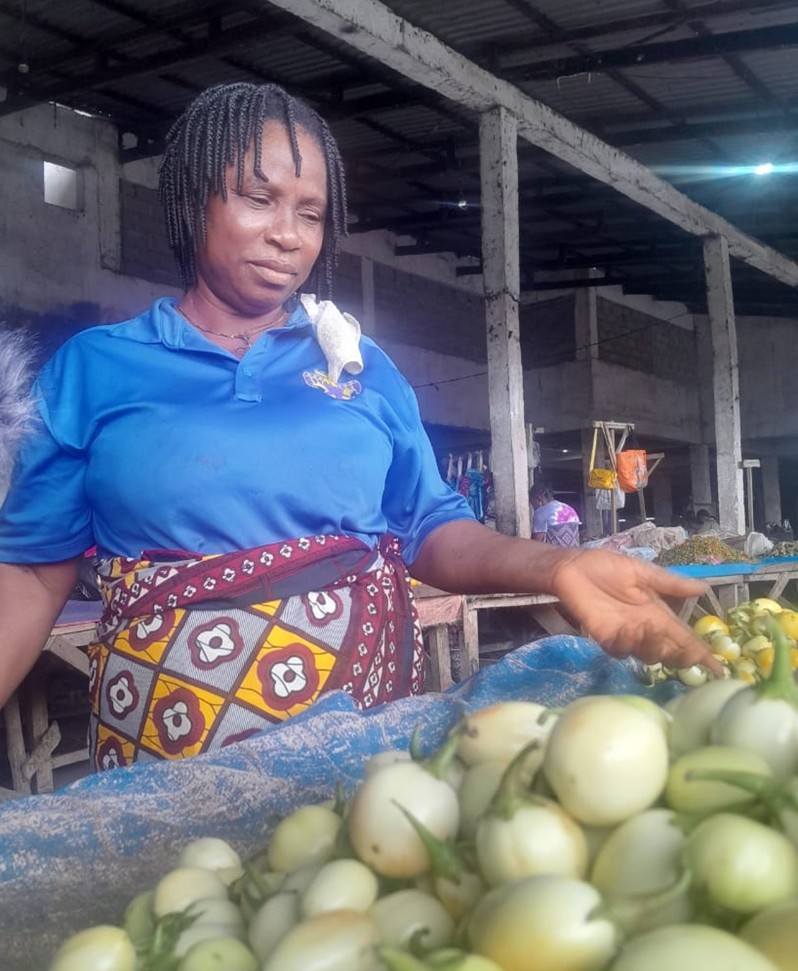
Anie Bomboce, a market seller at Omega Market in Monrovia, said doctors have diagnosed her with high blood pressure that leaves her weak and dizzy. “When I sit down, I can feel my eyes turn, my head spins,” she said. “I can’t rest because if I don’t come to the market, my children won’t eat.”
So-called “silent” illnesses like high blood pressure now stalk Liberian women, particularly those living in the informal economy with little access to care. Public clinics are supposed to be free, but medication shortages often force patients to buy drugs from private pharmacies, an unaffordable cost for many.
Kollie takes her blood pressure medication daily, tucked into a small plastic bag at the bottom of her purse. But even that adds to her stress. She worries she may not be able to find the money for the next refill. “Every day that breaks, I take it in,” she said. “I thank God for the $5 that keeps me alive.”
Globally, about 10 percent of people experience common mental health disorders such as depression, anxiety, or substance misuse, while 3 percent suffer from severe mental illnesses like schizophrenia or bipolar disorder. In Liberia, this translates to roughly 400,000 people affected by mental health, or addiction, and about 130,000 suffering from severe conditions, according to Liberia’s Mental Health Policy and Strategic Plan for 2016-2021.
Mental health experts trace much of today’s distress to Liberia’s brutal civil wars (1989-2003). The devastating pair of conflicts killed about 250,000 people and displaced over a million. It began when Charles Taylor’s rebels overthrew President Samuel Doe, leading to years of chaos, atrocities, and a humanitarian crisis. A brief peace followed Taylor’s 1997 election, but fighting resumed in 1999 until he was forced into exile in 2003. The wars left Liberia in ruins, with deep social scars, even as the nation began rebuilding under President Ellen Johnson Sirleaf’s leadership. “Women became breadwinners overnight,” said Seidu Swary, executive director of the Liberia Association of Psychosocial Services. “Many lost husbands, homes, families. That trauma didn’t vanish. It’s being inherited. They learned to survive without help. Now that independence comes with exhaustion.”
It’s not just women who experienced the war or Ebola themselves. Swary said that trauma can be biological andtransmitted across generations. Stress hormones in pregnant women can alter the stress responses of their unborn children, a phenomenon he says is visible today in younger women who were born during the conflict.
Meanwhile in quarries and markets across Monrovia, women echo the same refrain: fatigue, worry, sleepless nights.
Mercy Songka, 32, used to dream of university. Today, she sells crushed rocks by the roadside. She pays nearly $LD50,000 a year (about $US250) to keep her two children in school.
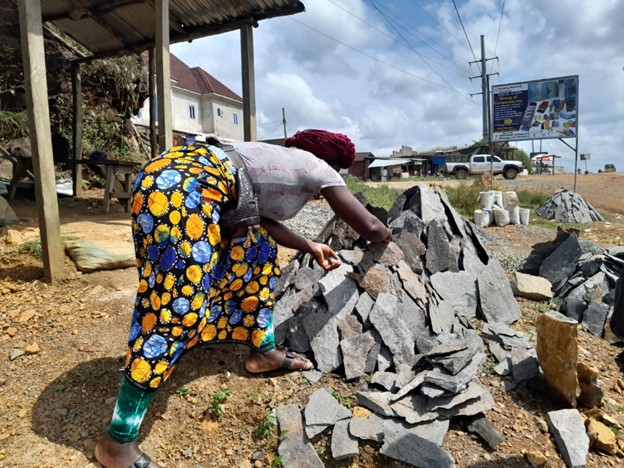
“I can’t sleep when I don’t have their school fees,” she said. “Sometimes I take tablets to rest my mind. The doctor says if I keep worrying, I could fall on the street.”
Nearby, Ma Yawmah, a grandmother who has cracked stones for nine years, says her only wish is “to stop thinking.”
“Sometimes my head hurts from too much worry,” she said. “I ask God to help me leave this rock field one day.”
The Boakai administration says it is aware of the crisis playing out. The Ministry of Health now frames mental well-being as a peace and security issue. With inherited trauma, rising poverty, unemployment, and a lack of opportunities, leaders fear where the combination will lead.
“Untreated distress can lead to conflict,” said Dr. Ziah. “If people feel hopeless and unheard, that’s dangerous for any post-war country.”
Liberia’s emotional crisis, experts warn, is no longer invisible. It is written on women’s bodies in sleepless nights, in pounding hearts, in the rhythm of hammers striking stone.
This story was a collaboration with New Narratives as part of the “Investigating Liberia” project. The Swedish Embassy provided funding, but the founder had no say in the story’s content.