
By Joyclyn Wea, gender correspondent with New Narratives
Summary
- A brutal public assault on a woman— and the flood of online reactions that followed — exposed how violence against women now spreads far beyond the street, amplified through phones, social media, into national shaming.
- A European Union-backed initiative is training male influencers, journalists, youth leaders, and activists from four countries to challenge harmful ideas about masculinity and become allies in tackling sexual and gender-based violence and supporting women’s leadership.
- Experts say for Liberia’s younger generation, raised on TikTok, Facebook, and WhatsApp, social media has become both a weapon and a window: fueling misogyny and harassment, while also exposing young men to cultures where women hold power and equality looks different.
The video lasted less than two minutes.
A young woman walking through Red Light Market in Monrovia was suddenly surrounded by a group of men who tore the clothes from her body. Her offense, they claimed, was, ironically, dressing indecently. Someone filmed the attack. Within hours, the footage spread across Facebook and WhatsApp, turning a public assault into public shaming on a national scale.
The Liberia National Police arrested eleven suspects. But by then, the woman’s humiliation had already traveled across thousands of phones and comment sections.
For many Liberian women, the violence itself was horrifying. The reaction online was worse. Some people condemned the attack. Others laughed, reposted the video, or argued that the woman deserved it.
Experts say the incident, and the flood of online reactions that followed, exposed something deeper about modern Liberia: violence against women no longer happens only in private. It now lives online too, amplified by social media, shared by strangers, and debated in comment sections that turn cruelty into entertainment.
It is against that backdrop that a new initiative is asking a difficult question: What role do men have in helping to change the culture that enables rampant sexual and gender-based violence?
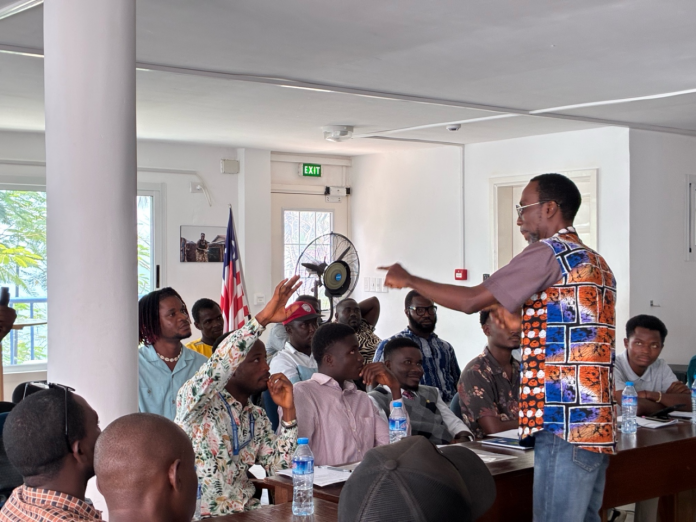
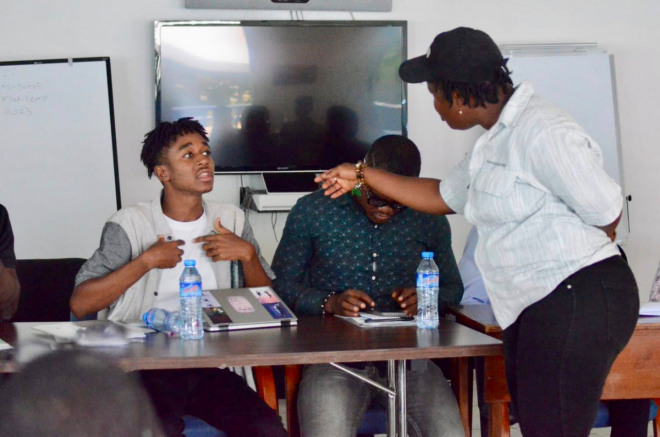
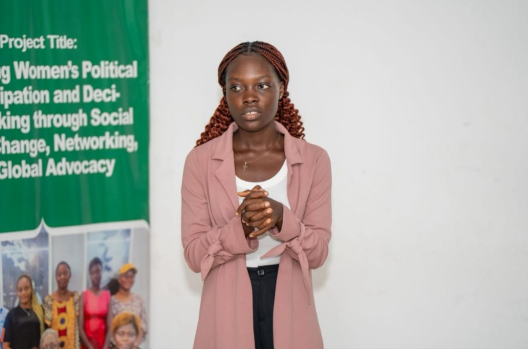
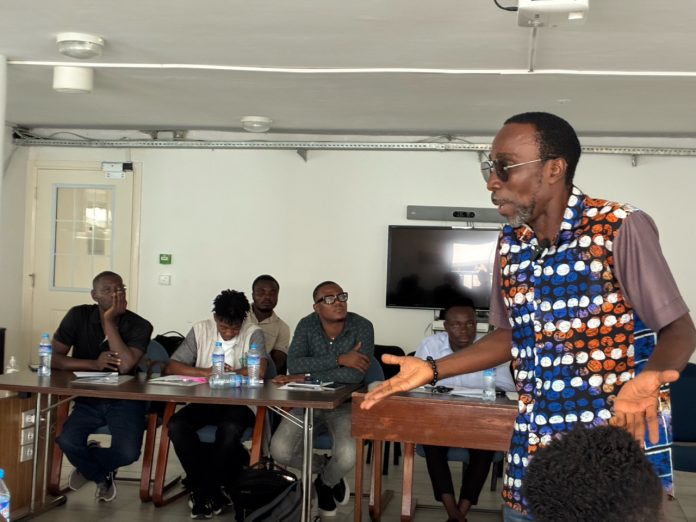
Last week, the Organization for Women and Children, with support from the European Union and in partnership with the African Women Leaders Network-Liberia Chapter, brought together male influencers from Montserrado, Sinoe, Maryland, and Grand Kru counties for training on positive masculinity, gender equality, and support for women’s leadership.
The participants included journalists, youth leaders, activists, and social media personalities — men chosen not simply because of who they are, but because of who listens to them. In the social media age, influence increasingly lives online. And for a younger generation raised on social media, it is shaping how men think about women, power, relationships, and masculinity itself.
“You can empower women, educate them, and give them economic opportunities,” said Thumba Fokwa Jedidiah-Johnson, founder and national coordinator of He For She Crusaders Liberia, a male-led advocacy organization that works to change traditional patriarchal male attitudes and was one of the facilitators of the training. “But if the man at home has not changed, those efforts hit a wall.”
A different kind of gender conversation
The scale of the problem in Liberia is striking. According to the 2019-20 Liberia Demographic and Health Survey, three in every five women aged 15 to 49 have experienced physical violence, and one-third experienced physical violence in the 12 months before the survey. The United Nations Population Fund says fewer than half of women who experience violence seek help, in part because abuse is often treated as a private family matter.
That inequality extends into politics and the economy. Liberia made history in 2006 as the first African country to elect a female president, yet women hold only about 11 percent of seats in the National Legislature. The cost of exclusion goes beyond politics: World Bank research estimates that long-run GDP per capita would be almost 20 percent higher on average if gender employment gaps were closed.
For years, efforts to tackle sexual and gender-based violence in Liberia focused mainly on women and girls — helping survivors report abuse, encouraging girls to build confidence, or supporting women seeking leadership positions. But organizers behind this initiative say lasting change will depend on men — especially younger men raised on social media, where they are exposed both to misogyny and to cultures where women enjoy greater equality.
The project wants to co-opt male influencers, journalists, and youth leaders to help reshape attitudes toward women before online hostility and deeply rooted traditions harden into another generation of violence and discrimination.
“You cannot have a conversation about the perpetrator without the perpetrator being in the room,” said Williette Arthur, project officer of the Organization for Women and Children. “If we are teaching women and girls about leadership and confidence, we must also teach men that women are partners, not threats.”
“My silence of injustice today is my approval of injustice tomorrow,” Johnson said.
The program grew out of research conducted in southeastern Liberia, where organizers found strong resistance to women’s political participation and leadership. Surveys and focus group discussions revealed that many men still viewed leadership as primarily male territory. In many communities, women still face resistance when seeking leadership roles or speaking publicly about issues such as gender violence, reproductive rights, and equality.
The debate is especially urgent in Liberia, where online abuse is increasingly shaping politics and public life. Female candidates and outspoken women are routinely targeted with insults, smear campaigns, and moral attacks designed to push them out of public spaces.
But participants said the issue goes far beyond politics. It also shapes relationships, homes, schools, and online behavior. And it has profoundly negative impacts on men and boys as well.
“Men don’t cry.”
Jerome Wlalee, executive director of Healing Bridge Liberia, which works with young people on mental health, described growing up in a society where boys were taught to suppress emotion.
“People told me men should not cry,” he said. “But I have emotions too.”
Wlalee said many Liberian boys grow up believing that masculinity means dominance, emotional silence, and control over women. Those ideas, he argued, can later fuel violence and abusive behavior.
“Society says men should not express emotion,” he said. “So many men grow up angry because they are taught to suppress everything.”
He said early intervention matters. “What you don’t learn from an early age is very hard to unlearn later.”
Liberia’s social norms around gender were shaped over generations, and many participants said older men often resist conversations that challenge traditional ideas of male authority. Organizers say that resistance is especially strong in deeply traditional communities, including parts of southeastern Liberia, where leadership has long been seen as a male space. But they say younger Liberians may be more open to change because they are growing up differently from their parents — connected through social media to broader debates about women’s rights, leadership, and equality. Social media has exposed young Liberians to women they might never have encountered otherwise — politicians, journalists, business leaders, and activists from Liberia and around the world.
Albert Zogba of the Sinoe County Women’s Platform said that exposure matters because it allows women to tell their own stories rather than having others define them. “Women can now showcase what they have. Women can now tell their story themselves to the outside world as to their values and what they have to offer,” Zogba said.
The internet can teach — and destroy
But social media is not changing attitudes in only one direction. The same platforms exposing young Liberians to new ideas about equality are also fueling harassment, misogyny, and public shaming. That exposure has helped some young men imagine women differently — not only as mothers, wives, or supporters, but as leaders. But the same online world also reinforces the very attitudes organizers are trying to change. On Facebook and TikTok, women who enter politics or speak about issues like female genital cutting, child marriage or sexual violence are often attacked for their appearance, morality, or private lives. Social media, then, has become both a classroom and a battlefield.
Last November, former Miss Liberia Wokie Dolo faced a wave of online abuse after publicly supporting a proposed ban on female genital cutting and child marriage. Commenters accused her of betraying Liberian culture and promoting Western ideas. Years earlier, when Dolo ran for political office, opponents circulated a photo of her smoking a cigar online, using it to question her morality and fitness for leadership. The attacks showed how women are often judged not only on their policies or public work, but on whether they fit narrow ideas of female behavior.
For many women in public life, online harassment has become part of the political landscape.
“Social media can educate people, but it can also destroy people,” said Zogba, whose platform supports women in politics. “Strength is not about controlling women. Strength is about partnership.”
Still, some participants said social media can also become part of the solution. Solomon Garpue, a social media influencer known online as “Tutu Girl,” said he uses his platforms to post skits and awareness videos supporting women and speaking against gender-based violence.
“It’s a big platform for advocacy,” he said. “People can learn there if they are willing to learn.”
Redefining strength
The idea behind “positive masculinity” is not to strip men of power or identity, participants said. It is to redefine what strength looks like. “If we should address gender-based violence, we must work with the men because the men are the primary makers of the problem,” Johnson said.
Organizers say the training is only a starting point. The male influencers, journalists, and youth leaders who took part are expected to become ambassadors for positive masculinity, using their platforms, community spaces, and public influence to challenge harmful attitudes, promote behavioral change, and encourage other men to support women’s safety and leadership. Whether that message can travel as quickly as the abuse women face online remains the real test.
This story was produced in collaboration with New Narratives as part of the Investigating Liberia project. Funding was provided by a private donor and the Swedish International Development Cooperation Agency. The donors had no say in the story’s content.