


By Joyclyn Wea, gender correspondent with New Narratives
Summary:
- In April, Ghana became the third African nation to reject a U.S. Trump administration health deal.
- Across Africa, similar deals are facing scrutiny over complaints about data sovereignty, specimen sharing, co-financing, weak consultation, and who benefits from innovations developed from African data or biological samples.
- Liberia signed a five-year, US$124 million health MOU in 2025. At a recent civil society panel, Liberian advocates said the urgent questions are who controls citizens’ health information, how long it can be shared, and whether Liberia has the laws to protect it.
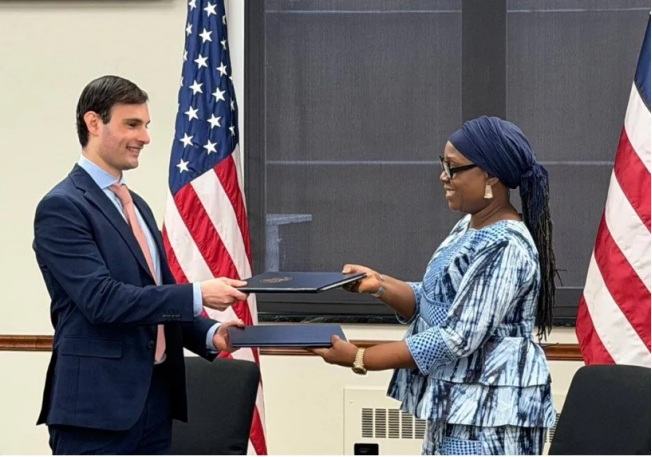
Ghana has become the third African country to reject a proposed U.S. health agreement, with government officials saying the deal would have given U.S. entities broad access to sensitive national health data, including metadata and analytical tools, without sufficient safeguards or prior approval.
The deal included provisions that would have allowed U.S. entities access to Ghana’s sensitive health data without necessary safeguards, Arnold Kavaarpuo, executive director of Ghana’s Data Protection Commission, told the Associated Press. The government said the move was also designed to build the Ghanaian government’s ownership of the health sector and reduce reliance on donors.
Ghana’s move followed Zimbabwe and Zambia, which have also rejected the deal. Zimbabwe objected to U.S. requests for long-term access to sensitive health data, virus samples, and epidemiological information. In Zambia, the proposed compact has faced delays and public pushback over data, specimen sharing, and reports that health assistance was linked to cooperation in the copper and cobalt sectors. In Kenya, the High Court suspended the agreement after a consumer rights lobby cited health-data safety concerns, and the deal has since drawn public protests over a planned US Ebola facility.
Under the Trump administration’s America First Global Health Strategy, the US has struck such health deals with more than 30 countries, most of them in Africa. The new model, which began in late 2025, replaces the agreements previously run through the now-dismantled US Agency for International Development (USAID). The deals offer billions of dollars to some of the African countries hit hardest by Washington’s aid cuts, supposedly to shore up public health systems and fight disease outbreaks.
In December, Liberia signed a five-year health cooperation Memorandum of Understanding with the Trump administration, promising up to US$125 million in U.S. assistance, while Liberia is expected to increase domestic health spending by nearly US$51 million.
The deal will replace the old USAID-managed programs with direct government-to-government compacts. The MOU covers HIV/AIDS, malaria, maternal and child health, and global health security.
The U.S. government says the model promotes national ownership and reduces aid dependency by asking partner countries to finance more of their health systems.
But critics say it moves risk onto poorer countries faster than budgets can absorb. Experts say Liberia will face a 63 percent reduction in annual U.S. health support compared with 2024 levels. Two former USAID officials with experience in West Africa, who spoke on the condition of anonymity for fear of retaliation by the Trump administration, told FrontPage Africa/New Narratives that government-to-government funding in West Africa has never worked.
The previous U.S. government-to-government health program in Liberia — which ran from around 2011 and covered eight counties — operated under a reimbursement model. The Liberian government could only receive funds after proving it had met specific health targets, verified by an independent third party at a cost of roughly one to two million dollars per year.
A 2024 State Department review found that Liberia failed to meet eligibility criteria related to addressing corruption, which placed the entire program under review before USAID was shut down.
The new Health Compact does not include a comparable verification mechanism. One former USAID official said she has been unable to get a clear answer on how funds will be tracked. “I don’t think they care about the oversight,” she said. “I think they’re just going to give them the money and ask for some good results they can share.”The full MOU and annexes, including any provisions on data access, sharing of biological material, or implementation benchmarks, have not been released. That makes it difficult for civil society and affected communities to assess what Liberia agreed to and what safeguards exist.
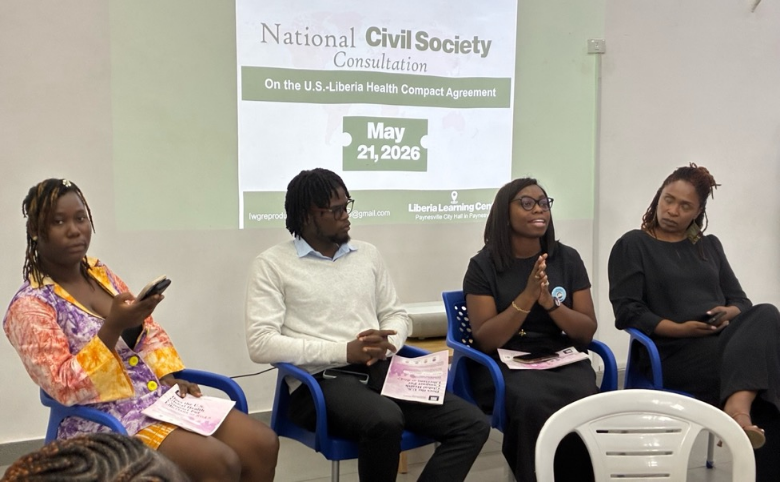
But from what has been leaked, advocates in Liberia have flagged a range of issues.
The first is data. At a recent civil society panel, Owens Lavall, CEO of Easy Tech Solutions, a Liberian technological company, said health information is “very, very sensitive” because it can reveal HIV status, pregnancy, contraception, reproductive health, outbreaks, and other conditions that can expose people to stigma or discrimination if misused. “We do not just want anybody to have access to our data.”
He also questioned why any data-sharing arrangement linked to a five-year compact should last much longer than the agreement itself. “Why will a five-year agreement say we will share our data for over 20 years – up to 25 years? Is this in the interest of Liberia?”
Africa Center for Disease Control officials have warned that African countries must retain ownership and control over data that could help produce vaccines, diagnostics, or treatments, and that they should have priority for any treatments developed with the materials.
“Data is money,” said Dwede Tarpeh, gender and human rights program coordinator at the Swedish Embassy in Liberia. She warned that African populations could help develop products that Liberians may later be unable to afford.
The second concern is funding. The America First model requires countries to increase domestic health financing while U.S. support declines. Liberia has no financing obligation in the first year but could shoulder about 90 percent by year five. The concern is that the pace of transition is too fast. Panelists asked whether costs would shift to patients, depending on public clinics.
The Ministry has not explained how Liberia plans to meet those rising co-financing obligations, or whether maternal health, HIV, malaria, and community health programs could face gaps during the transition.
The third concern is process. “Civil society was not consulted,” said Joyce Laykah Kilikpo, of the nonprofit Public Health Initiative of Liberia.
The Ministry of Health has issued a Request for Expressions of Interest from organizations seeking to implement parts of the compact, but advocates say it does not answer who will deliver which services, under what conditions, at what cost, and with what safeguards.
They said that without the full agreement and annexes, the public cannot know whether the compact protects personal data, limits access to biological samples, guarantees benefit sharing, or allows renegotiation if implementation creates problems. The Ministry has not publicly explained whether Liberia’s agreement contains data-sharing provisions like those Ghana rejected, whether the U.S. requested access to pathogen samples or disease surveillance systems, or whether implementation disagreements have emerged.
It has also not explained how Liberia plans to meet rising co-financing obligations if U.S. assistance declines, or whether maternal health, HIV, malaria, and community health programs could face gaps during the transition.
The Liberian organizations that spoke with New Narratives stopped short of calling for cancellation. But they said Ghana’s decision should force Liberia to slow down, publish the details, and answer basic questions before implementation becomes irreversible. Dolo said Liberia should not proceed without safeguards: public release of the full MOU and annexes; legislative and legal review; passage of a Personal Data Protection Act; clear limits on data access; and sovereignty clauses keeping Liberian health data under Liberian law.
“Liberia should learn from Ghana, Kenya, and other countries that have pushed back on similar agreements,” said Lela Dolo, head of Help a Mother and Newborn Initiative, a Liberian nonprofit.
New Narratives sent written questions to the Ministry of Health in May about implementation disagreements, health data safeguards, and whether Ghana’s rejection should prompt a review. The Ministry did not respond by publication time.
Kilikpo said it was “not too late” to bring civil society into implementation, though the window was narrowing.
This story was produced in collaboration with New Narratives as part of the Investigating Liberia project. Funding was provided by a private donor and the Swedish International Development Agency Development Cooperation Agency. The donors had no say in the story’s content.