
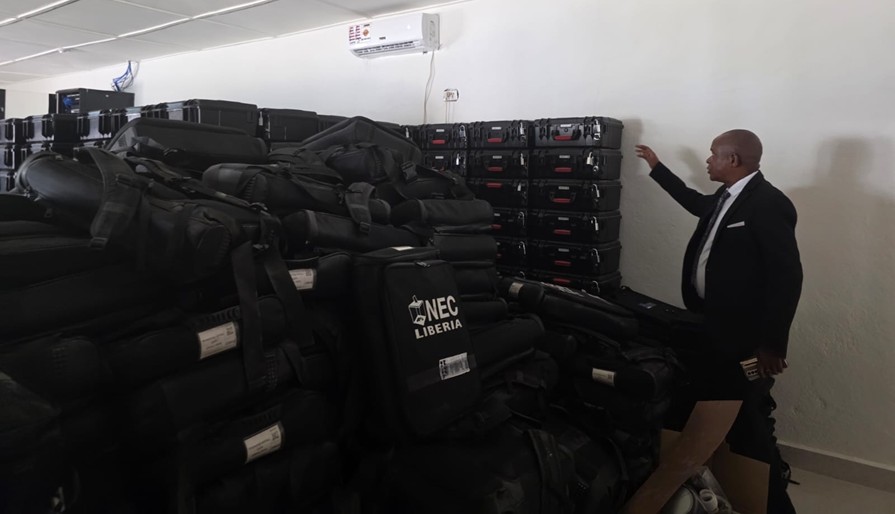
By Tetee Gebro and Joyclyn Wea with New Narratives
Summary:
- Liberia has handed management of its national identification system to Austrian firm OSD, relying on private capital to fund an enrollment process the government says it cannot afford.
- Key details of the deal remain secret — including how OSD was selected and the findings of a presidential committee report on last year’s failed rollout, which has not been released five months after submission.
- Civil society groups warn the concession puts the biometric data of 5.3 million Liberians at risk, with no data protection law in place to govern how a foreign company handles citizens’ personal information.
Nearly a year after public anger forced the government to suspend the chaotic rollout of the national digital identification registration, Liberia is preparing to hire a private company to help restart the enrolment and operate the system.
The system will digitize the data of the Liberian population, making banking and a range of other services faster and more secure, supercharging technical innovation and bringing the country up to the standard of most countries in the world. It is part of a broader World Bank funded governance and digital services project called the Great Project to digitize Liberia’s public services.
The head of the National Registry, Andrew Peters, said the government has hired the Austrian company OSD, which will bring capital and expertise that the government does not have. The company website claims to have over 200 years of experience.
But the plan has been mired in secrecy that is angering transparency activists. The government has not said how the company was selected, or what the deal entails. A presidental committee report that was supposed to guide the process has also not been released to the public.
Peters confirmed that the steering committee tasked with reviewing what went wrong with the original rollout, and recommending a path forward, submitted its report to President Joseph Boakai in November. Five months later the report remains secret.
“We’ll get to the public,” Peters said. “We want to reach a reasonable position, and I will be able to speak to the press.”
The original contract is now being made into a concession – a much larger deal that would bring in a private company to help enroll all 5.3 million Liberians. The original contract with Kenyan company Technobrain targeted only one to two million people because the government could not afford to enroll the entire population under that model, said Peters. The estimated cost of enrolling everyone is as much as $US40 million and may go higher – too big a stretch for a government with competing crises and an annual budget of just $1.2 billion.
“The envelope of the government is so small,” he said. “The government would not be able to commit, in a one-year budget, over $US40 million to the National Identification Registry alone.”
Under the proposed concession, OSD would finance the process and recover its investment over time. The system is modeled on Ghana’s national identification system, which was developed through a public-private partnership with Identity Management Systems Ltd., a subsidiary of the Ghana-based Margins Group.
Peters said an inter-ministerial concession committee, including the ministries of finance and justice, the Liberia Revenue Authority, the Land Transport Authority, is handling the final stages of the concession process. It was due to report back to President Boakai by the end of last month. Peters said negotiations had largely concluded and that the committee’s report should already be on the president’s desk.
Then the concession will have to go to the Legislature for approval, a notoriously difficult process that is widely known to have required payments to lawmakers on many occasions. Peters said he did not expect lawmakers to oppose the agreement, saying the legislators themselves have repeatedly pushed for a more affordable and accessible identification system.
Transparency Activists Call for Full Disclosure of Concession and Data Protection Plans
That assurance has not allayed the concerns of transparency activists. Harold Aidoo, head of Integrity Watch Liberia, said such public-private partnerships can help governments deliver large projects they cannot afford on their own. But he questioned the secrecy around the selection of the company. “Who is this company? What is their track record? These are things the public should know,” Aidoo said.
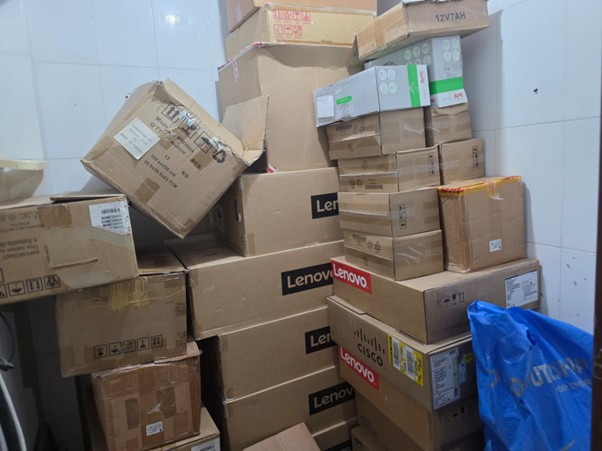
Peters insisted that the concession process with OSD is being conducted in accordance with Liberia’s procurement laws. The Public Procurement and Concessions Act says government contracts and concession deals must be handled through a process that is fair, open, and competitive. That is a requirement of funding from the World Bank that will fund part of this project.
The bigger concern, say activists, is the protection of the personal data of Liberians who sign up to the system. “Because we’re talking about citizens’ information, there must be strong safeguards and transparency,” said Aidoo.
That is a major problem for Liberia. The country has no comprehensive law protecting people’s personal data. That means there are no rules governing how the government, companies, or other organizations collect, store, or share information of ordinary Liberians — and no government agency to protect them. The country’s constitution offers a basic right to privacy, and a 2019 technology policy sets out some principles for handling data, but neither carries the force of a dedicated law.
The government, with support from the European Union, has drafted a Personal Data Protection and Privacy Act and held public consultations on it in late 2024. But the bill has not yet been passed by the Legislature — meaning for now, Liberians remain largely unprotected.
Transparency advocates said the government’s move to a private concession could put citizens’ fingerprints, photos, and personal records in foreign hands. They worry how much say the company will have in deciding how much people will pay to register, and whether a system that already failed under debt, poor access, and public anger will be rebuilt in the public interest.
“We don’t know what a company is going to do with our personal data behind our backs,” said Lawrence Yealue, chairman of the National Civil Society Council of Liberia.
He warned that a lack of transparency in selecting the company could further undermine public trust in a system that has already left them disillusioned.
But Registry chief Peters rejected concerns that the company would control Liberians’ personal data. He said all biometric information collected under the system – including the fingerprints, photographs and records already gathered – are physically stored in the country and are controlled by the registry.
“The data belongs to the government,” Peters said.
He said the concession agreement will not allow OSD to own or control Liberians’ data. He said Liberian staff would eventually be trained to manage the system independently.
“We’ll never negotiate any deal that will hire private investors to have access to our data,” Peter said.
How Liberia Got Here
Liberia’s national identification crisis began with a promise to modernize government services. In April 2025, President Boakai issued an executive order making biometric identification enrollment compulsory for Liberian citizens and foreign residents. The order tied the identification card to key services, including banking, telecommunications, healthcare, education, and immigration.
But the system was not ready. New Narratives and FrontPage Africa reported that the rollout quickly became chaotic, with long queues, poor communication, limited registration centers, and people being denied services before they could even get the card. The government first extended the deadline by 76 days, then suspended the rollout indefinitely after public anger grew.
Rick Scott, a 54-year-old businessman told New Narratives at the time, that he arrived at a National Identification Registry center in Red Light before dawn. By evening, he went home empty-handed, for the fourth time in a week. Like hundreds of others, he had left work, paid his $5 registration fee, and joined long lines.
“I leave my job in the morning and come to find an identification card because it’s a government mandate,” Scott said. “We are all fighting to get an ID card, and then the process is just going slowly. Some of us are not feeling well, but we are forced to come here.”
The problems were worse outside Monrovia. Peters acknowledged that many counties had only one enrollment center. A person traveling from Foya to Voinjama, for example, could pay transport to enroll, return home, and then pay again when called back to receive the card.
In March 2026 New Narratives/FrontPage Africa reported that the program was stalled by an unpaid $1.7 million debt to Techno Brain, the Kenyan company that built the biometric database, leaving millions unenrolled and many cards expired. President Boakai appointed the task force under the leadership of Kofi Woods, the national security advisor, to report on the breakdown. Techno Brain required payment in order to release the database.
Peters said he expects enrollment to restart in the “not too distant from now, the Registry will be back on its footing” with a target of enrolling the entire population within 18 months of the deal being signed.
This story was produced in collaboration with New Narratives as part of the Investigating Liberia project. Funding was provided by a private donor and the Swedish International Development Cooperation Agency. The donors had no say in the story’s content.