
By Joyclyn Wea, gender correspondent with New Narratives
Summary
- A nationwide consultation found that women across Liberia share the same concerns: affordable healthcare, better roads, support for farming, and access to finance.
- Women said leaders have known about these problems for years, but their priorities remain largely absent from policies and legislative action.
- Organizers said they will now push lawmakers and government agencies to act on recommendations developed from the consultation.
Liberian women said they are tired of explaining their problems. After years of consultations, meetings, and promises, many of the 160 respondents to a new nationwide consultation across Liberia’s 15 counties said the country’s leaders already know what they need: affordable healthcare, better roads, support for farming, and access to finance.
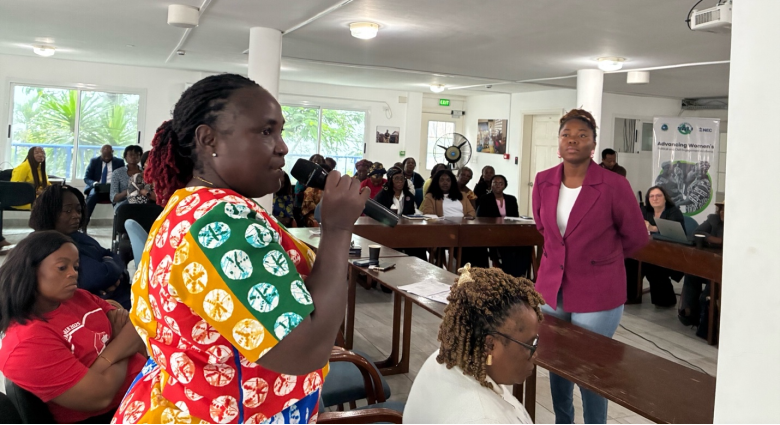
“We have had so many dialogues,” agriculture entrepreneur Nyamah Dunbar told lawmakers, government officials, and development partners gathered in Monrovia last month for the launch of the consultation findings. Echoing her sisters in the survey, she declared: “I am ready for action.”
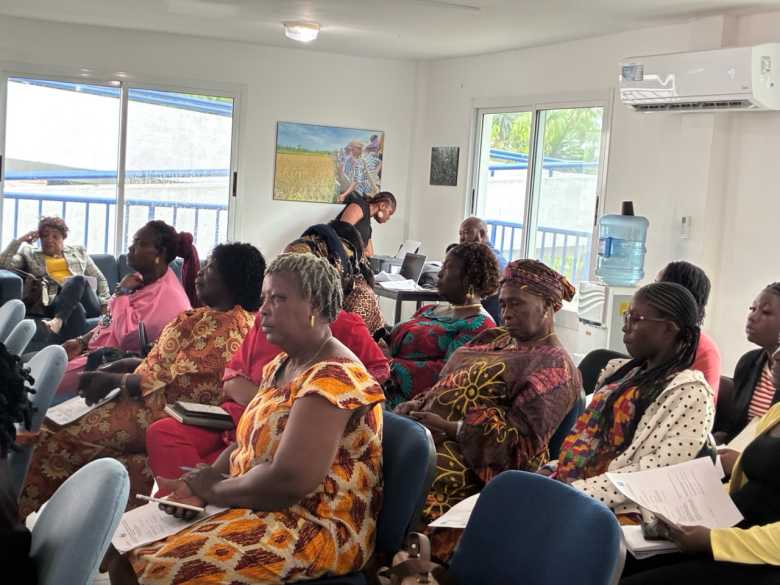
Attendees at the dialogue organized by women’s rights organization Sisters’ Aid Liberia said the findings revealed a troubling gap between what women said they need and what political leaders focus on.
The “consultation revealed a glaring disconnect between political messaging and the everyday realities of our women,” Amelia Sieh, a program officer with Sisters’ Aid Liberia, told the meeting.
The finding is significant because women make up more than half of Liberia’s electorate and play a major role in the country’s economy. According to the World Bank, women account for about 80 percent of Liberia’s agricultural labor force and produce most of Liberia’s food crops.
Yet participants said their priorities remain insufficiently reflected in party platforms, policy commitments, and legislative actions.
Women said they continue to walk long distances to reach health facilities. Some communities lack essential medicines and trained healthcare workers. Others struggle with poor roads that make it difficult to reach clinics, schools, and markets. For many women, these challenges are connected.
A woman who cannot access healthcare may be unable to work. A farmer who cannot move crops to market loses income. A trader who cannot access financing may never expand her business.
The result, participants said, is a cycle that keeps many women trapped in poverty.
Health advocates warned that the consequences can be deadly.
Naomi Tulay Solanke, executive director of Community Healthcare Initiative, which provides sexual and reproductive health services and health education to women and girls, said many women lack access to basic health information, qualified healthcare providers, and quality services.
Lack of access to emergency care during childbirth was killing three women a day. World Bank data estimates that 628 women die for every 100,000 live births in Liberia, one of the highest maternal mortality rates in the world.
“No woman should die while giving birth,” Solanki told the gathering.
Women farmers described a similar pattern of neglect.
Dunbar said women have long been the backbone of Liberia’s agricultural sector, but continue to face barriers in accessing financing, equipment, and business opportunities. She argued that many institutions still view farmers as poor and dependent rather than as entrepreneurs capable of growing successful businesses.
Cross-border traders reported difficulties obtaining loans and dealing with high interest rates, saying these barriers limit the growth of women-owned businesses.
Government officials attending the dialogue acknowledged many of the concerns.
Agriculture Minister Alexander Nuetah said the government is working to improve feeder roads and expand support to farmers. Other officials highlighted efforts aimed at improving services for women.
But for many of the women at the event, the question was not whether leaders understand the problems.

It was whether they would finally act on them. That is what organizers said they hope to achieve next.
Amelia Sieh said Sisters’ Aid Liberia plans to engage legislative committees responsible for health, agriculture, public works, gender, and trade to push for action on recommendations developed during the dialogue.
Advocates said that for women like Dunbar, success will not be measured by another consultation or conference.
It will be measured by whether the priorities women have raised across Liberia’s 15 counties finally begin to appear in the policies, budgets, and laws that shape their lives.
This story was produced in collaboration with New Narratives as part of the Investigating Liberia project. Funding was provided by a private donor and the Swedish International Development Agency Development Cooperation Agency. The donors had no say in the story’s content.