
By Tetee Gebro, gender correspondent with New Narratives
Summary:
- In a groundbreaking panel, Leymah Gbowee, a leading Liberian women’s rights advocate, said public pressure forced her to “shrink” after winning the Nobel Peace Prize, the leading global prize for peacemaking.
- A group of women’s rights experts told the gathering the word “whole” has become a cultural weapon used to shame women.
- Speakers warn that social expectations — not law — continue to regulate women’s choices.
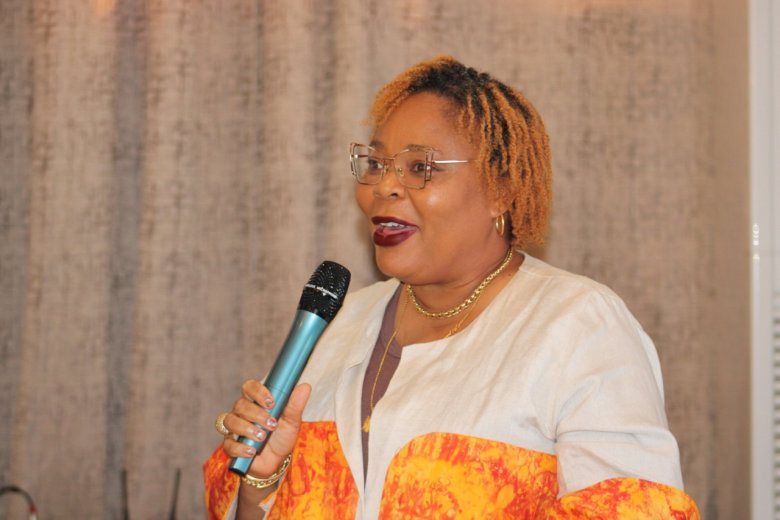
Leymah Gbowee, one of Liberia’s two Nobel Peace Prize winners, warned that societal pressure to conform and be subservient is holding Liberia’s women back and robbing the country of the productivity and contributions of half of its citizens.
In a candid admission at the latest Feminist Lecture Series under the theme “The Whole Debate: Society’s Expectations of Women,” Gbowee shared her own experiences after winning global recognition when she won the Nobel Prize, the world’s top peace prize, in 2011, along with then-Liberian president Ellen Johnson Sirleaf.
Gbowee said public judgment pushed her out of social spaces in Liberia. She described the process as forcing her to “shrink” into what she said was the small space that women are expected to occupy in the country, regardless of their achievements.
The first time she entered a nightclub after the award, Gbowee said, the music blared, but the room went still. Conversations paused. Eyes followed her. Then came the whispers: “Whole Nobel Laureate in the club.” She stopped going. “I started shrinking,” Gbowee said.
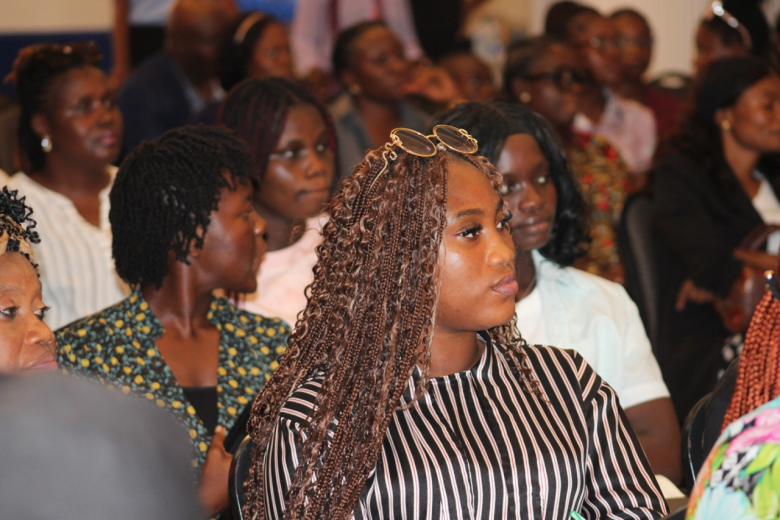
Her admission landed heavily in a Monrovia hotel ballroom filled with leaders, including Cornelia W. Kruah, Youth and Sports Minister; media personalities, including Master Queen, Liberian scholar Randell Zuleka Dauda, and leading activists, students, and young professionals. If a Nobel laureate could feel pressured to retreat, what does that mean for women without titles?
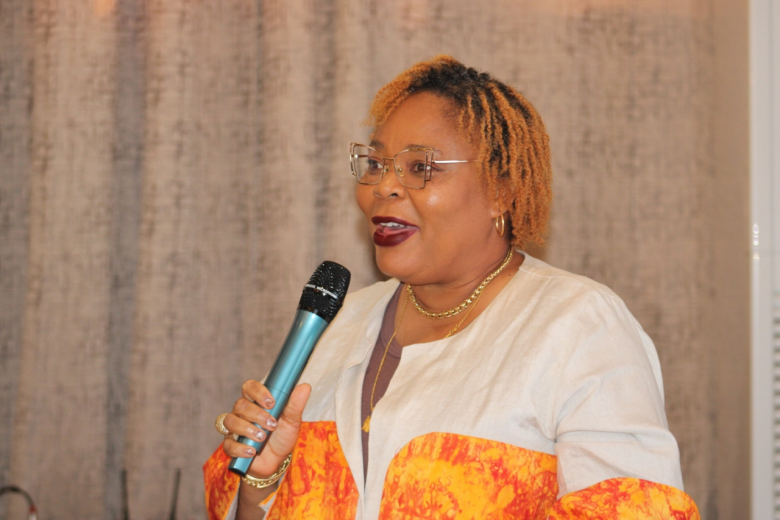
Gbowee’s admission highlighted a tension at the heart of Liberian society: a country that elected Africa’s first female president and produced two female Nobel laureates, still polices women’s behavior through social expectation, cultural shaming, and the unspoken demand for subservience.
Experts at the lecture warned that these informal pressures — invisible in law but powerful in practice — may be costing Liberia the full participation of half its population with serious consequences for development, economic growth and a fair and peaceful society going forward.
Every nation that has transformed its economy has done so by bringing women into work and leadership — experts said Liberia cannot expect to be the exception.
Panelists examined how the word “whole” — commonly used in Liberia as a moral label implying that a woman should be respectable, modest, mature, and socially compliant. They said it functions as more than commentary. They described it as a social tool to compel women to conform.
“A whole married woman out late. A whole minister with tattoos. A whole Christian dancing,” were some of the examples cited by panelists. “There is always a ‘whole,’” said Kruah, the Youth and Sports Minister in a panel.
Kruah said the word had been used repeatedly by men and women who wanted to push her down and undermine her power. She said critics questioned why she worked late in male-dominated political spaces. After her divorce, scrutiny shifted to her tattoos and social life.
“The message is clear,” Kruah said. “Stay inside the expected mold.”

Randell Zuleka Dauda, a Liberian scholar currently pursuing her PhD at Virginia Tech in the United States, where her work focuses on planning, governance and higher education, said her tattoos and piercings, brought the label into her classrooms.
“Whole professor,” she said. “It’s never about capability. They attack your appearance.”
For media personality Master Queen, the policing unfolded online. She described blogs speculating about her pregnancy and private life.
“At a certain age, you must marry. You must have a child. I cried many times,” she said. Eventually, she decided to stop internalizing the judgment. “You control your own life.”
Panelists argued that language rooted in shame — including “whole: — reinforces silence and pressures women to protect reputation before seeking justice. That was having profound consequences for the nation.
During the forum, a young woman shared a moving story of being rejected by relatives after publicly sharing her experience of sexual abuse. Family members accused her of bringing shame to the family — not the abuser, but her.
Her story reflects a broader national pattern. According to the 2019–2020 Liberia Demographic and Health Survey, 37 percent of women aged 15–49 have experienced physical violence since age 15. Advocates say stigma remains one of the biggest barriers to reporting abuse, with many women choosing silence over the risk of being ostracized.
The constraints, speakers noted, rarely appear in statute. There is no law banning a married woman from going out at night. No policy stopping a professor from wearing tattoos. No rule preventing a Nobel laureate from dancing. But unwritten rules can be as powerful as written ones.
A man at a nightclub is social. A woman there invites scrutiny. A male politician working late signals dedication. A female politician doing the same sparks suspicion.
The numbers reflect the cost. After the 2023 elections, women hold just 8 of 73 seats in the House of Representatives and 2 of 30 in the Senate — one of the lowest rates in Africa and far from equal representation in a country where women make up half the population.
“People already have a box for you,” said Zuleka Dauda said. “Step outside it, and they remind you.”
Gbowee said she eventually understood that shrinking had not quieted her critics — it had only limited her.
“I stopped going. I started shrinking,” she said. “I have degrees. I have honors. I have a Nobel Peace Prize. But I am still growing.”
Because shrinking may feel safe. But it has never been freedom. Panelists said that increasingly, women are following Gbowee’s lead and refusing to shrink.
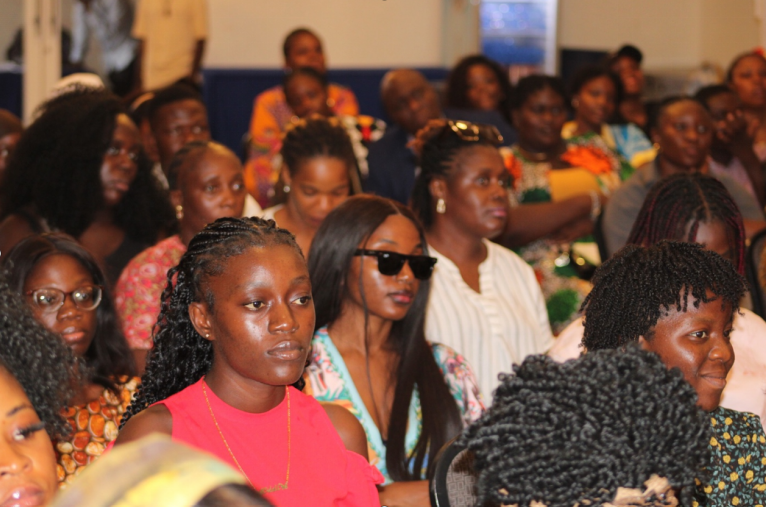
The 15th event held as part of the Feminist Lecture Series, hosted by the Gbowee Peace Foundation Africa as part of its ongoing feminist engagement platform, brought together women, young leaders, activists, and members of the public to critically examine the pressures society places on women — including expectations to be perfect, silent, or small.
The goal of the lecture series is to amplify women’s voices, challenge harmful stereotypes, promote gender equality, and create a safe space for open dialogue and empowerment. The event saw enthusiastic engagement from the large crowd. Attendees was they felt inspired, validated, and empowered by the honest conversations and shared experiences. Many described the event as uplifting and thought-provoking, and said they appreciated the opportunity to reflect on societal expectations and reclaim their full identities.
Advocates urged families, employers and community leaders to examine the everyday pressures they place on women to conform — from discouraging girls from speaking up in public to penalising professional women for behavior that goes unquestioned in men. Real change, they argued, begins not in parliament but in households, churches, schools and workplaces where the boundaries of acceptable womanhood are enforced daily.
They also urged young Liberians — men included — to reject the idea that a woman’s worth is measured by her compliance. Several speakers pointed to the lecture series itself as a model: a space where women’s experiences are treated as evidence, not complaint, and where the conversation about what Liberia expects of its women is finally being held in public.
This story was a collaboration with New Narratives as part of the “Investigating Liberia” project. Funding was provided by the Swedish embassy in Liberia. The funder has no say in the story’s content.