
By Tetee Gebro, gender correspondent with New Narratives
Summary:
- Market women say prices have been rising since late February, driven by higher global fuel and import costs linked to the US/Israel war on Iran, forcing customers to buy less
- Low income and high costs are squeezing Liberia’s small businesses from both sides
- Government enforcement of price controls through inspections and fines is ongoing but gaps remain
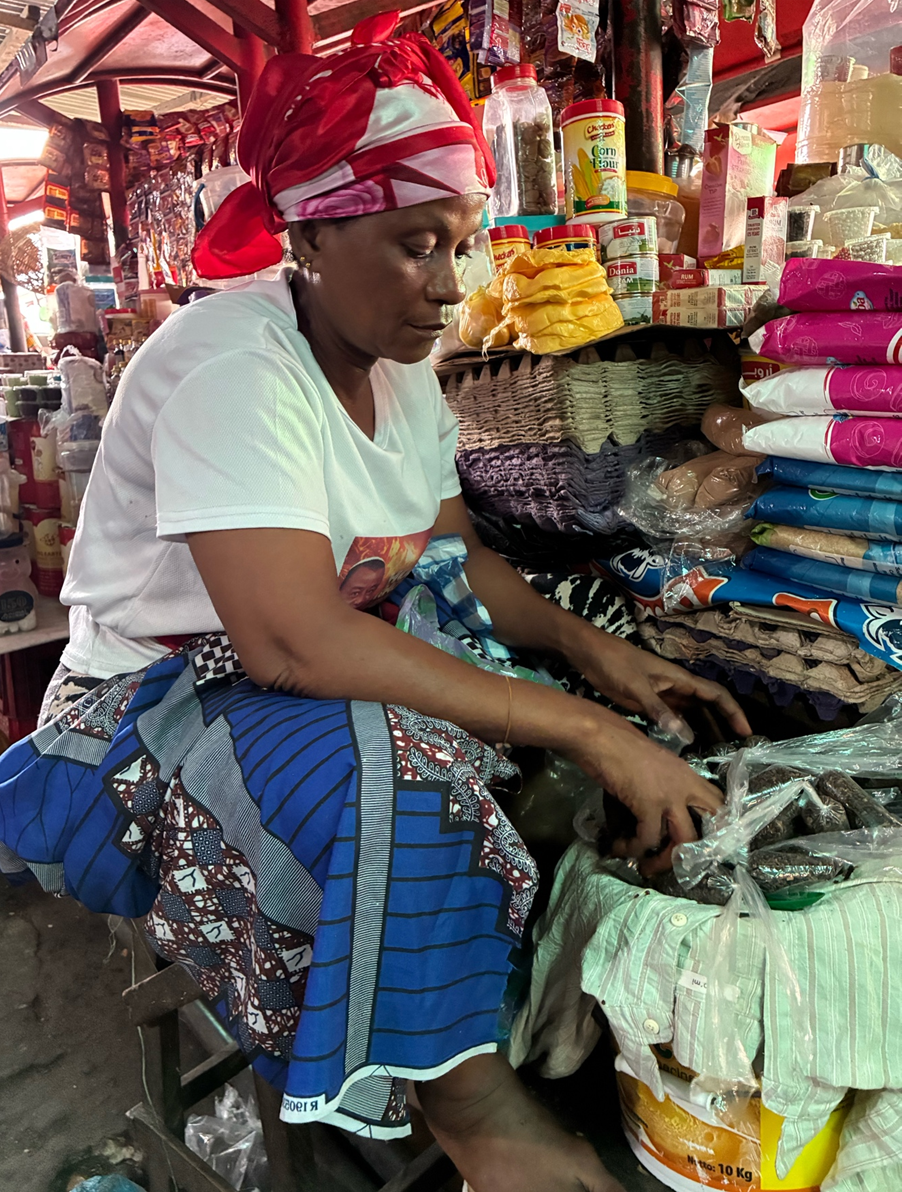
WATERSIDE MARKET, Monrovia – Bessy Toe sat behind small piles of sugar, flour and milk here one day recently, watching the hours pass. Business used to move, she said. Now, goods stay too long on the table, and sometimes they must be sold at a loss to avoid spoilage.
At home, the impact is being felt by her whole family. Where there used to be eight cups of rice to eat, now there may be five or six.
“Before one customer can come, two to three hours will pass,” she said.
Across Liberia, market women are telling the same story: business is slow, prices are high, and survival is getting harder.
The US/Israeli war on Iran, that has strangled global fuel and fertilizer trade, is threatening to upend the Boakai administration’s careful management of the economy. By March year on year inflation was down to 4.5 percent, a big drop from the high of 12.4 percent a year earlier. But experts say the dramatic rise in global prices means that is likely to change from April.
Aliko Dangote, Africa’s richest man, issued a warning at an event in Washington last week that rising fuel prices would devastate African airlines and farmers. “The majority of African airlines won’t be able to survive” Dangote warned, noting that Nigerian carriers have already announced they would suspend operations by April 20 if prices are not reduced.
He was equally stark about fertilizer, saying that two months ago it was selling for about $400 and today it is at $850. “This farming season the governments have to actually give subsidies,” he said.
In late February, the United States and Israel began direct military strikes on Iran hoping to topple the weakened regime. Within days, Iran retaliated and disrupted traffic through the Strait of Hormuz — a critical route for global oil shipments.
The impact was immediate. Global oil prices surged, pushing up the cost of fuel worldwide. For countries like Liberia, which rely heavily on imports, that translated quickly into higher transport and commodity prices.
Women like Bessy know nothing of war between global powers but they are starting to feel it nonetheless but she and other traders said they began noticing increases within weeks.
“Everything started going up small-small, then it got worse,” said one market woman.
Jerry Barclay, an economist at the University of Liberia, said the link between global shocks and local prices is direct.
“Liberia depends heavily on imported goods,” Barclay said. “When global prices rise or fuel costs increase, local prices also go up.”
The recent surge, he said, reflects both international pressures and deeper structural weaknesses in the economy. At the same time, more than half the population lives in poverty. If prices go up, they will face serious hardship.
“If everyone doesn’t have money, to buy is very difficult,” Barclay said.
When customers cannot afford to buy, businesses begin to struggle — and the effects ripple across the wider economy. Barclay said rising costs faced by traders, including transport, rent, electricity, taxes and loan payments could push many to the brink.
“If things do not improve, some of the business people will have to shut down,” he said.
At Red Light market, on the outskirts of the city, Esther Wallace stood near a market table to buy flour. Wallace is not just a buyer. She fries kala to sell to feed her four children.
Wallace said sugar has increased from L$80 to L$100. A small gallon of oil, once L$1,200, is now L$1,600. Wallace sells kala for L$5 and L$10. But profit is almost gone.
“Mama, we are just there,” she said. “Any small thing gets on it, thats our profit.”
Wallace said sometimes there is not enough money to buy a full bucket of flour. On the day of the interview, she bought two cups. Wallace’s husband is dead. Business is the only source of survival.
“We just have to bear it,” she said.
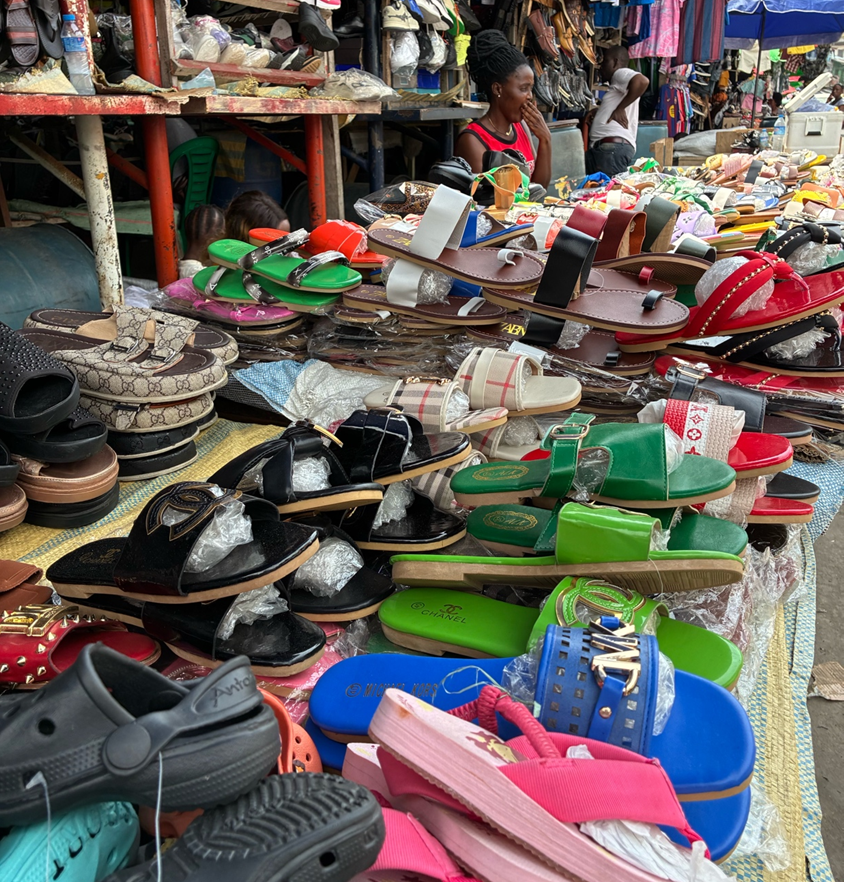
At Waterside market, Mariama Kamarah said the pressure shows up most at home. Food is reduced and money no longer stretches. What used to work is no longer enough. “Things are hard,” she said.
At the same market, Agnes Nwagiawe said transport costs are adding to the burden. A trip that once cost L$100 can now cost L$160 or more.
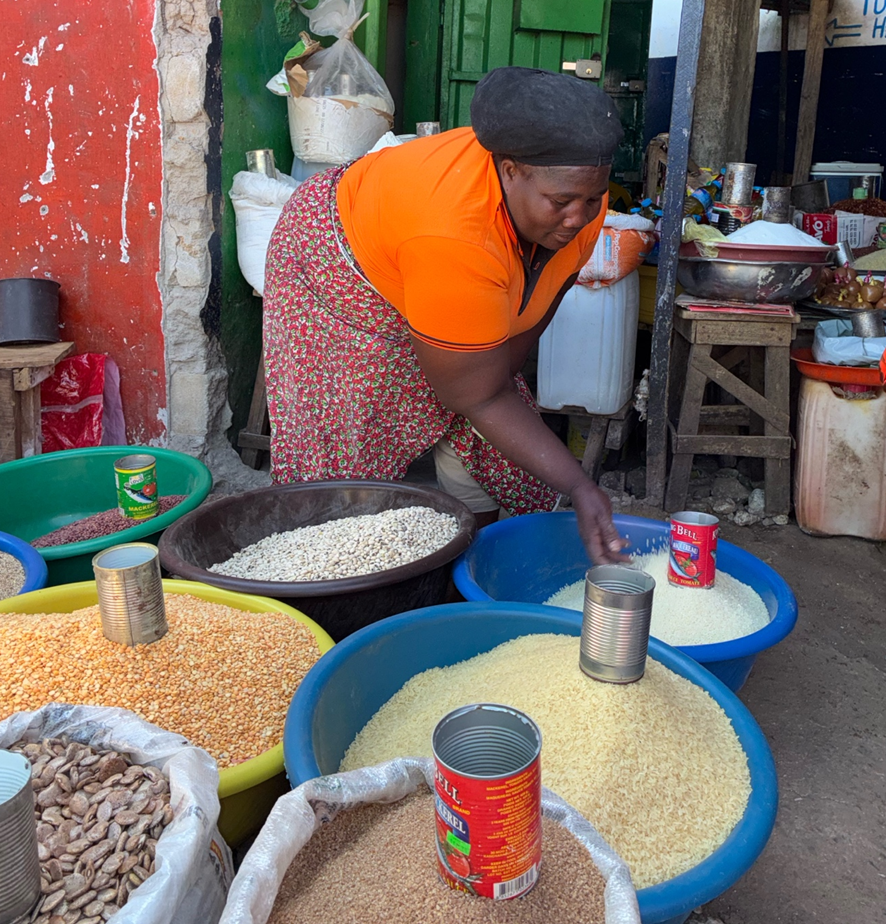
To survive, Nwagiawe said traders now sell different items at once—rice, beans, flour, sugar—just to keep money coming. “We are losing gradually,” she said.
Some traders said they have reduced what they sell. Others have stopped coming to the market all together. Many remain only because they have no alternative.
At home, the effects are immediate. Meals are reduced. Food is stretched over days. For some families, proper meals now happen only on Sundays or special occasions.
Miantor Gbatu, Commerce Inspector General, said the government is working to control prices of local commodities including rice to prevent price gouging.
“Our role is to ensure a very good business practice in the country,” Gbatu said. “We are there to ensure that prices are regulated and there is value for money. We are in the market on a daily basis. We have our inspectors into the different communities ensuring that the right things are done.”
Gbatu said businesses that violate rules are fined.
“Some are fined $100, some $200, some $250 depending on the violation,” Gbatu said. “In Montserrado we have around 98 inspectors.”
He would like 150 inspectors but there are challenges. There is not enough funding for the inspectors he has. Some are working without pay.
“Sometimes our inspectors have to pay from their own pocket to get to the field,” said Gbatu.
Economist Barclay warned that enforcement alone will not solve the problem. Liberians depend too heavily on exports for their staple food, rice. According to the World Bank, rice makes up over one fifth of what Liberians eat, nearly half of adult caloric intake and takes up 15 percent of average household spending. When the price of rice rises — as it does whenever global shipping costs spike, or export governments restrict exports – the poorest Liberians eat less.
Growing more rice is imperative so the country can control the price and supply. But Liberia produces less than a third of the 650,000 tons Liberians eat each year. The gap, over 400,000 tons, is filled by imports, mostly from India. At the same time farming is inefficient. The average yields for Liberian rice farmers hover around one ton per hectare, barely enough to make rice farming worth the labor.
The government has launched several projects designed to address this. Experts said until they yield results the economy and food security will be vulnerable.
“If we don’t deal with the root causes, the situation will remain the same,” Bagley said.
Even as the US and Iran head into the second round of negotiations to permanently open the strait, experts warn the effects of the blockade will be felt for months at least. Pressure on prices and the Boakai government will likely continue.
At Waterside, Bessy Toe still waits behind the table each day. She said leaving the market is not an option. She has no other way of making money. But staying is becoming almost impossible.
The story was a collaboration with New Narratives as part of the “Investigating Liberia” project. Funding was provided by a private donor and the Swedish International Development Cooperation Agency. The donor had no say in the story’s content.