
By Anthony Stephens, senior justice correspondent with New Narratives
Summary:
A Liberian court awarded US$120,000 in restitution to victims and imposed the country’s longest-ever human trafficking sentences, sentencing eight defendants to 50 years and three others to 20 in Liberia’s largest trafficking case.
The court ordered banks and telecommunications companies to identify and freeze assets belonging to the convicted traffickers to help ensure victims recover the court-ordered restitution.
The landmark case, involving 57 victims, followed a FrontPage Africa/New Narratives investigation into alleged corruption that threatened the prosecution, ended in a unanimous jury verdict, and is now headed to the Supreme Court on appeal.
A Monrovia court on Friday sentenced 11 convicted human traffickers to the longest prison terms ever imposed in a trafficking case in Liberia and ordered them to pay US$120,000 in restitution to victims, along with US$11,500 in fines, capping the country’s largest human trafficking prosecution after a month-long trial involving 57 victims.
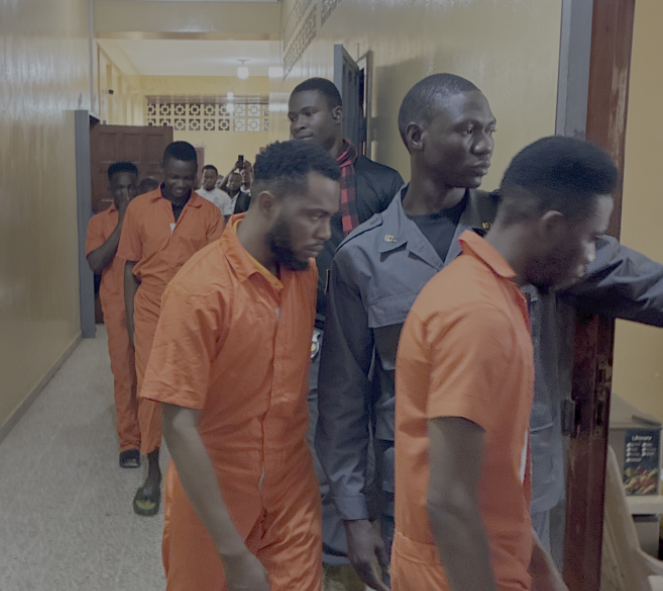
Judge Roosevelt Z. Willie of Criminal Court A sentenced eight defendants to 50 years’ imprisonment each and three others to 20 years, suspending half of the latter sentences after they pleaded guilty. He also ordered banks and telecommunications companies to identify and freeze any assets belonging to the convicted traffickers to help enforce the restitution award and fines.
“The defendants deceived their victims, recruited them, harbored them, exploited them, sexually abused them and took money from them as registration fees,” Judge Willie said during his more than two-hour reading of a 36-page judgment. “These are all critical elements of trafficking in persons. And it is the considered judgment of this court that the defendants are hereby sentenced to 50 years’ imprisonment each.”
The defendants sentenced to 50 years were jointly ordered to pay US$90,000 in restitution and a US$10,000 fine. The three defendants who pleaded guilty were each ordered to pay US$10,000 in restitution and a US$500 fine, bringing the total restitution to US$120,000 and the fines to US$11,500.
The restitution award fell short of the nearly US$200,000 prosecutors had requested, including US$57,000 for medical treatment, US$85,500 for psychological care, US$28,500 for rehabilitation expenses incurred by victims and their families, and US$28,500 for emotional distress and suffering.
In ordering compensation, Judge Willie ruled: “The defendants are further ordered to pay a fine of US$10,000, or its equivalent in Liberian dollars, into the Judiciary’s account. Furthermore, the defendants shall pay restitution to the victims in the amount of US$90,000 for the following: (a) costs of medical and psychological treatment; (b) lost income and benefits and likely losses of the same in future; and (c) compensation for emotional distress, pain and suffering.”
To help enforce the judgment, Judge Willie ordered banks and telecommunications companies to identify and freeze any assets belonging to the convicted traffickers. If assets are located, they are to be sold in accordance with the law, with the proceeds used to satisfy the restitution order. The measure is intended to ensure victims receive the court-ordered restitution, unlike in the aftermath of the 2023 Arthur Chan-Chan case, when the state did little to recover the funds.
The judgment concluded a month-long prosecution involving 57 victims, allegations of rape, torture, forced confinement and a corruption scandal that nearly derailed the case before a FrontPage Africa/New Narratives investigation prompted renewed government action.
The case drew national and international attention, tested Liberia’s efforts to combat human trafficking and ended with a unanimous jury verdict after just 23 minutes of deliberation. They were all convicted for human trafficking, theft of property and criminal conspiracy.
Judge Willie said the law, testimony and physical evidence overwhelmingly established that the defendants recruited victims with false promises of jobs in Canada or Australia, confined them at a compound in Gbankpa Town, Margibi County, on the outskirts of Monrovia, and exploited them for money, labor and, in some cases, sex.
The eight defendants were Bill Plato, Wuo Zekarso Garteh, also known as Daniel Davis, Jerome Genseh, Alexander Plato, Rudolph Flomo, also known as Luther, Blessing Favor Suah and Daylue Kargon. Their sentences surpassed the previous record set in January 2023, when former National Security Agency officer Chan-Chan was sentenced to 25 years in prison by Judge Willie after his conviction for human trafficking.
Judge Willie also relied on pre-sentence investigations by the probation office, which found that “many of these defendants are recidivists,” saying the gravity of the crimes justified the unprecedented punishment.
Four defendants—Shelley Jonny, Maxson Wonlebaye, Marthaline Tompia and Preston Godfred—pleaded guilty during the trial. Prosecutors dropped the charges only against Jonny after she admitted her role in the trafficking operation on the second day of the proceedings and agreed to testify for the state.
The prosecution opposed dismissing the charges against Wonlebaye, Tompia and Godfred, arguing that victims had identified them as key participants in the scheme. Instead, prosecutors urged the court to treat their guilty pleas as mitigating factors at sentencing.
Judge Willie sentenced the three to 20 years in prison but suspended half of each sentence, meaning they will serve 10 years in custody, with the remaining 10 years suspended.
“This court says that the defendants cannot escape criminal responsibility merely because they subsequently admitted to their guilt,” Judge Willie ruled. “The evidence adduced during the trial established the active participation of these three defendants in the commission of the crimes.”
The defendants sat silently in the dock as Judge Willie read the sentences.
Bill Plato and Wuo Zekarso Garteh, also known as Daniel Davis, who admitted during the trial to serving as leaders of Infinity Millennium Platinum Star Limitless Institution, an organization they said was affiliated with the Malaysian multilevel marketing company QNet, stared ahead as the judgment was delivered. Flomo repeatedly bit his fingers, appearing to struggle to absorb the ruling.
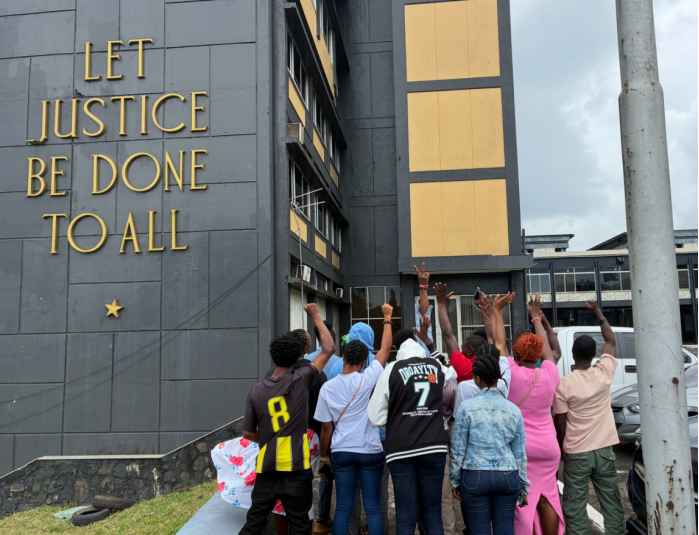
Inside the courtroom, victims smiled quietly as the sentences were read. Outside, after the hearing ended, they embraced one another and pumped their fists into the air in celebration.
“I am feeling fine because Liberia justice system, before this case can start, we hear plenty things from the defendants them, how ‘the people in their pocket,’ how this, that… we hear plenty things,” said L.G. in Liberian English. “But for us to win this case today, I am really, really happy because justice was done.”
Another victim, S., one of two women whom the jury found had been raped by Davis, said the judgment brought relief, though it could not erase the hardship her family endured. Her widowed mother borrowed US$2,300 from a village savings club in Bomi County to finance what they believed would be her daughter’s journey to Canada.
“I am very, happy although what they did to my mother, today she in the problem because now, now, da na small thing,” she said in Liberian English.
M.L. said the ruling finally lifted a burden she had carried since escaping the trafficking ring.
“I feel like I am breathing the fresh air from the sea right now. I feel so relaxed,” she said. “They deserve it because of what they did. They turned my family against me.”
Another victim, M.Z., said the sentences reflected the profound harm inflicted on survivors and their families.
“I am overwhelmingly happy because this case has not been easy from the beginning,” he said. “If they had even sentenced them to life, I would have been happy because they caused so much damage to us.”
The trial—the largest human trafficking prosecution in Liberia’s history—involved 57 victims who testified that they had endured intimidation, beatings, torture, rape, extortion, forced recruitment, starvation and other degrading treatment before escaping the trafficking ring.
A Montserrado County grand jury later an indicted the defendants, and after a month-long trial, the 12-member jury unanimously found the remaining defendants guilty last Monday.
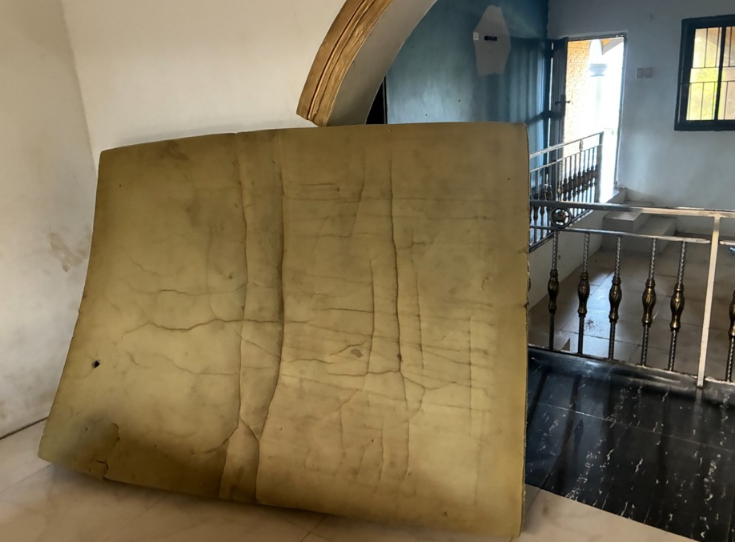
In one of the trial’s most unusual moments, all 12 jurors, three alternate jurors, the defendants, victims, lawyers, court officials and this reporter visited the crime scene. It was one of the few court-ordered crime scene visits in recent years.
Witnesses testified they had been recruited from Bong, Nimba, Lofa, Grand Bassa, Margibi, Montserrado and Bomi Counties with promises of jobs in Canada and Australia before being taken to the compound, where they were held for periods ranging from two to 18 months. Shelley Jonny, one of four defendants who pleaded guilty, told the court that as many as 150 people were being held there at a time.
Judge Willie said the evidence demonstrated that the defendants acted together in carrying out a coordinated “criminal enterprise.”
“The court finds that the conduct of the defendants clearly demonstrates the existence of a common plan and unlawful agreement,” said Judge Willie. “The recruitment of victims from different counties, the collection of substantial sums of money, the confinement of the victims in one location, the confiscation of their telephones, the coordinated punishments inflicted upon them, and the collective efforts to extort additional funds from relatives could not have occurred independently of one another. Rather, these acts were carried out pursuant to a preconceived and coordinated scheme among the defendants.”
The sentencing also shed new light on the trafficking network beyond those convicted. During the trial, James F. Farmah, an employee of the Ministry of Foreign Affairs assigned to the Liberia Business Registry, testified that Joseph Vulu, Pape Gbagnagbe, Andrew Suah, Munah O. James and Aaron P. Miaway were listed as the incorporators of Infinity Millennium Platinum Star Limitless Institution, all using addresses in Montserrado County.
Davis, one of the convicted traffickers, identified Mamie Dollar and Munah Y. Bartie as senior figures within Infinity Millennium. Davis told the court that Dollar remained in Liberia and was “the one in charge” after he and Bill Plato went on trial.
To help secure payment of court-ordered restitution, the court ordered banks and telecommunications companies to identify and freeze any assets that may belong to the convicted traffickers. The measure is intended to avoid a repeat of the Chan-Chan case, in which victims struggled to recover restitution awarded by the court.
The sentencing leaves unresolved questions about the government’s responsibility to support the victims beyond the court-ordered restitution.
In an interview after last week’s verdict, Augustine C. Fayiah, Liberia’s solicitor general, said it was too early to say whether the government would provide additional reparations.
“I can’t speak to that,” Fayiah said. “It will also be discussed to see whether that is possible.”
He said the government would provide psychosocial support and help reunite victims with their families.
“The institutions will take care of that,” said Fayiah. “Mainly, the Gender Ministry will get involved. The Labor Ministry also has a program to deal with them in such a manner that they will be reunited with their families without any disturbance. The only difficulty is that some of them sold their homes, and so they are in conflict with their friends. That is why we want the Labor Ministry’s involvement.”
Nuho Kanneh, acting director of the Anti-Human Trafficking Secretariat at the Ministry of Labour, did not respond to a WhatsApp message seeking comment on whether the government would provide additional reparations.
The issue has drawn international attention. In its 2025 Trafficking in Persons report, the U.S. State Department urged Liberia to “increase the availability and quality of protection services—including short-term shelter and long-term housing—for all trafficking victims, especially victims outside the capital.” The recommendation forms part of broader measures the government must implement as it seeks removal from the Tier 2 Watch List.
Meanwhile, the defendants have begun the appeals process.
As he did after the jury returned its guilty verdict last week, lead defense lawyer, Sennay Carlor declined to comment on the sentences but formally announced an appeal, which Judge Willie approved in accordance with Liberian law.
The defendants, who spent between two and ten months in pretrial detention, have until July 21 to complete the initial appeal process in Criminal Court “A.” Carlor must then file a bill of exceptions with the Supreme Court and ensure it is completed within 60 days. But the appeal does not suspend the prison sentences.
Earlier Friday, before sentencing, the court heard Carlor’s motion for a new trial, a routine post-verdict application before final judgment is entered.
Carlor argued that the jury’s verdict was against the weight of the evidence, contending that prosecutors failed to prove the defendants promised victims jobs abroad.
“The receipts did not say, ‘The money you pay will take you to Canada,’” Carlor argued. “That was major evidence. The jury did not pay attention to that. Most of the prosecution witnesses said they transported themselves. It tells us the jury did not examine the evidence properly. I can tell why they did that. They wanted to go home. They were tired.”
Prosecutors urged the court to reject the motion. Sumo C. Kutu Akoi, Liberia’s senior human trafficking prosecutor, defended the jury’s swift verdict.
“They understood the case to the point,” said Akoi. “The motion itself lacks its legal pedigree. It’s completely naked legally.”
Judge Willie agreed, dismissing the motion for a new trial.
“This court says there’s no law that has been established that when the jurors go in their camp of deliberation, they may take 10, minutes, 5 minutes, one hour, 30 minutes, depending on the volume of the file,” said Willie. “The jurors sit on the case from the beginning. And they are allowed to ask questions because they themselves want to understand the facts. Moreover, the court takes its time to explain to the jurors. The court rereads the facts and evidence.”
The sentencing concludes a case that first drew national and international attention after a FrontPage Africa/New Narratives investigation alleged that corruption had delayed the prosecution long enough for the defendants to become eligible for bail. The investigation also found that serious charges had been removed from the original charge sheet.
Nine victims said a prosecutor told them public defender Bestman Juah had offered him US$7,000 to reduce or dismiss the charges. Police statements from seven victims, reviewed by this reporter, said Davis boasted the defendants were paying Juah US$500 a week to keep them “untouchable” and that they “owned the government.”
The victims further alleged that after the prosecutor rejected the payment, Enoch Dunbar, head of the Liberia National Police’s Anti-Human Trafficking Unit, accepted the money to alter their statements and weaken the case.
Juah and Dunbar denied the allegations. Dunbar later testified for the prosecution but was not questioned about the claims. On July 1, 2026, Supreme Court Chief Justice Yamie Quiqui Gbeisay Sr. appointed Juah national coordinator of Liberia’s Public Defense Program. He has also led EU-funded training for public defenders handling sexual and gender-based violence cases.
While welcoming the convictions, advocates said the government must now complete its investigation into the bribery allegations. Akoi has said a separate probe is underway.
“The issue of bribery has been a serious one,” said Zokerseh B. Saye, executive director of the Liberia Anti-Trafficking Scam and Victim Support Initiative. “We want the government to be very straight and come up with the findings as fast as possible because it will help our system and it will help our people to know that they can get justice through the court.”
Judge Willie found that deception lay at the heart of the trafficking scheme, with victims lured by false promises of jobs abroad before being exploited.
Saye said the case also exposed the need for greater public education to prevent similar crimes. His organization works with the Liberian government to identify trafficking victims, support investigations and help bring perpetrators to justice.
“They should invest in awareness to educate our people about trafficking and its impact on communities and society,” he said.
This story was a collaboration with New Narratives as part of the Investigating Liberia project. Funding was provided by the Swedish International Cooperation Development Agency. The funder had no say in the story’s content.