


By Nemenlah Cyrus Harmon, climate correspondent with New Narratives
Summary
- Liberia’s climate plan has no funding in the national budget, leaving agencies reliant on donor support and communities vulnerable to disasters like the recent windstorm in Gomue Village, say experts.
- Experts urge government to encourage forests, mangroves, wetlands, and windbreaks as low-cost, frontline defenses against climate impacts.
- Officials say transparent institutions, dedicated funding in the national budget, and stronger governance are essential to effective climate adaptation.
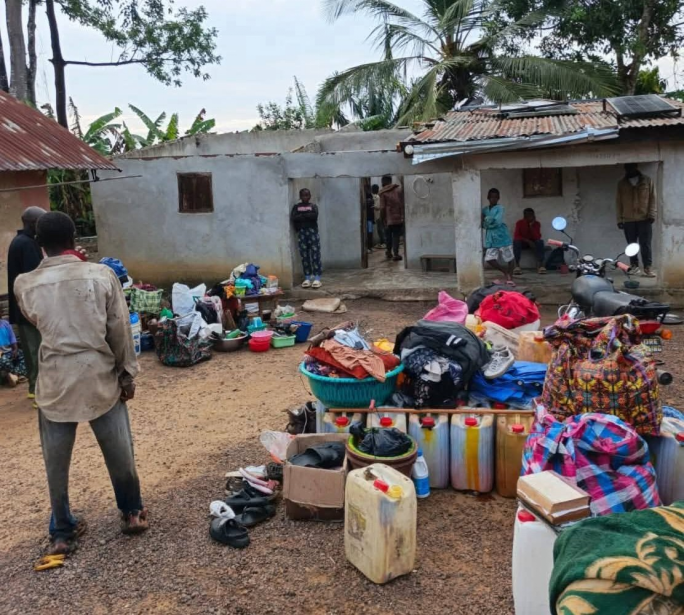
A few nights before a high level climate dialogue convened in Monrovia last week, a violent windstorm tore through Gomue Village, Zota District, Bong County in, what experts said, was an ominous reminder of the stakes for Liberians across the country as climate change worsens. Roofs were shredded; families fled into the dark and household belongings were scattered across the mud.
With a growing number of disasters caused by climate change and little funding available for disaster management, Emmanuel Urey Yarkpawolo, the Environmental Protection Agency’s executive director, was forced to appeal for assistance for the victims.
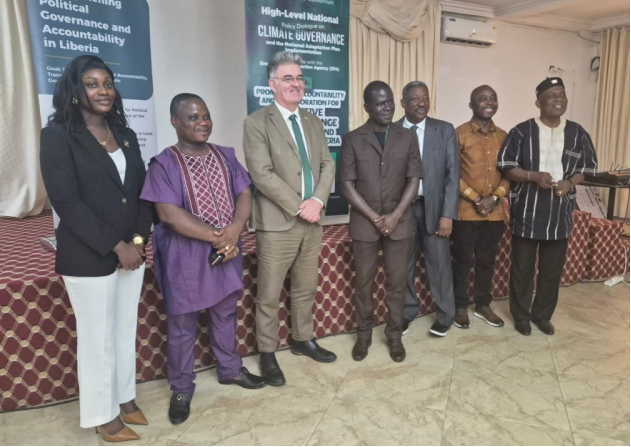
At a high-level climate dialogue held last week experts said the disaster underscored two gaps that government will need to address urgently as climate change impacts increasingly impact Liberians.
A Plan Without a Purse
Liberia’s National Adaptation Plan, a sweeping blueprint developed by the EPA in partnership with international donors, charts a course through agriculture, energy, water, health, and coastal protection.
Liberia commits to cutting emissions by 44 percent by 2030 – tripling the previous target, with ambitious plans including 2,000 electric vehicles and dramatic increase in renewable energy. Implementation requires at least $US2.5-3 billion in funding – far exceeding the country’s own capacity to fund.

The adaptation plan has been well received. The problem, according to Nathaniel Blama, it’s a bit ambiguous and that it exists almost entirely on paper. Blama spoke in an interview on the sidelines of event hosted by the Environmental Protection Agency, the Center for Democratic Governance, the Center for Transparency and Accountability in Liberia, and Partners for Democratic Development, with support from the Embassy of Ireland. “We welcome international support, but the government must show deliberate action, including allocating a dedicated budget for climate initiatives.”
The national budget allocates $US2.9 million to the Environmental Protection Agency. (The budget also includes $US900,000 the government is required to pay as co-financing for the $10 million donor-backed Climate Information System project and the $27 million coastal defense project known as the Monrovia Metropolitan Climate Resilient project that will protect coastlines at West Point from sea level rise. The Green Climate Fund is funding both projects. The Fund is one of the big global funds through which rich countries are providing funds for low-income countries facing the great threat from climate change.)
Blama said the allocation from the national budget to the Environmental Agency, is a “bare-bone” that barely covers salaries. Nearly a third of the agency’s staff are being paid by revenue generated independently by the EPA. He says the national budget needs to specify costs for adaptation.
“We need specific budget coded lines for climate change, for biodiversity conservation — because it is only by having those kinds of coded budget lines that we know where money is going and what it is doing,” Blama said.
Without such lines, he argued, even well-intentioned donor funding — which, like the two Green Climate Fund projects, currently accounts for nearly all of Liberia’s climate spending, becomes a temporary patch. One to five years of project funding, and then, “After that, what next?”
Even as the government’s annual revenue has increased by 20 percent, it’s still just $1.2 billion. Barely enough to cover even basic services for the country’s 5.4 million people. Climate experts are now advising that the country look to other solutions to address the growing onslaught from climate change.
‘Let Nature Do the Work’
“In the absence of funding, there are suggestions which I think need a lot of awareness around — and that is nature-based solutions,” Blama said. “Using nature to help you build your resilience against the impact of climate change.”

Blama prescribed a range of low-cost actions that he said could have major impact. By planting trees in the direction of prevailing winds to create living windbreaks before storms reach towns and villages for example, would help prevent disasters like the one in Gomue Village. By educating communities not to clear trees from hillsides where, once stripped, heavy rains descend directly onto settlements, they could protect people from flooding. And by protecting wetlands and mangrove forests along the coast, flooding and sea-level rise can be absorbed rather than destroying homes and livelihoods.
“Those are nature-based solutions, using nature to help you build your resilience,” he said. “We can start with those, but those also require a lot of awareness at every level.”
Yarkpawolo agrees. He opened the dialogue by pointing to Gomue as a present-tense indictment of the country’s vulnerability, and by listing nature-based solutions explicitly among Liberia’s active climate strategies.
The country lost ground during the Weah administration which did little to advance climate resilience and stalled the Green Climate Fund projects by failing to meet donor requirements. Over four years as projects were delayed, hundreds of thousands of Liberians suffered flooding and poor harvests while they had no access to the help the projects were to deliver.
The Boakai administration has put all the projects back on track, but “we are racing against time, now is the time to act more than ever before,” said Yarkpawolo.
Yarkpawolo said that the agency is now advancing climate-resilient zoning laws and making progress on the Green Climate Fund information system that would give an early warning to communities like Gomue.
Accountability as the Missing Ingredient
Ireland’s Ambassador Gerard Considine congratulated the government for making climate change a priority and urged it to ensure its actions were seen as transparent and accountable by impacted communities.
Transparent institutions, he said, do more than build trust; they make climate adaptation both effective and equitable. “Effective climate action is inseparable from good governance.”
Richard Nagbe Koon, speaker of the House, delivered the keynote address, pledging the Legislature’s readiness to pass whatever laws are needed to strengthen climate resilience. “We stand ready at any time to promulgate law, enact law, and any policy that will strengthen your results.”
Sounding the Alarm
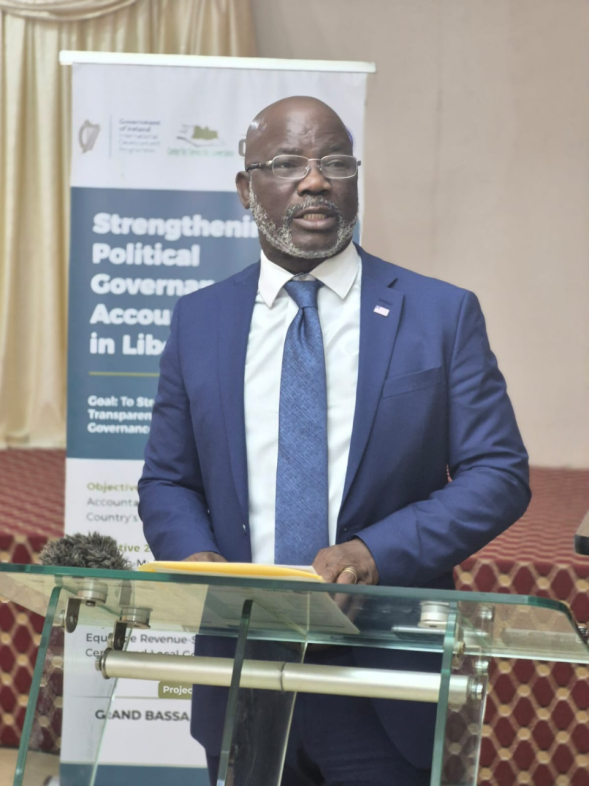
Nathaniel Blama, who has spent years watching Liberia’s climate commitments outpace its climate spending, said the issue is personal.
“Sometimes it gets disappointing, it gets frustrating. But such is the time, such is the condition, such is your country.”
“Someone said we can do nothing, but I don’t think we can. We can do something about it — and that’s why we are sounding the alarm now. We can’t continue to complain. We have an opportunity to act. We’re not doing it.”
This story was a collaboration with New Narratives as part of the Investigating Liberia Project. Funding was provided by the American Jewish World Service and Swedish International Development Cooperation Agency. The funders had no say in the story’s content.