


By Joseph Titus Yekeryan with New Narratives
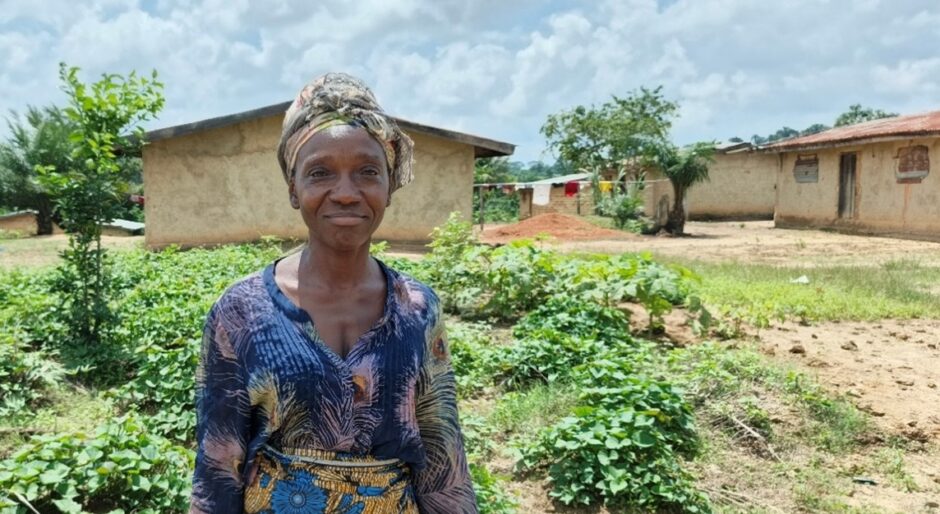
NEGBAN, Bong County – The vegetable and lowland rice field behind the Yan family home here should be alive with movement this time of year: young men clearing brush; laughter rising above the steady rhythm of hoes striking soil, and seedlings lined in careful rows.
Instead, the field is quiet. Only one figure moves across the land: Kou Yan, the mother, bent low, working alone under a punishing sun. The soil is uneven, with patches left untouched. Weeds creep where rice and vegetable should be growing.
“This farm used to feed us,” she said, pausing to catch her breath. “Now, we na even finish planting it. The problem is not just land. The problem is, I having no one to help me here.”
Her two sons, Samuel Yan, 19, and Elijah Yan, 17, are no longer here.
Across Liberia’s rural communities, families like the Yans are confronting a growing crisis: farms are failing not only because of climate pressures, but because young people are walking away from agriculture.
Farming has long been the foundation of life in rural Liberia. The 2022 government census found that 30 percent of rural households depend on subsistence farming — growing food mainly to eat, not to sell. In counties like Nimba, nearly every household relies on crops to survive.
But that foundation is cracking. As climate change is causing late rains and higher temperatures, families have little cushion. Yet the young people who once worked those farms, are leaving. Without them agriculture can no longer guarantee a family’s survival.
In February, a report by FrontPage Africa documented how the rise of sports betting is pulling students out of classrooms and into gambling, raising alarm about Liberia’s education system. But in rural communities like Negban, the same forces are driving children to leave the land.
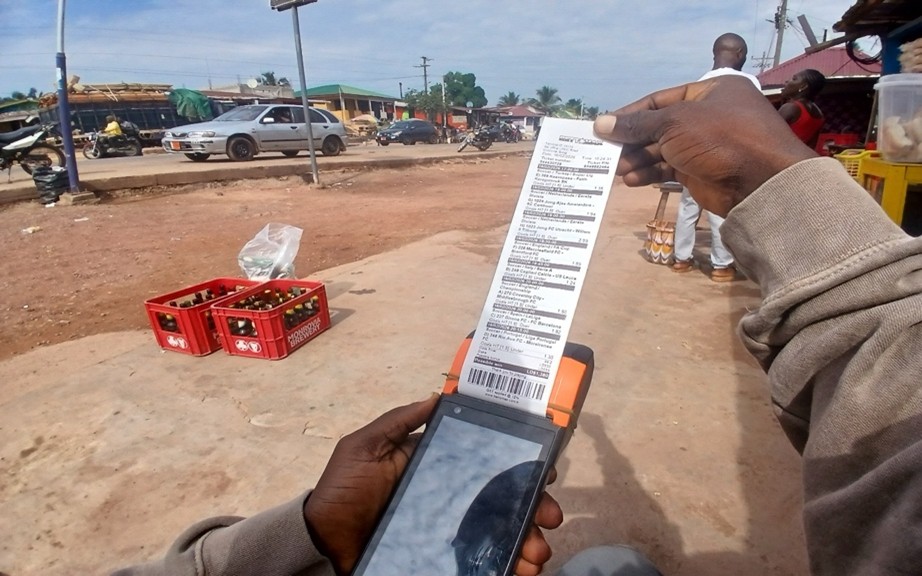
For the Yan family, the consequences have been stark. Just a year ago, both sons worked daily on the farm, helping their parents cultivate rice, cassava, and pepper – staples that sustained the household through the year. But today, the boys spend most of their time in nearby towns, drawn to betting shops and mobile gambling apps.
“We can win money fast,” Samuel said, scrolling through football odds on a pocket-sized betting machine in the nearby town of Kpan.. “When you depend on the farm, it can take long time for you to get money.”
Samuel and Elijah say they understand the risks of betting. Both admit they have lost more money than they have won.
“I know I can lose plenty,” Elijah said. “But if I get one big win, I will forget about everything.”
That hope, fragile but persistent, keeps them returning. But the promised winnings rarely come. What does come are losses, small at first, then heavier, draining not just their savings, but the fragile economy of their household.
With their sons gone, the Yan farm has shrunk by nearly half. Kou’s husband, Peter has been ill for years and no longer has the strength to do hard labor. Entire sections of land remain uncultivated because there is simply not enough labor to manage them.
“We na planting plenty again,” their mother said. “The work too much for me alone.”
The reduced harvest has meant food that once lasted months now runs out early. Meals have become smaller, and are sometimes skipped. Sometimes, the boys borrow money from relatives, neighbors, even from what little the family has saved. When they lose, the burden returns home.
A 2021 National Risk Assessment by Liberia’s Financial Intelligence Agency flagged a rapidly growing sports betting and gambling sector. This expansion, including betting companies, mini-slot machines, and gaming kiosks, has created significant vulnerabilities for money laundering and other illicit financial activity it said. The report warned that weak supervision and a lack of financial disclosure make tracking the true scale of the industry difficult. It also noted that slot machines and similar gaming devices are gaining popularity and that heavy use by the young and unemployed could signal increased money-laundering risk.
Liberians already experience moderate or severe food insecurity, and millions cannot afford a healthy diet. Now, the loss of youth labor is compounding that crisis.
In response to the FrontPage Africa article, the National Lottery Authority announced an enforcement operation targeting underage gambling. But two months later, in counties like Bong and Nimba, there has been little sign of the crackdown. Experts warn that if the Authority does not double up its efforts by working with the police to close illegal betting shops and getting rid of underage gambling, it could undermine the fight against food insecurity in Liberia or worse.
“Agriculture in Liberia is already vulnerable,” says Mr. Abraham B. Kollie, head of the Federation for Liberian Youth, Bong chapter. “When young people turn to gambling as a source of income or entertainment, it undermines their potential and community stability. If nothing is done, Liberia risks a generation diverted from productive work.”
Kollie said the Federation has made efforts to engage rural youth through sports, skills training, and mentorship as a diversion from the games. But he said the challenge is immense.
Price Eric Cooper, regional coordinator for NAYMOTE, Partners for Democratic Development, said the convergence of economic malaise, limited opportunity, and easy access to gambling creates a perfect storm. Cooper warns that the trend could deeply erode household income, social cohesion, and rural food production.
Civil society groups are calling for a multi-sectoral approach, one that includes strengthening laws, expanding educational and job opportunities, enhancing gambling regulation, and investing in rural farming activities.
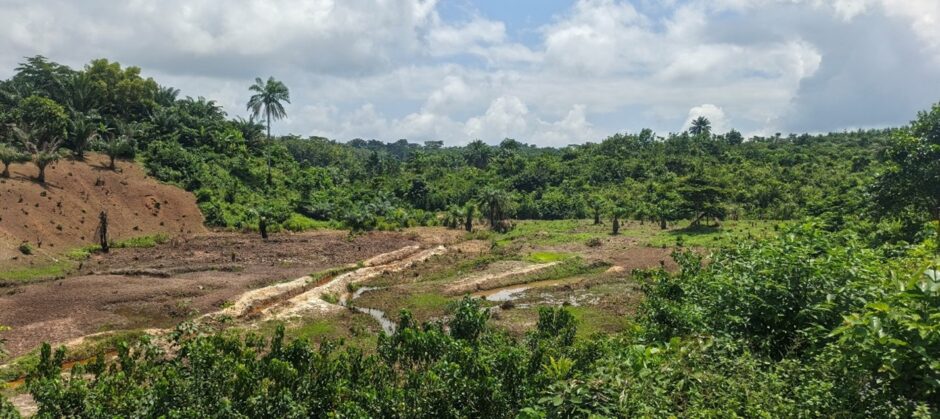
Back on the Yan farm, the cost is visible in the soil; the rows are uneven. The planting is delayed, the expected yield will be lower, and the gap between what the family needs and what the farm can produce continues to widen.
“It will na be easy again this year,” Yan said in a quiet tone.
As evening falls in Yan Town, the fields are silent.
In nearby trading centers, the energy rises. Groups of young men gather around betting shops, their faces lit by phone screens, their attention fixed on matches unfolding thousands of miles away. The family farm and the nation’s food security are far from their minds.
This story was a collaboration of New Narratives. Funding was provided by the American Jewish Service and the International Development Cooperation Agency. The funders had no say in the story’s content.