

Summary:
· Health experts are urging swift regulatory approval for “Coartem Baby”, a groundbreaking new malaria drug for infants under six months, warning delays could cost lives.
· Liberia continues to battle one of Africa’s highest malaria burdens, with nearly one million cases and an estimated 3,500 deaths in 2023 — most among children under five, according to the WHO.
· Officials say U.S. funding cuts threaten progress toward eliminating malaria by 2030, as community health workers and hospitals struggle to manage severe infections without medicines.
DU-PORT ROAD, Paynesville – Aminata still remembers the heat of that morning in 2019—the way her six-month-old son’s skin burned against her palm as she lifted him from the thin foam mattress in their small room here.
The child’s tiny body jerked uncontrollably, his breaths shallow. His skin burned like fire as she tried to cool him with water. By the time she rushed him to the nearby clinic, Aminata feared the worst. With no money for hospital, the staff could offer little more than a lab slip confirming high malaria and a list of artemether syrups and other medicines she would have to buy at a pharmacy.
Doctors treat severe anemia in infants as a medical emergency because a child can die within hours or days without blood transfusions and urgent care. Sure enough a few days later, the baby boy’s body went stiff. A neighbor confirmed what Aminata refused to believe.
“The child died,” Aminata, now 33, says. She has struggled to accept the loss of her only child. The father abandoned them when she became pregnant. “Since that child left me, I haven’t had any pregnancy yet. I feel so hurt up to now.”
Malaria remains one of Liberia’s biggest killers, especially for children under five. Despite years of education campaigns, the country still reports some of the highest infection rates in the world, with nearly one million cases and about 3,500 deaths in 2023 alone. Government data shows malaria drives a third of all clinic visits, half of all hospital admissions and a quarter of hospital deaths—underscoring the disease’s enduring grip on the nation’s health system. Infants like Aminata’s son are most vulnerable.
For decades, the world has lacked an approved malaria treatment for infants weighing less than 4.5 kilograms, leaving a dangerous gap in care for the youngest and most vulnerable.
A new drug to treat infants has been approved for use in eight African countries. But although health officials consider the drug “essential” in the fight against malaria, there is no indication of when it will be available here.

“For babies weighing below 4.5 kilograms, treatment has been mostly improvised,” says Joseph Somwarbi, a trained pharmacist and former House Committee chair on health. He called the drug known as “Coartem Baby” a “breakthrough” in closing Liberia’s malaria treatment gap. “Health workers often try to adjust adult doses to suit a child’s weight. Having a specific formulation for that vulnerable group is a very laudable step.”
In July this year, Swissmedic, the Swiss drug regulatory agency, approved Coartem Baby (also known as Riamet Baby) as the first malaria medicine for newborns and young infants. Coartem Baby offers greater precision for treating the youngest children, avoiding the potential for overdose.
Eight African countries participated in the assessment – Burkina Faso, Ivory Coast, Kenya, Malawi, Mozambique, Nigeria, Tanzania, and Uganda – and are now expected to grant rapid national approvals thanks to a partnership with the Swiss regulator Swiss medic. Novartis has announced plans to distribute the drug on a largely not-for-profit basis in malaria-endemic regions.
But it may take much longer for Coartem Baby to reach other African countries, including places with weaker drug-approval systems or limited health budgets, like Liberia. Most countries rely on the World Health Organization to “prequalify” a medicine before they can buy it, and that review can take months or even years. Experts say that if everything goes well, the medicine could be available in more countries within one to two years, but some places may wait much longer.
Liberia’s infants cannot wait.
“There are cases where people experience malaria two or three times a year,” says Dr. Luke Bawo, managing director of the Liberia Medicines and Health Products Regulatory Authority. “For newborns, the impact can be devastating.”
So far the drug is not a priority for the health ministry. “As far as I’m concerned, I do not know much about or anything at all about the drug,” said Dr. Trokon Washington, Manager of the Health Ministry’s National Malaria Control Program.
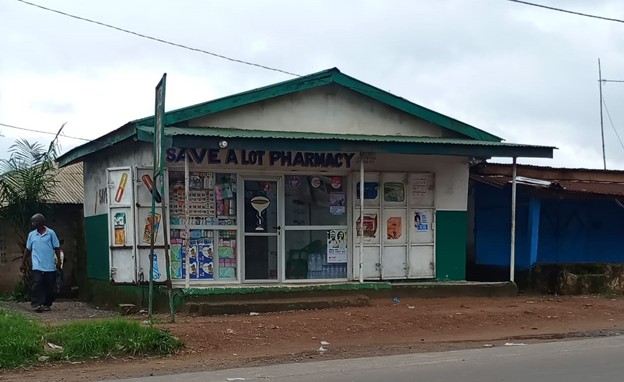
Liberia mostly lacks the capacity to assess drugs on its own. It relies on the World Health Organization’s prequalification program – a global seal of quality, identifying medicines, vaccines, and diagnostic tools that meet strict safety and effectiveness standards. Countries with weaker regulatory systems rely on these prequalified products to avoid fake or low-quality medicines, and major health agencies such as UNICEF and the Global Fund purchase only items that have earned this approval. For Liberia and other low-income countries, WHO-prequalified products are essential for ensuring that treatments for malaria, HIV, TB, and other major diseases are safe and reliable.
Dr. Yatta D. Sackie Wapoe, national professional officer for communicable diseases at the World Health Organization, confirmed in an email that Coartem Baby does not have such status.
“Unfortunately, we as WHO cannot respond to any of the questions because the drug is not part of our WHO’s pre-qualify product.”
Dr. Bawo confirmed that while existing Coartem products are already approved for children above two years and adults, the infant version has not yet been reviewed.
“It’s not that we believe the drug lacks quality,” Dr. Bawo said. “It’s just that it has not been brought to our regulatory agency for assessment. It’s important that we evaluate this drug when the need arises and consider introducing it as a treatment option.”
Health Workers on the Frontline
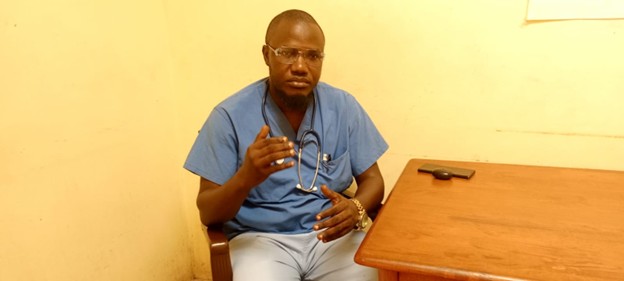
Frontline health workers are urging government and the WHO to move fast. At ELWA Hospital, physician assistant Boima D. Dougba has spent nine years treating severe malaria cases. He says children remain the most vulnerable.
“Many parents treat malaria at home first, and by the time they come to the hospital, the condition has already become complicated,” Dougba says. “Sometimes the malaria causes severe anemia. The child loses blood fast and that’s what kills them.”
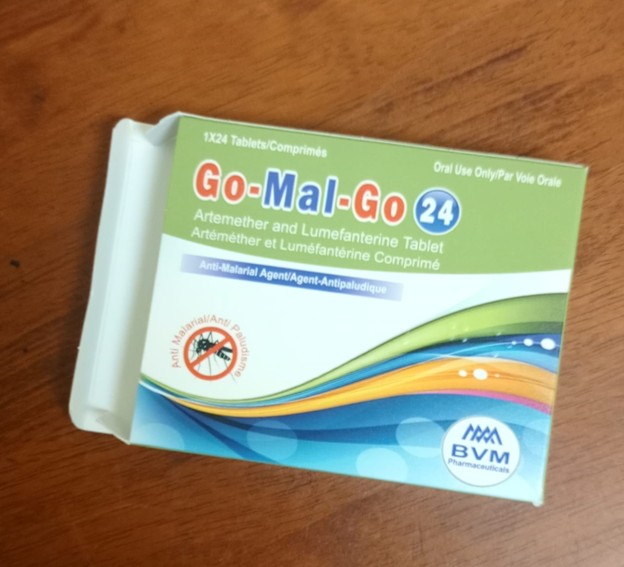
Dougba says his hospital currently uses artesunate for severe cases and Coartem, a combination of artemether and lumefantrine for children in outpatient departments.
Thomas Dahn, physician assistant of the New Eyesight and Medical Clinic in Paynesville, says he has seen similar outcomes. “If treatment is delayed, children can die sometimes from low blood, sometimes from low sugar levels caused by the malaria,” he says.
Somwarbi also urged authorities to move fast but with caution. “The necessary scrutiny should be done,” he said. “We need close pharmacovigilance monitoring and pharmacoepidemiology studies to ensure safety.”
Funding Cuts Threaten Progress
Liberia has made progress in reducing malaria deaths in children in the last two decades. The National Malaria Control Program’s 2022 Malaria Indicator Survey showed malaria prevalence among children aged 6–59 months dropped from 32 percent in the 2009 to 10 percent in 2022.

Before the return of Donald Trump to the White House in the United States the government had aimed to eliminate malaria from the country. But the government’s progress was threatened by donor cuts especially from the United States.
“We were preparing for the 2025 survey when many NGOs that supported us were shut down,” says Dr. Washington. “The Global Fund reduced its budget for Liberia by 10 percent from US$48 million and USAID also cut support. It’s been a shock.”
Malaria has been successfully eradicated in much of the world. It is really only an Africa problem now. Nearly all the 600,000 global deaths in 2023 were in Africa. Children under 5 accounted for three in every four of those deaths.
Dr. Washington said the funding cuts stalled critical studies. “We haven’t been able to conduct the Therapeutic Efficacy Study, which WHO recommends every two years to test our anti-malaria combination therapies,” he says.
Some of Liberia’s anti-malaria effort was given a reprieve this month with the announcement that the US government had agreed to a new $125 million health care funding plan over the next five years.
The plan says the US will provide $10.5 million in 2026 for medicines, diagnostic tests, insecticide-treated bed nets, and maternal and child health supplies. US funding also covers the storage and distribution of these commodities, including warehouse management and bed-net delivery. But in the following years US funding will decrease gradually as Liberia increases its own financing, with the goal of Liberia paying the full cost by 2031.
In return, Liberia has committed to strengthening oversight of its health supply chain. By 2027, the government plans to introduce a global tracking system to trace U.S.-funded medicines, upgrade all public warehouses to international standards, and train at least 30 staff to detect and respond to theft or diversion of medical supplies. Liberia has also pledged to take over full management and funding of the Central Medical Stores by October 2028, marking a shift toward national ownership of malaria treatment and other essential health commodities as U.S. support winds down.
For health care workers on the frontlines it is a nervous time as this new arrangement plays out. For poor mothers like Aminata, lacking money for treatment and knowledge about prevention, malaria continues to stalk their children and leave them powerless.
This story was a collaboration with New Narratives as part of the Investigating Liberia Project. Funding was provided by the Swedish Embassy in Liberia. The funder had no say in the story’s content.