

By Jennifer Ambolley
TEMA, Accra —Before dawn, Christabel Addo, would lift the shutters of her provision shop in Community 8. By 6 a.m., the narrow roadside was already choked with trotros belching dark smoke, taxis idling impatiently, and heavy-duty trucks grinding past on their way to the nearby industrial area.
“Once the traffic starts, the air changes,” says the 46-year-old former Junior High School teacher. “You smell fuel, smoke, everything.”
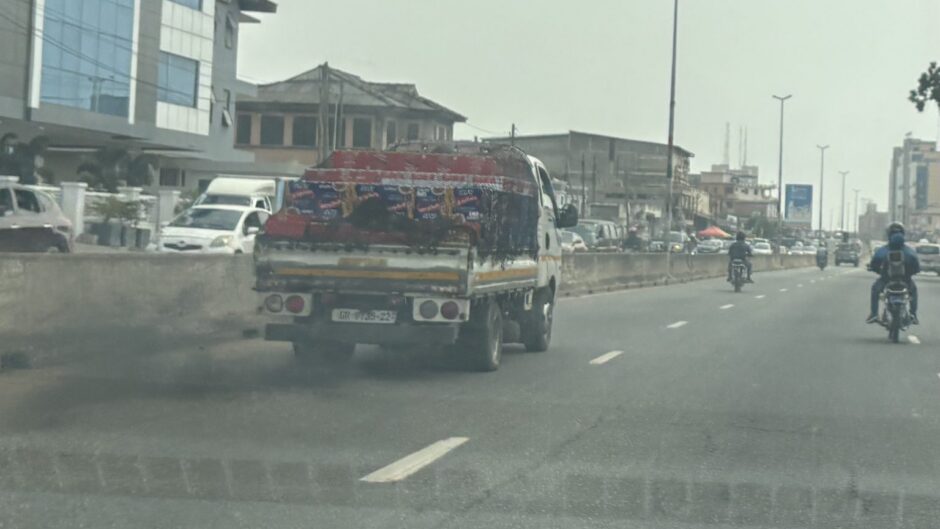
For nearly six years, Christabel worked from this spot, breathing in exhaust fumes as she arranged bread, canned foods and toiletries on wooden shelves. Then one afternoon, while serving customers, she suddenly felt short of breath. Dizziness forced her to sit. Within hours, she was rushed to Korle Bu Teaching Hospital in Accra where doctors diagnose her with hypertensive heart disease.
“I thought it was just tiredness from standing all day,” she says. “Little did I know it was something this serious.”
Christabel’s experience is not an isolated one. Across Ghana’s rapidly growing cities, doctors say, air pollution is emerging as a silent but significant contributor to heart disease, increasingly affecting adults in their most productive years. Beyond coughing and breathing difficulties, polluted air is now linked to hypertension, heart attacks, strokes and premature death at a rate that public health experts say demands urgent attention.
A hidden threat
Christabel does not smoke. She has no known family history of heart disease. During her admission, doctors explained that while her condition is linked to recognised risk factors including high blood pressure, obesity, poor diet, physical inactivity and smoking, it has also been linked to prolonged exposure to polluted air.
“They told me that apart from the usual causes, the smoke I was breathing every day by theroadside could also have affected my heart,” she says. “That was when everything startedmaking sense.”
After weeks of treatment and being placed on medication, her condition stabilised. Doctorsadvised her to reduce prolonged exposure to traffic fumes as much as possible.
For women like Christabel who work along congested roads, polluted air has become an unavoidable occupational hazard. According to data from the National Cardiothoracic Centre at the Korle Bu Teaching Hospital, about 10,000 cases of heart-related diseases were recorded in 2024 alone.

Daily exposure to vehicle emissions, generator fumes, open waste burning and industrial activity has become routine in many urban communities, often without any form of protection. For traders, transport operators and residents living near busy roads, polluted air is not a temporary inconvenience but a constant presence.
The State of Global Air 2025 report found that in West Africa, including Ghana, more than one in three heart disease deaths are attributable to air pollution. Cardiovascular diseases including heart attacks and strokes account for about 70 percent of all air pollution–related deaths, making heart disease the single largest health impact of polluted air.
Additional evidence from the World Health Organization shows that average PM2.5 levels – the smallest and most dangerous air pollutants – in Ghana’s major cities are four to six times higher than recommended safe limits.
WHO cardiovascular studies indicate that reducing air pollution to guideline levels could prevent a significant proportion of heart disease deaths annually, particularly among people exposed over many years.
“When someone spends years working in an environment with constant vehicle fumes and industrial emissions, the heart is placed under continuous stress,” says Dr Richard Bright Danyoh, a paediatrician at the Korle Bu Teaching Hospital. “PM2.5 is so fine that it travels deep into the lungs.Once the lungs are affected, oxygen delivery to the body is compromised, and the heart is essentially starved of oxygen.”
Over time, that strain can lead to hypertension and other forms of cardiovascular disease. Some particles, he adds, can directly damage blood vessels, further increasing the risk. Air pollution, Dr Danyoh warns, is an invisible threat that quietly damages the heart long before symptoms become obvious.
Children Are More Vulnerable and Cases Are Growing
For children, the effects of polluted air often begin earlier and progress quietly.
Dr Danyoh recounts the case of a child brought to the teaching hospital with severe respiratory distress requiring intensive care. She was small for age and had been exposed to indoor air pollution.
“The damage usually starts in the lungs,” Dr Dunyo says. “Polluted air weakens natural defencesand sets off a chain reaction that can eventually affect the heart.”
Such cases, he says, are becoming more common, particularly among children exposed to smoke from indoor cooking and heavy outdoor pollution.
During treatment, doctors discovered the child also had sickle cell disease, a genetic condition more common in Africans, that made her vulnerable to infections.
“While children with certain inherited diseases are already at risk, polluted air often pushes already fragile systems over the edge,” Dr Danyoh says.
Children are exposed daily to smoke from charcoal and firewood used in poorly ventilated kitchens, both before birth and after delivery. Children are especially vulnerable because they spend more time close to the ground, where concentrations of harmful particles are often higher.Their smaller organs also mean they are exposed to pollutants at a higher concentration.
Long standing lung complications can lead to heart diseases as Danyoh warns that long-term exposure can force the heart to work harder due to limited oxygen supply, increasing the risk of future complications.
In cities like Accra, exposure is often constant rather than occasional.
“Pollution comes from traffic and industry, but also from inside homes,” said Professor Reginald Quansah, an environmental epidemiologist. “Smoke from cooking doesn’t stay indoors. It escapes into the surrounding air, meaning people are exposed both at home and on the streets.”
This continuous exposure helps explain why heart disease is increasingly affecting younger, working-age adults who do not smoke or have obvious lifestyle risks, he says. People who work close to busy roads, in markets or in poorly ventilated spaces face some of the highest risks, though he stresses that there is no safe level of exposure to polluted air.
Experts say protecting heart health will require cleaner cooking fuels, better transport systems, improved city planning and stronger enforcement of air-quality regulations.
A growing public health crisis
Air pollution has moved beyond being an environmental issue to become a major public health threat in Ghana according to doctors.
“Air pollution is no longer just about the environment; it is a major public health issue because of its direct and long-term effects on the human body,” says Dr Benson Owusu, a public health expert and lecturer at the School of Nursing and Midwifery at Central University.
Pollution-related heart disease, he notes, is already affecting Ghana’s workforce and economy.
“People living with cardiovascular complications are more likely to miss work, experience reduced productivity or retire early due to ill health,” he says.
At the same time, the healthcare system faces increasing pressure from hospital admissions, long-term treatment and emergency care, diverting limited resources from other essential services.
Low-income and high-traffic communities are especially vulnerable. Many are located near busy roads, industrial zones and congested urban centres with consistently poor air quality. Limited access to healthcare, healthy living conditions and information about pollution risks further reduces residents’ ability to prevent or manage disease.
Existing health conditions, poor nutrition and occupational exposure often compound the risk.
Without a stronger preventive approach, the health system will continue to bear the cost of diseases that could have been avoided, Dr Owusu warns.
Despite growing evidence, experts say Ghana’s public health response remains limited and largely reactive. While environmental regulations exist, specific strategies linking air pollution to cardiovascular disease are weak. Public awareness is low, air-quality monitoring is inconsistent and enforcement of emissions standards remains inadequate.
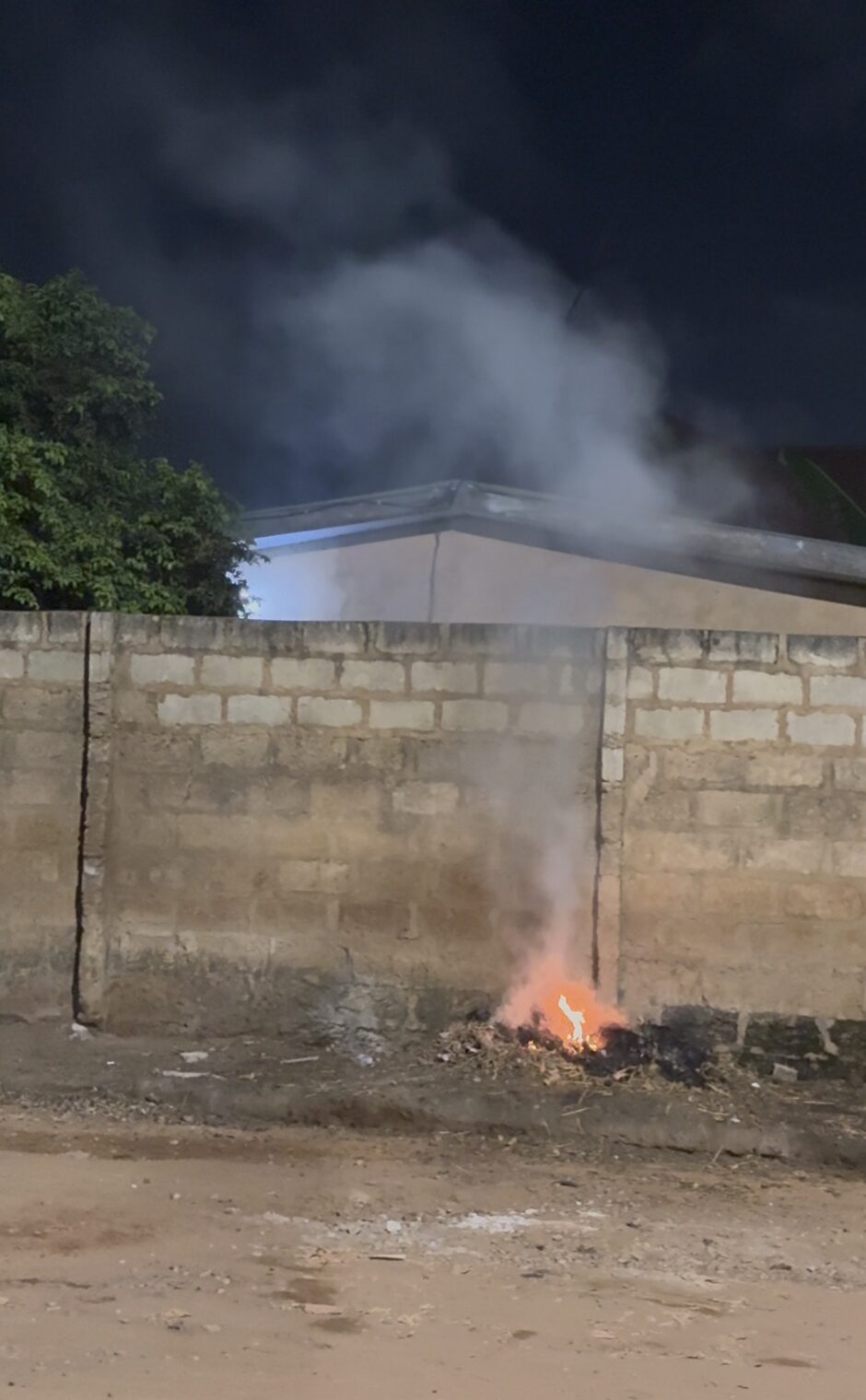
To protect those most at risk, Dr Owusu calls for immediate public health interventions alongside longer-term solutions. These include public education on pollution risks, reducing exposure during peak pollution periods, improved traffic management, routine heart disease screening in high-exposure communities and stricter enforcement of vehicle and industrial emissions standards.
Public health experts say people are not completely helpless, even when they cannot avoid polluted environments altogether. Small steps such as limiting the amount of time spent directly in heavy traffic fumes where possible, taking breaks away from the roadside, improving ventilation at home and reducing indoor smoke from charcoal or firewood can help lower exposure.
For now, Christabel has stayed away from the shop, even though it is her main source of income. Closing it, even temporarily, means losing the daily sales she depends on to support herself.
But she admits the uncertainty weighs on her. “I can’t say I’m done with the shop forever,” she says. “That is how I survive. I’m just trying to get better and figure out what to do next.”
This story was collaboration with New Narratives. Funding was provided by the Clean Air Fund. The donor had no say in the story’s content.