
By Nemenlah Cyrus Harmon, climate correspondent with New Narratives
Summary
- Conflict involving Iran, Israel and the United States has pushed global oil prices above $US100 per barrel, raising fuel costs in Liberia, which imports all its petroleum.
- Higher fuel prices are driving up transport, food and electricity costs, squeezing drivers and households. Flight prices are likely to go higher.
- Experts warn Liberia’s reliance on imported fuel leaves it vulnerable to global shocks and potential economic and social pressure.
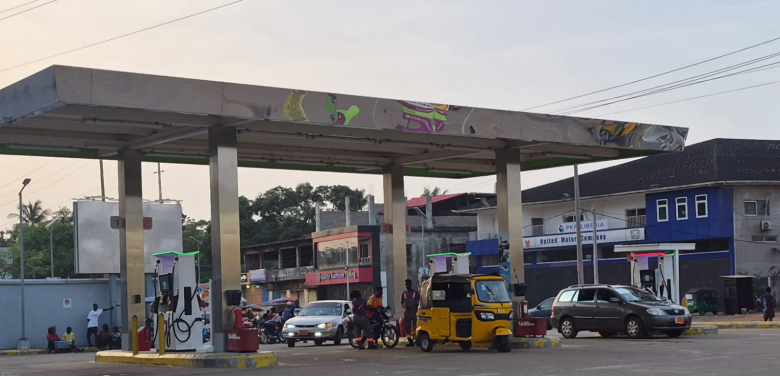
Liberians are paying more to travel, eat and keep the lights on as conflict in the Middle East pushes global oil prices above $US100 a barrel for the first time in years, exposing the country’s dependence on imported fuel to the world’s most volatile markets.
The price surge is hitting Liberians across the board. Transport fares are climbing as drivers pass on higher fuel costs to passengers. Food prices are rising as goods cost more to move. Electricity bills are increasing for those connected to the grid, while fuel for private generators — a lifeline for businesses and households — is eating deeper into already stretched budgets. Airfares are also expected to rise.
As Daniel Kau, a taxi driver in Paynesville, rolls his car onto the streets, he’s hoping the day’s math will still work to feed his family of three children. Lately it has not. He is worried.
“If the gas price increases and the government doesn’t talk about it then that’s how we will charge the passenger,” he said, sitting at the Red-Light parking station waiting for passengers. “At the end of the day, the passenger will be crying.”
For drivers like Kau, a geopolitical crisis unfolding thousands of miles away has become an immediate financial threat. As fighting involving Iran, Israel and the United States pushes global crude prices above $100 per barrel, countries far from the battlefield are feeling the shock. Experts say few feel it more directly than Liberia, a country that produces none of its own fuel, has no strategic petroleum reserves and limited ability to cushion global price spikes.
When oil prices rise, the effects ripple quickly through the Liberian economy. On March 5, the government of President Joseph Boakai attempted to limit the damage. Following consultations between the Liberia Petroleum Refining Company and the Ministry of Commerce, officials approved a US55 cents per gallon increase in diesel prices while keeping gasoline prices unchanged for now.
In a statement, authorities described the adjustment as temporary and said it would be reassessed within 30 days.
But just nine days later new upward adjustments were made. On the weekend the government announced new prices were set for the retail pump price for gasoline at $US4.87 per gallon from previous price of $US4.02. The Fuel oil price was set at $US5.78 per gallon from previous price of $US4.88.
The Government said its approach is to maintain a steady supply of petroleum products across Liberia, preventing long queues at gas stations, and stabilizing prices during a period of heightened international economic uncertainty caused by fluctuating oil reserves and global conflicts. It also warned that hoarding fuel or charging above regulated prices would lead to penalties.
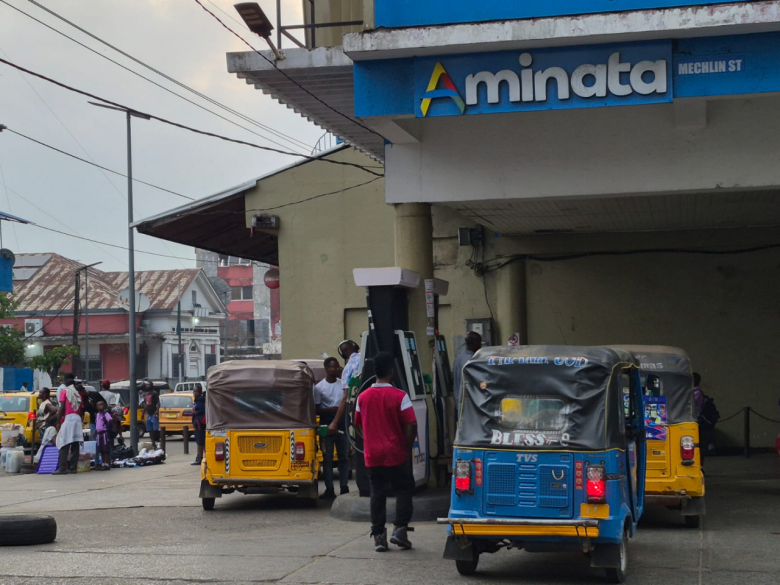
But for drivers and passengers navigating Monrovia’s crowded streets and towns across the country the calculations are simpler. The more money they pay for gasoline, the higher the fares for passengers.
“It will affect everyone, Because once a driver is affected, a passenger will be affected too. You don’t expect me to buy gasoline for $L1,000, then you expect to pay for the same fare,” said Arthur M. Wehyee, a commercial driver for 20 years.
The number on the pump determines whether a day’s work ends in profit or loss.
Pressure on the road
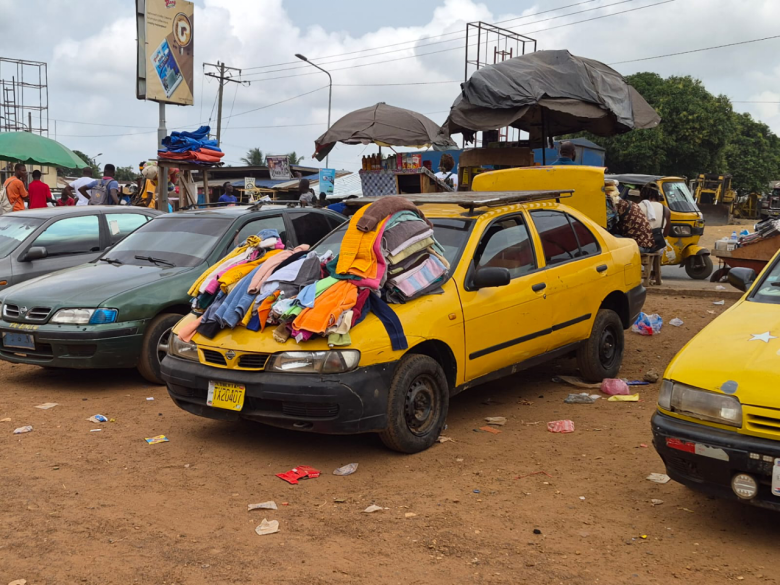
In Paynesville the United Congress Transport Union manages one of Liberia’s more organized commercial transport networks.
Emmanuel Akoi, a supervisor there, oversees more than 200 drivers operating routes connecting the capital to towns across the country.
When the government made the first adjustment to diesel fuel on March 5, the union resisted raising fares despite rising fuel costs.
Passengers traveling to Ganta in Nimba County were still paying $L1,800, while those going to Gbarnga in Bong County were paying $L1,000.
Akoi said the decision reflects solidarity with passengers already struggling with rising living costs. But the burden falls on drivers.
“For the increase, we get a little problem,” he said quietly. “But at least we are covering it for ourselves.”
If fuel prices rise again, that may change. Akoi estimates fares could increase by about $L200 per passenger. With the new adjustments, drivers there say they have increase fares with a little over $L300 to each seat.
Some of the passengers have problem with it, but some of them understand that gasoline prices are going up,” said Wilson Kleeme, another commercial driver at Redlight.
For now, Akoi hopes the conflict abroad cools.
“We are not praying for war,” he said. “We are praying for peace.”
For M. Nathaniel Barnes, Liberia’s former finance minister and former ambassador to the United Nations, the fuel crisis exposes a deeper structural weakness. Liberia has no strategic petroleum reserve and limited economic buffers, leaving it highly exposed to global shocks.
“Because we do not have the capacity to build reserves to account for situations like these, we are immediately impacted,” Barnes said in a video interview from the United States. “We live at the very edge of everything because of our own poverty.”
He said the ripple effects will spread across several sectors of the economy — especially transport, agriculture and electricity.
“You cannot run an effective agriculture system if you don’t have fuel to power machinery,” Barnes said. “Moving food from farm to market becomes more expensive, and every time that happens those costs are passed on to the consumer.”
Prices to Rise In Every Sector
As the Middle East conflict continues pushing global oil prices upward, economists say Liberia could face multiple layers of economic pressure. Transport will likely feel the impact first. As fuel prices rise, commercial drivers are expected to increase fares to cover higher operating costs.
“As owners of transport vehicles begin to feel the pinch of increased fuel prices, they are going to pass those increases on to passengers,” Barnes said.
Food prices could also rise as it becomes more expensive to grow crops and transport them to markets. Electricity costs may increase as well. Many businesses and households rely on fuel-powered generators because of the instability of the national power grid.
“When prices go up and people cannot afford to buy as much, the poor feel the impact the most,” Barnes said.
Experts Warn Price Spikes Can Threaten Stability
Economists warn that rising global fuel prices could also heighten the risk of political instability across West Africa, including Liberia.
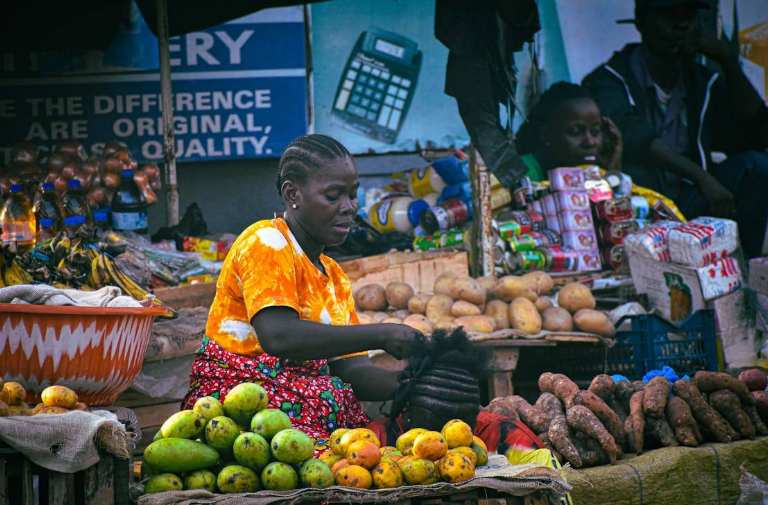
As higher fuel prices push up the prices of food and other basic goods. In economies where many people already struggle to meet daily needs, even small increases in the cost of living can spark public frustration.
“Historically it has been proven across the globe that economic hardship can feed social and political disorder,” Barnes said.
He called for stronger regulatory oversight and careful management of fuel prices to prevent additional pressure on already struggling households.
Experts Say Oil Crisis a Wake-Up Call to Boost Renewable Energy
Barnes said crises like this reveal deeper policy challenges. Liberia should be investing more aggressively in renewable energy such as solar and hydropower, resources the country has in abundance, he said. Continuing to rely heavily on imported fossil fuels leaves the country exposed to global instability.
“It all has to do with leadership,” Barnes said. “Having the vision to look 30 or 40 years down the road.”
He also called for broader economic reforms, including tackling corruption and reassessing government spending priorities.
“In times like these,” he said, “those who suffer first and longest are the poor.”
For now, passengers and drivers are feeling pinch of the government’s adjustments. Drivers are watching prices at filling stations the way others watch the weather.
Kau will return to the streets tomorrow morning along with thousands of Liberians whose daily lives depend on decision makers in distant capitals shaping the price of daily life across the country.
Barnes used the well-known African proverb: “When two elephants fight, it is the grass that suffers.”
This story was a collaboration with New Narratives as part of the Investigating Liberia Project. Funding was provided by the Swedish International Development Cooperation Agency. The funder had no say in the story’s content.