
By Joyclyn Wea, gender correspondent with New Narratives
Summary:
- Young people said they do not just need encouragement. They need tools — money, space, training, mentorship, and access to opportunity.
- This dialogue exposed a familiar problem in Liberia: youth are often treated as beneficiaries of programs, not as people with the power to shape them.
- The success of this meeting will not be judged by the speeches in the room, but by whether money, attention, and decision-making move closer to the young people UNDP says it wants to serve.
“If they are not feeling it, if you are not making a difference in what they do, then we are irrelevant.”
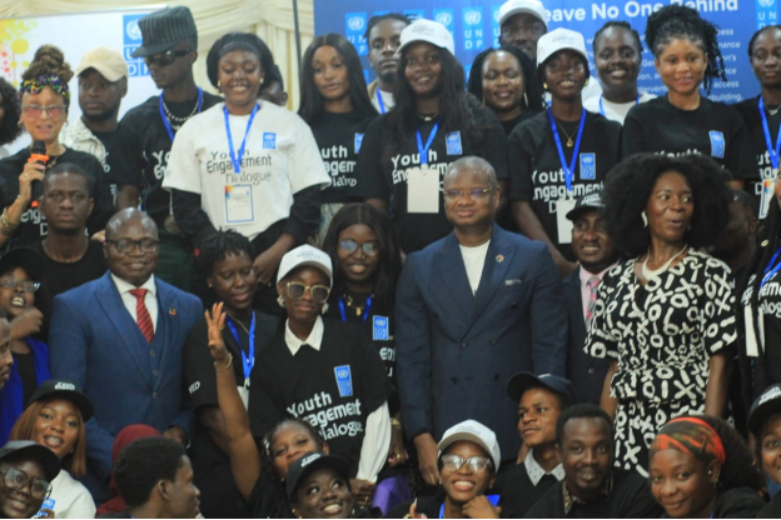
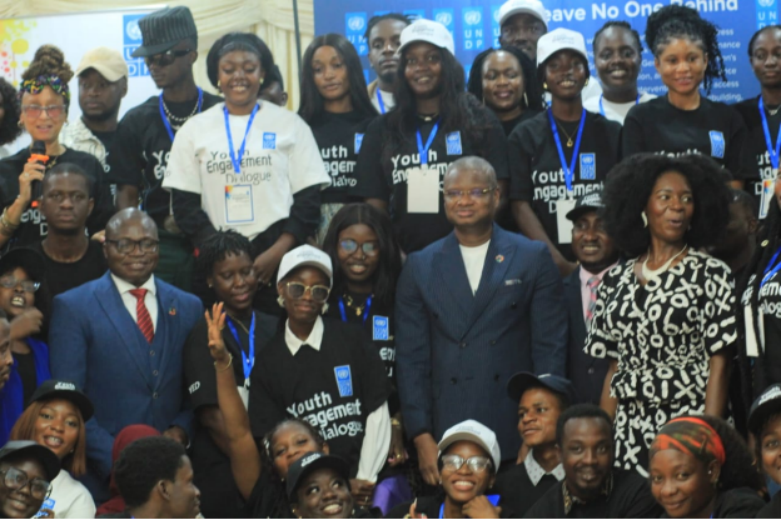
That was the frank concession from Aliou Mamadou Dia, the United Nations Development Program’s resident representative in Liberia, to more than 50 young people — including entrepreneurs, artists, athletes, student leaders, and digital innovators – at an unusual consultation session at a conference hall in Congo Town last week. Dia told the group the agency had not listened closely enough to them in the past. So the agency is changing how it works with young people.
In a move widely celebrated by participants, he said the agency would be asking them what they need before writing its next round of support, rather than deciding itself what they need.
It is a message that lands in a country where youth are the biggest force in society, but most still struggle to find stable work, education, opportunities, and a real say in decisions that shape their future. Liberia’s most recent census in 2022 found people under 35 make up three in every four Liberians, a huge percentage of the population that experts say offers the country many opportunities if they can give that generation jobs and entrepreneurial support. But they warn that huge numbers can also present danger if youth become discouraged and frustrated.Things are not going well now. Just one in every four young men and one in every six women have formal employment. Limited digital infrastructure and resources have stopped them from making the businesses and jobs that would power the economy.
The focus on youth has become a top priority for government and international donors. Across the continent, governments fear that a rapidly expanding youth population — with too few jobs, too little education, and too many unmet expectations — risks becoming a combustible force that could fuel instability, crime, and political unrest.
The United Nations Development Programme is the UN’s main development agency. In Liberia, UNDP has been an active postwar partner, supporting programs spanning governance, justice, economic recovery, and youth development.
Dia said the new approach was a product of his own experience. He told participants that when he arrived in Togo in 2019, he asked his team to show him young people helped by a youth employment project that had been running for years. Weeks passed, and no one could point to even one young person who had benefited. Much of the effort, he said, had gone into policy, training, and institutional support instead of support that young people could feel.
That failure changed his thinking. He said UNDP later shifted money in Togo into a small grants facility for youth-led projects, with more visible results because young people could point to what had changed in their own lives. His warning in Monrovia was clear: if youth programs do not reach young people directly, they lose their purpose.
Last week’s meeting, called a Youth Engagement Dialogue, was an introduction to this different approach.
Stanley Kamara, the agency’s team leader for inclusive governance and public institutions, compared the process to taking someone to lunch but letting them choose the menu. He said the program is working with “clean sheets” as it designs a new youth empowerment and digital transformation program that does not begin with a fixed answer.
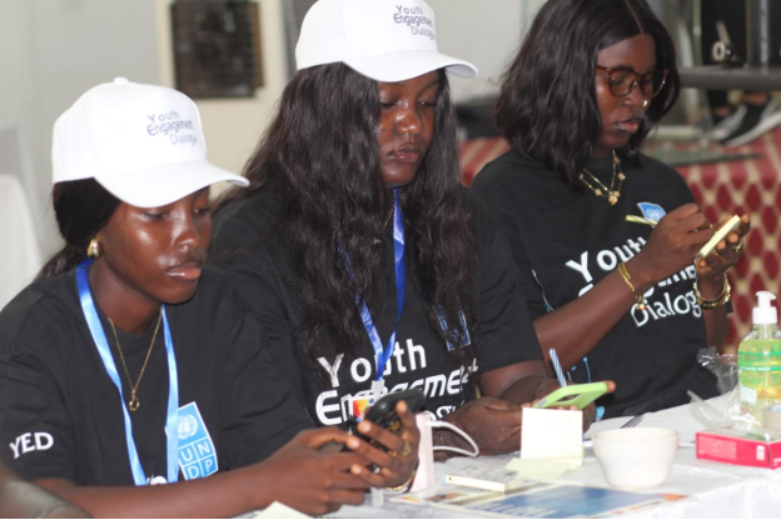
Kamara said one of the most important things about this event was the diversity of the room. The guest list reached beyond the usual circles to include people in sports, music, the creative economy, and innovation. Dia insisted on bringing in rappers, people in the music industry, athletes, influencers, and others whose sectors are often overlooked, even though they matter deeply to how young people live, earn, and build community.
Officials from the Ministry of Youth and Sports also promised that the Boakai administration was committed to acting differently. Laraamand Shenkin Nyonton, deputy minister for technical and vocational education and training at the Ministry of Youth and Sport, said the government plans to expand the national cadet program and launch a scholarship program expected to reach counties across Liberia.
“We’re shifting the paradigm. We want to open the space for inclusion for every young person who has the will and the innovation to move the youth sector forward,” Nyonton said.
But interviews with many participants suggest the UNDP and government will have a tough time winning them over. Many expressed skepticism that the agency would carry through on its commitments. Consultations and promises are easy. Young Liberians have heard both before. Many said the harder question is whether this meeting will lead to a program that shifts money, attention, and power closer to the people in the room and others like them across the country.
“I hope what we discuss here will not just stay on paper, but that UNDP will make sure the solutions are implemented,” said Stephenie Coleman-Mulbah, chief executive officer of Coleman Special Incorporated, a Liberian alcohol producer. But the entrepreneur said she was glad to be in the room for the first time. She said it was her first time taking part in this kind of youth dialogue and that she saw it as a chance not only to share ideas, but to push for action.
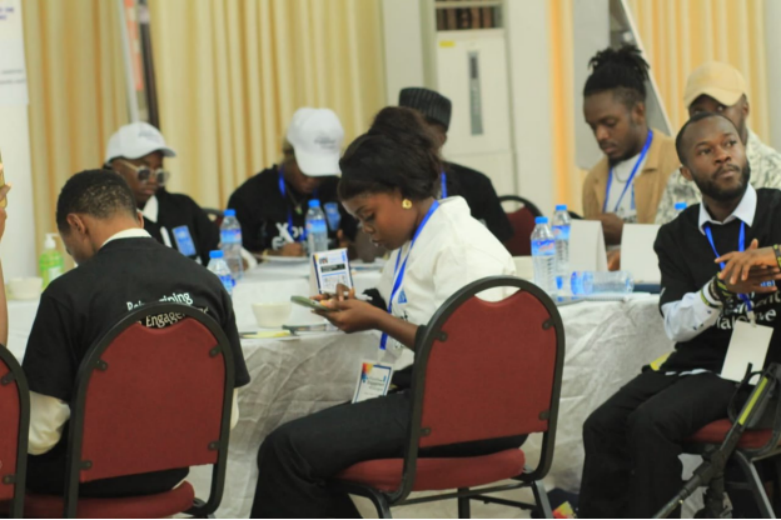
Dwah Faith Massaquoi, another entrepreneur and founder of Faith Natural Juice, which produces local juice, supports smallholder farmers, and creates jobs. She said she needed training, networks and funding. Athletes told the group they lacked decent places to train and compete. They described weak structures in sports, poor support, and little reason for young people to believe their effort will lead anywhere.
People in the creative sector said Liberia has talent, but not enough financing, infrastructure, mentoring, or protection for creative work. In innovation and digital work participants said many are stuck between ideas and execution because of limited internet access, poor equipment, weak mentorship, and too few funding paths to help them move from prototypes to businesses. Entrepreneurs said many need information: what comes after registering a business, where to get technical support, how taxes work, and how to grow beyond the startup stage.
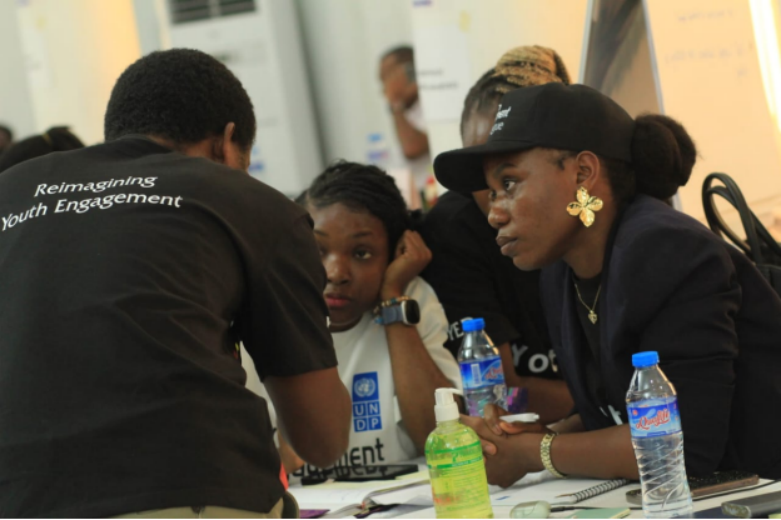
The UNDP’s Kamara committed that participants would stay involved as the new youth empowerment and digital transformation portfolio takes shape. He said UNDP wants to create a platform for ongoing engagement, so the conversation does not end with one meeting.
The resident representative said he also wants the dialogue to move beyond Monrovia into the counties, after being reminded during wider consultations that Liberia is not only the capital and promised to hold similar conversations with young people across the country.
UNDP leaders said participants should expect to be called back in the coming months to review the youth program now being drafted, with plans to widen the process into the counties. At the same time, Ministry of Youth and Sports officials said young people should begin seeing related openings, including an expanded cadet program and a scholarship program expected to launch by the next academic year.
This story was produced in collaboration with New Narratives as part of the Investigating Liberia project. Funding was provided by a private donor and the Swedish International Development Cooperation Agency. The donors had no say in the story’s content.