
By Anthony Stephens, senior justice correspondent with New Narratives
Summary:
- Survivors of the 1990 massacre by Armed Forces of Liberia soldiers at Monrovia’s St. Peter’s Lutheran Church used the 36th anniversary commemoration to demand the government speed up promised reparations and war crimes court.
- Liberia’s military leaders used the event to formally express regret for the first time for the military’s role in the massacre that killed 600 men, women and children in just 24 hours.
- Survivors unveiled a new memorial honoring those killed in the massacre.
SINKOR, Monrovia -Victims and survivors of the St. Peter’s Lutheran Church massacre, one of the bloodiest atrocities of Liberia’s 14-year civil conflict, had expected that by the time of their 36th commemoration, the court to try those accused of war crimes would be preparing to get underway.
Instead they have found themselves once again begging the country’s leaders to deliver them the justice President Joseph Boakai promised when he stepped into office in January 2024.
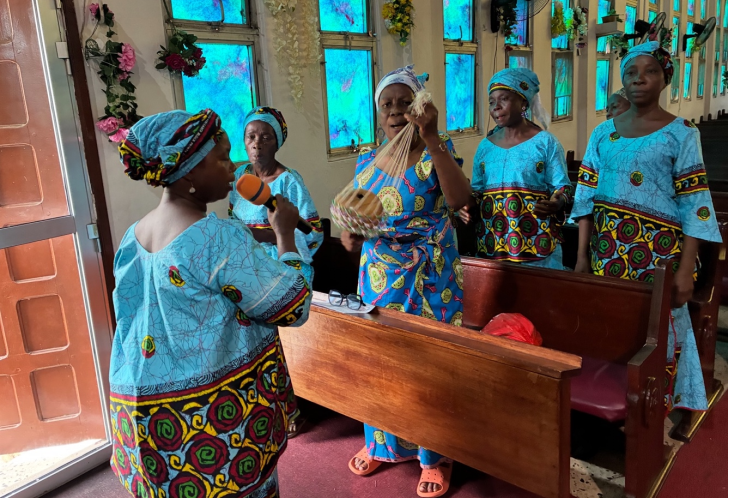
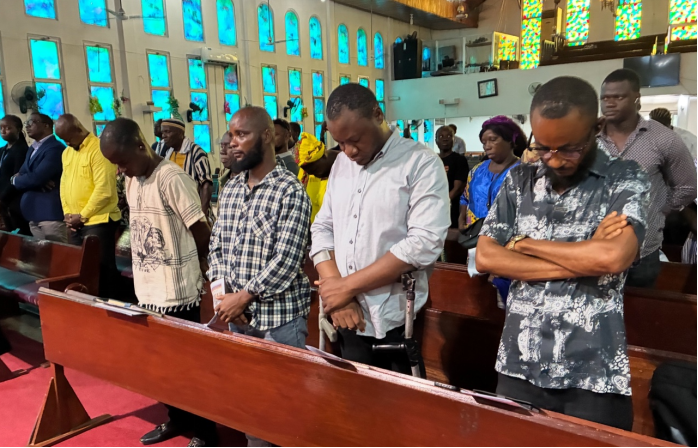
Their appeal came during last week’s memorial service marking the massacre’s 36th anniversary, where families and survivors unveiled a new memorial honoring the 600 men, women, children and babies killed while sheltering inside the church, then a designated Red Cross refuge.
“How long will we continue to stand before the audience to explain our stories in pain?” asked survivor Eletha Mamie Sanga Toe, who said she lost 15 members of her family, including brothers and cousins, in the massacre.
The 36th anniversary came as Liberia’s Legislature stalls on the long-delayed effort to establish a War and Economic Crimes Court. The Boakai administration’s promises of reparations have also remained largely unfulfilled. More than three decades after the massacre, no one has been criminally prosecuted in Liberia for the killings.
Two accused perpetrators have faced accountability. In 2022, the U.S. federal civil court in Pennsylvania found Moses Thomas, a former commander of the Armed Forces of Liberia’s Special Anti-Terrorist Unit, civilly liable for the massacre and ordered him to pay US$84 million in damages to four survivors. He fled to Liberia to avoid a criminal charge and having to pay victims. Thomas has dismissed the judgment as “nonsense.”
Moses Wright, a former brigadier general in the Liberian army who allegedly oversaw the killings, faces trial in the same federal court in Pennsylvania in October on charges of criminal immigration fraud. American prosecutors allege that Wright lied in immigration proceedings to conceal his role in the war. Wright has denied the charges.
This year’s commemoration also brought one significant development for victims: for the first time, a representative of Liberia’s defense leadership publicly expressed regret for the military’s wartime past.
“As one of the officials of the Ministry of National Defense, allow me to say, on behalf of my boss, that we regret our dark past,” said Oscar Mulbah, assistant defense minister for public affairs. “We can only wish that the dark past did not happen. This is a time to show that we’ve been able to choose hope over despair. The Minister of National Defense wants me to inform you that this new Armed Forces of Liberia is an institution, or force, that has its loyalty to the sovereignty of the state, is a people’s centered military, a respecter of the rule of law and of human dignity. We want to reinforce our commitment of the Armed Forces of Liberia and the Ministry of National Defense to ensuring that the AFL, the Armed Forces of Liberia, serves with professionalism, integrity, accountability, and respect for human dignity and the dignity of every citizen.”
Asked in a follow-up WhatsApp message about the timing of the apology, Mulbah replied: “There is time for everything.”
The Lutheran Church Massacre Survivors Association, which organized the commemoration, welcomed the apology but cautioned that “we have some concerns about its timing.”
Still, in a WhatsApp message, Marcus P. Quoigoah, the association’s executive director, in a WhatsApp message called it “an encouraging sign” that survivors’ long-standing call for recognition was “gradually being acknowledged” and “a positive step toward reconciliation and healing.”
Following the memorial ceremony, survivors and families unveiled a new memorial honoring those killed. Wreaths were laid by Tiawan Saye Gongloe, veteran Liberian human rights lawyer whose brother was killed in the massacre, Lawrence Yealue, chairman of the National Civil Society Council of Liberia, and Peterson Sonyah, who lost seven members of his family in the massacre, including his father. Sonyah now serves as executive director of the Liberia Massacre Survivors Association, one of the country’s largest organizations representing victims and survivors of the civil wars.
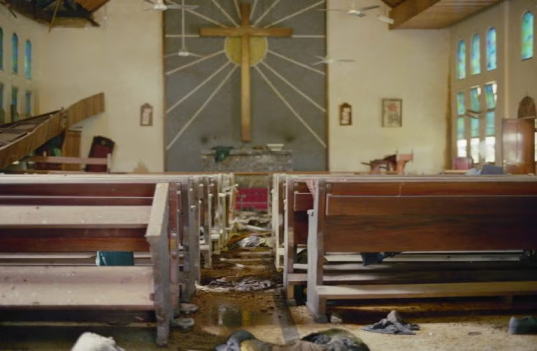
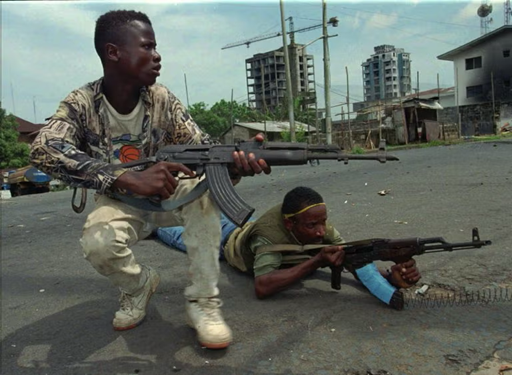
The massacre marked one of the most shameful acts in the military’s history. Forces loyal to President Doe claimed the civilians sheltering in the church, predominantly members of the Mano and Gio ethnic groups, supported the advancing rebel faction led by Charles Taylor who had invaded the country six months earlier aiming to topple Doe. (Taylor later became Liberia’s president and was eventually convicted by an international tribunal and sentenced to 50 years in prison for aiding and abetting war crimes and crimes against humanity committed in neighboring Sierra Leone. Doe was killed by Taylor’s former ally Prince Johnson.)
In shocking acts that brought the world’s attention to the conflict men, women and children were hacked to death with machetes over a 24-hour period.
At the memorial service, survivor after survivor said they no longer wanted merely to relive their suffering at annual ceremonies. They wanted justice, medical care, psychological support and assistance rebuilding lives shattered by the war.
“We often hear that Liberia is healing and moving forward. But can a nation truly move forward while those carrying its deepest wounds are left behind?” asked Quoigoah, in a speech at the church. “Can reconciliation be genuine if victims continue to suffer in silence? We do not gather because we enjoy remembering pain. We gather because forgetting injustice gives it permission to happen again. We remember so Liberia may heal, so humanity may learn, and because those who were murdered can no longer speak for themselves. As survivors, we have a sacred responsibility to speak for them.”
War Crimes Court Stuck in Legislature
Liberia’s war crimes court remains a work in progress. In May, Boakai renewed the mandate of the Office for the Establishment of the War and Economic Crimes Court, which is overseeing efforts to establish both a War and Economic Crimes Court and a National Anti-Corruption Court, directing the Office to work with the Legislature to approve a bill to establish the court (as required by law) within 90 days. That deadline has long-since passed.
In June, the Office and its partners held a consultation with more than 40 members of the House of Representatives. In early July, Jallah Barbu, the Office’s executive director, appeared at a closed-door Senate hearing to defend draft two bills prepared by his office. Journalists were prohibited from covering the hearing.
Christopher Selle, a spokesman for the Office, said it had completed its responsibilities within the 90-day period. “Yes. The Legislature is the hold-out,” said Selle said in a phone interview. “They’ve got their timeline. The timeline was not fitting within our timeline. Unfortunately, this office cannot pass these bills, but the Legislature.”
Advocates have repeatedly warned that lawmakers in the Legislature, which includes multiple people who may face trial, would try to stop passage of a bill. Augustine Chea, chairman of the Senate Committee on Judiciary, Claims and Petitions did not respond to a request for comment on the matter. The Committee has been holding hearings with stakeholders and groups advocating for six competing proposals for the courts.
In addition to the bills prepared by the Office, they include a War and Economic Crimes Court bill submitted by the Liberian National Bar Association in 2021; another drafted by a civil society coalition led by the Independent National Commission on Human Rights. Separate proposals were introduced by Senate President Pro Tempore Nyonblee Karnga-Lawrence and Lofa County Senator Joseph Jallah.
The competing proposals contain differences that some lawmakers say could be unconstitutional and must be reconciled before legislation can be passed. But civil society leaders have accused the Legislature of delay tactics.
“When other bill them come, you can be fast in passing it,” said Lawrence Yealue, chairman of the National Civil Society Council, in Liberian English. “So, when pain happening to us now, whatten you not passing that bill for?”
Government Remains Silent on Reparations Program Promised at the UN in 2024
In its final report in 2009, Liberia’s Truth and Reconciliation Commission proposed a wide-ranging reparations program funded over 30 years at the cost of US$500 million ($780 million in 2026 dollars). It said the program should cover “memorials, victim support and the process of prosecution” as well as “psychosocial, physical, therapeutic, counseling, medical, mental health and other health related services for all physically challenged individuals who were incapacitated” during the civil wars.
Nearly two years ago, Justice Minister Oswald Tweh told a United Nations gathering in New York that the government was “committed to establishing a reparation trust fund to support conflict victims.” He said the fund would “help victims rebuild their lives and communities, ensuring that they are not forgotten as we move forward.”
That promise has yet to be fulfilled. Tweh has not responded to repeated requests for comment on the status of the proposed fund.
The Boakai administration has taken what advocates describe as important symbolic steps in the country’s broader reparations process. President Boakai has issued an official state apology to victims of the civil wars, pledged to build a national memorial for victims and regional peacekeepers, and presided over a special national prayer service honoring the dead and the living. But survivors said symbolic gestures must be matched by material support.
“As survivors, we are not asking for luxury,” Quoigoah said. “How much does it really cost to help suffering survivors survive? Is compassion truly that expensive? Will providing medical care, counseling, and basic support somehow weaken our nation—or is it simply too much to ask? History will one day demand an answer.”
Tiawan Gongloe said the government should take practical steps to support survivors while the proposed court is being established.
“I am suggesting that the Liberian government sets up a special tax to take care of victims of the wars,” Gongloe said. “Even if it’s 2 percent of salaries, let there be tax to show the government’s seriousness. So that the victims can get some money every month.”
He also urged Boakai to issue an executive order guaranteeing free treatment at government hospitals for verified victims of the wars.
“If we are serious, we must start giving relief to those who are still living now,” Gongloe said.
This story was a collaboration with New Narratives as part of the Investigating Liberia project. Funding was provided by the Swedish International Cooperation Development Agency. The funder had no say in the story’s content.