
By Anthony Stephens, senior justice correspondent with New Narratives
Summary:
- The Gambia begins paying reparations to more than 1,000 victims of Jammeh-era abuses, following a 237 million dalasi ($3.7 million) recommendation.
- The country is also moving toward accountability, having appointed a special prosecutor and preparing a tribunal for prosecutions.
- Advocates say the move offers lessons for Liberia, where a $500 million reparations plan remains unimplemented as the push for a criminal tribunal intensifies.
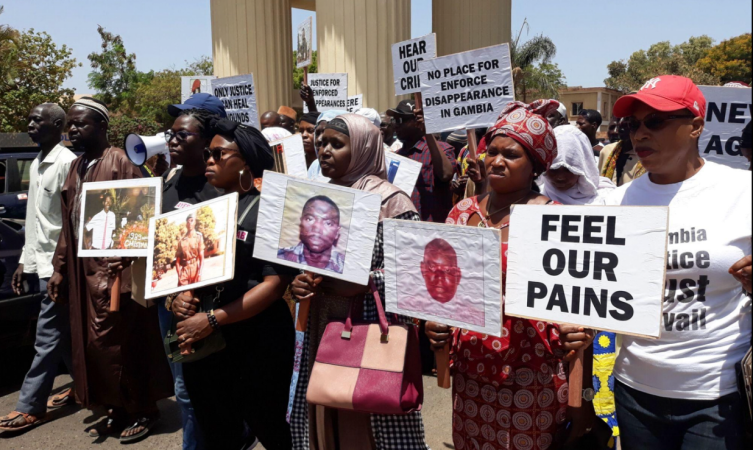
The Gambia has begun paying reparations to victims of crimes committed during the violent 22-year regime of former president Yahya Jammeh that ended in 2017. The country’s 2021 Truth, Reconciliation and Reparations Commission report recommended that more than 1,000 victims be paid 237 million dalasi ($US3.7 million) for the wave of terror that left about 250 dead and thousands of victims of human rights violations.
Eighty-three victims had been targeted for the exercise, with the Commission expected to pay a total of 761 victims in the broader implementation of the reparations program, said Essa Coker, executive secretary of the Reparations Commission in an email.
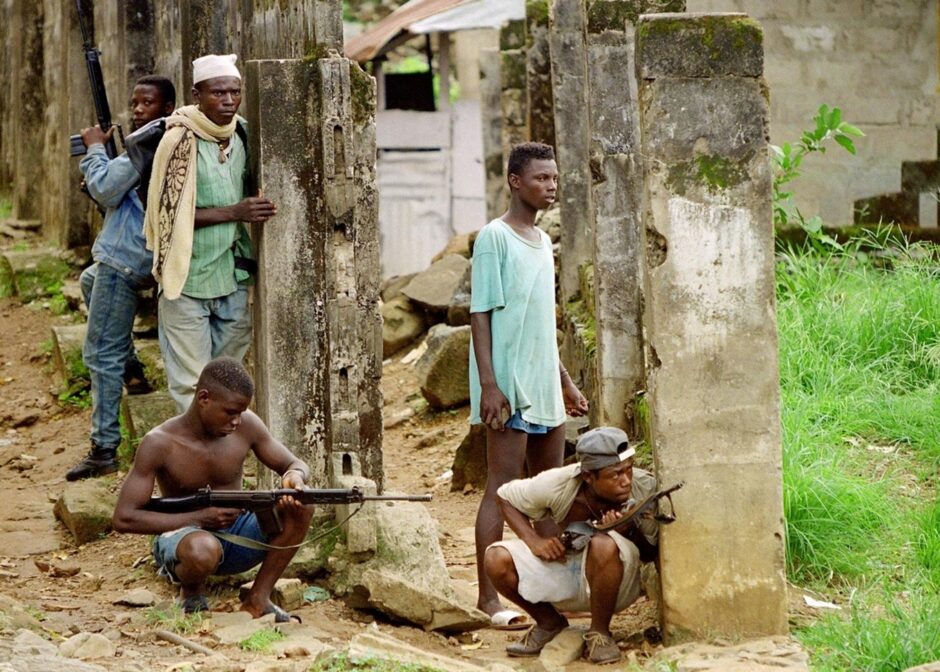
Advocates say the move offers lessons for Liberia, where the 2009 Truth and Reconciliation Commission report recommended $500 million in reparations be paid to victims of the civil wars between 1989 and 2003 ($740 million in today’s dollars).
In January, The Gambia’s Reparations Commission announced that it had begun paying reparations to victims of crimes under Jammeh’s rule. Experts say the decision marks one of the most concrete steps taken yet to address abuses committed during Jammeh’s regime. The country is preparing to set up a hybrid tribunal to try Jammeh — now in exile in Equatorial Guinea — along with 68 officials who served under his regime recommended for prosecution by the Truth Commission.
The Commission accused them of serious human rights violations including extrajudicial killings, forced disappearances and torture. Although no official dates have yet been announced for hearings to begin, The Gambia has appointed Martin Hackett, a
top British human rights lawyer, as a special prosecutor with a 4-year mandate.
Gambian Reparations Commission’s Coker said $US285,000 had been allocated separately for reparations in each of the government’s 2025 and 2026 budgets.
“We are currently processing payments for victims whose violations occurred between 1994 and 1996,” said Coker. “Victims are receiving the remaining 81 percent of the reparations owed to them after the 19 percent initial payment made under the TRRC. The actual amount varies depending on the category and gravity of the violations suffered.”
Experts say reparations are a crucial part of healing in societies emerging from conflict. They say such programs acknowledge the harm suffered by victims while helping rebuild trust in institutions and prevent future abuses.
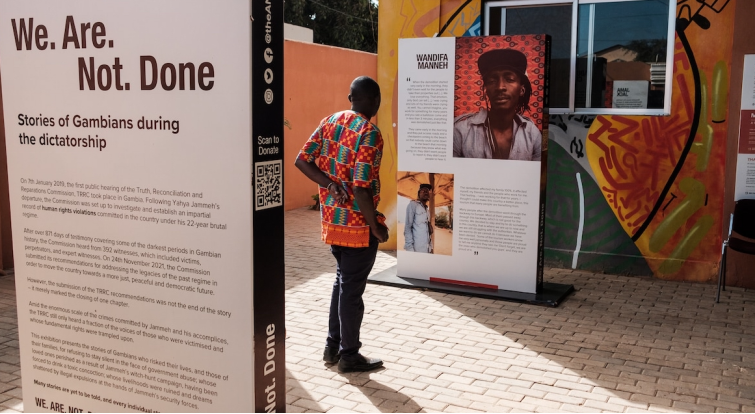
A man at Memory House, a museum dedicated to documenting abuses committed during the Jammeh regime. Credit:Nick Roll/Al Jareera.
Aside from recommending the creation of a special criminal tribunal, the Commission proposed financial compensation, medical and psychological rehabilitation for victims, community restitution and memorialization, and restorative and symbolic reparations.
The Gambia’s decision to begin paying reparations before its special criminal tribunal becomes operational has been welcomed by advocates, who say it offers inspiration for Liberia. Experts say some form of reparations for Liberia’s victims is long overdue, whether it is in the form of money, medical care or help with housing and other basic needs.
“They’ve suffered a lot, they’ve lost a lot,” said Fatou Bensouda, a former prosecutor of the International Criminal Court in an exclusive interview with FrontPage Africa/New Narratives at a South African conference in November. “Some of them, their lives are completely changed, and then they are expected to just pick up the pieces and go on their own. They must be supported.”
Liberia’s own Truth and Reconciliation Commission recommended in its final report in 2009 that the government pay $US500 million in reparations payment over a 30-year period, but no funds have been provided by any of Liberia’s three post-war governments.
The administration of President Joseph Boakai, who broke with his predecessors to trigger the process to establish a war crimes court in Liberia, has expressed support for the idea.
Oswald Tweh, Liberia’s Justice Minister, told a United Nations meeting in August 2024 that the government was “committed to establishing a reparation trust fund to support conflict victims” to “help victims rebuild their lives and communities, ensuring that they are not forgotten as we move forward.”
Tweh did not respond to requests for comment on the matter.
“It has to be transparently done,” said Adama Dempster, who has been leading initiatives in recent times on the issue. “We know that it may not be able to satisfy everyone, but it least it will help in the context of reconciliation and will also help in promoting the justice program as well because that’s another form of justice.”
Dempster also urged the Liberian government to formally launch a reparations program and appeal to international partners for support, saying the process should be organized and shielded from political interference.
Advocates say Boakai has taken steps they view as part of a broader reparatory process. These include an official state apology to victims of the civil wars, a pledge to build a national war memorial for victims and regional peacekeepers, and a special prayer service.
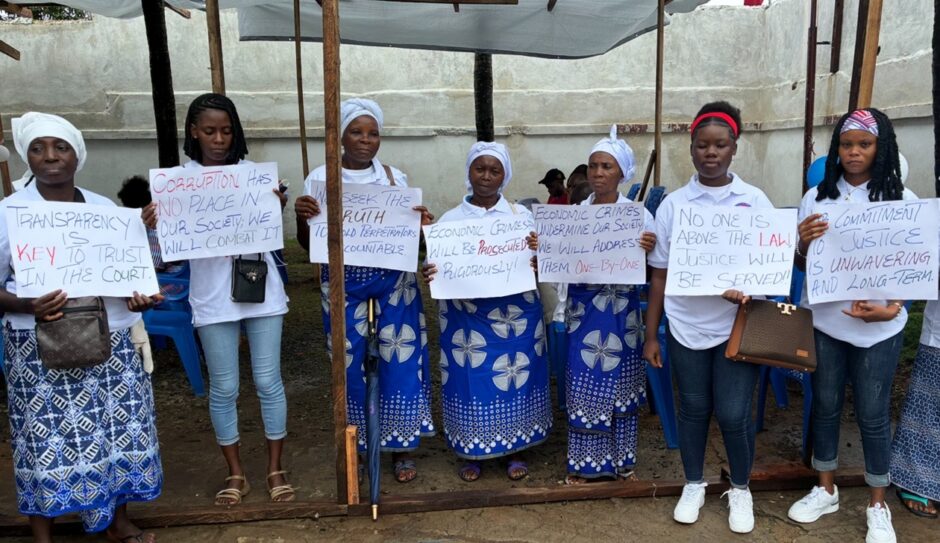
Reparations have been paid in various forms in other settings. The International Criminal Court was the first permanent international criminal court to establish a dedicated Trust Fund for Victims as part of its founding treaty. Between 2017 and 2024, the court ordered roughly $US95 million in reparations for victims in five cases involving war crimes and crimes against humanity.
The largest award came in 2024, when the court ordered Dominic Ongwen, a former Ugandan rebel commander, to pay $US60 million to more than 49,000 victims. Ongwen lost his appeal and is serving a 25-year sentence in Norway after being convicted on 60 counts of war crimes and crimes against humanity, including murder, rape and the abduction of children.
Sierra Leone’s reparations program offers another example from the region. Managed entirely by the government, the program registered between 28,000 and 30,000 war victims as eligible for assistance. About 20,000 received one-time interim payments, with plans later announced to reach roughly 10,000 more. But limited funding, however, meant many registered victims never received comprehensive reparations.
In a 2014 report, the Peace Research Institute Frankfurt, a leading German independent transitional justice research institute, said that the “program received $US8.5 million in funds that were invested into measures such as one-time interim relief payments, medical operations for serious injuries, vocational training and micro-grants.”
But it added that “due to the high number of victims, benefits were distributed selectively to specific target groups, such as amputees and sexually abused women, leaving the bulk of victims with a one-time payment of roughly $US100 2008 to 2013.”
Despite such challenges, experts say Sierra Leone’s experience shows that reparations programs are possible even with limited resources. Binta Mansaray, registrar of the Residual Special Court for Sierra Leone and former registrar of the Special Court, said Liberia had an opportunity to better its transitional justice program and prioritize reparations.
“Is not one thing, or the other. Survivors of violent conflict are entitled to both reparations and justice, so you don’t substitute one for the other,” said Mansaray In an interview on the sidelines of a recent justice conference in Monrovia. “Psychosocial support is extremely important. Others need medical support because of the long-lasting injuries. Some of them will live with their injuries for the rest of their lives. Others would need welfare treatments, because they lost everything and they are unable to engage in any gainful employment for their livelihood or to take care of their families.”
Elise Keppler, executive director of the Global Justice Center, a group that advocates for gender justice in war crimes cases, said that as Liberia debates reparations it should also consider the “kind of medical care” that “could be accessible for children born of rape, education or other community programs and also to ensure what is the impact for victims. It’s important that justice not only be about what happens for the perpetrator, but also about what happens for victims and affected communities.”
“Reparations are an important way to consider how to ensure that those who have been harmed have real redress,” she said in an interview. “Ask those communities what kinds of services would be most important to them.”
The Gambia court set a second precedent for Liberia by securing a cooperation agreement with the Ecowas court in December 2024 that will allow it to establish a hybrid court to try international crimes that were not under the Gambia’s domestic law when the crimes took place. Liberia will also need to secure the support of an international partner, possibly Ecowas, in order to try international crimes in its war crimes court. International crimes include those crimes designated as war crimes or crimes against humanity including recruitment of child soldiers, rape as a weapon of war, forced labor and torture.
This story is a collaboration with New Narratives as part of the West Africa Justice Reporting Project. Funding was provided by the Swedish Embassy in Liberia which had no say in the story’s content.